Five Framing Mistakes That Quietly Damage a Painting
Updated By VanArtHub Curatorial TeamShare
Framing damage is almost never dramatic. It is slow, it is hidden behind the mat where nobody looks, and it is usually discovered years later when a frame is finally opened.
These five are the ones we find most often.
1. Ordinary cardboard behind the artwork
This is the most common by a distance, because nobody sees the backing so nobody spends money on it.
Ordinary board and corrugated cardboard are made from wood pulp, which contains lignin. Lignin breaks down over time and produces acids, and those acids migrate into whatever the board is touching. The paper discolours, goes brittle, and takes on a brown stain in the exact shape of whatever was against it. Corrugated cardboard also prints its own ridge pattern into the back of the sheet.
Timescale: visible in about ten to fifteen years, faster in a warm or bright room.
The fix costs very little. Conservation board, which is acid-free and lignin-free. "Acid-free" alone is a weaker claim than it sounds, because board can be acid-free today and turn acidic as it ages if the lignin is still in it.
2. Any ordinary tape
Masking tape, cellophane tape, packing tape, self-adhesive corners. They all fail the same way: the carrier dries out and falls off, and the adhesive stays behind as a hard brown stain that has soaked into the paper fibres.
Removing it is a conservator's job and it is not always possible.
Correct hinging uses Japanese tissue and starch paste, or a purpose-made conservation tape. Both release with moisture, which is the whole point: a future framer can undo it without touching the artwork.
3. Fixing the artwork at all four corners
Paper takes up moisture when the room is damp and gives it back when it dries, expanding and contracting a little each time. Over a year in an ordinary home it does this constantly.
Hinge it at the top edge only and it moves freely and stays flat for a century. Fix it at four corners and it has nowhere to go, so the movement turns into permanent cockling.
The worst version of this is dry mounting, which bonds the sheet permanently to a board. It cannot be reversed and it ends the work's life as an original. We will not do it.
4. Glass resting directly on the artwork
There has to be something holding the glazing off the surface, either a mat or a spacer.
Without one, any moisture at all and the sheet sticks to the glass. Separating them then takes the surface of the artwork with it. This is also how condensation in a damp room turns from a nuisance into permanent damage.
If you want the full sheet visible with no mat covering the edges, that is a float mount, and it still needs a spacer.
5. Hanging it on the wrong wall
The only one on this list that framing cannot fix.
Above a working fireplace, above a radiator, or on a wall that catches hot afternoon sun, the temperature cycles every day. Everything in the package expands and contracts at a different rate, the paint film gets brittle, and on a canvas the tension changes with every cycle.
No glazing and no board solves this. The answer is a different wall.
How to check what you already own
Look for a brown line around the edge of the image following the shape of the mat, waviness in the paper, any tape visible at the corners, fogging on the inside of the glass, or grey and brown speckling, which is mould.
Any of those means the frame should be opened now rather than later. If it was framed more than about twenty years ago and you care about it, it is worth opening anyway, because conservation materials only became normal in general framing relatively recently.
Opening a frame to look is a short job, and often the answer is that it is fine. If you are in Vancouver, bring it to the gallery at 1242 Davie Street.
More in acid-free mats and backing, reframing an old or inherited painting, and our conservation framing standards.
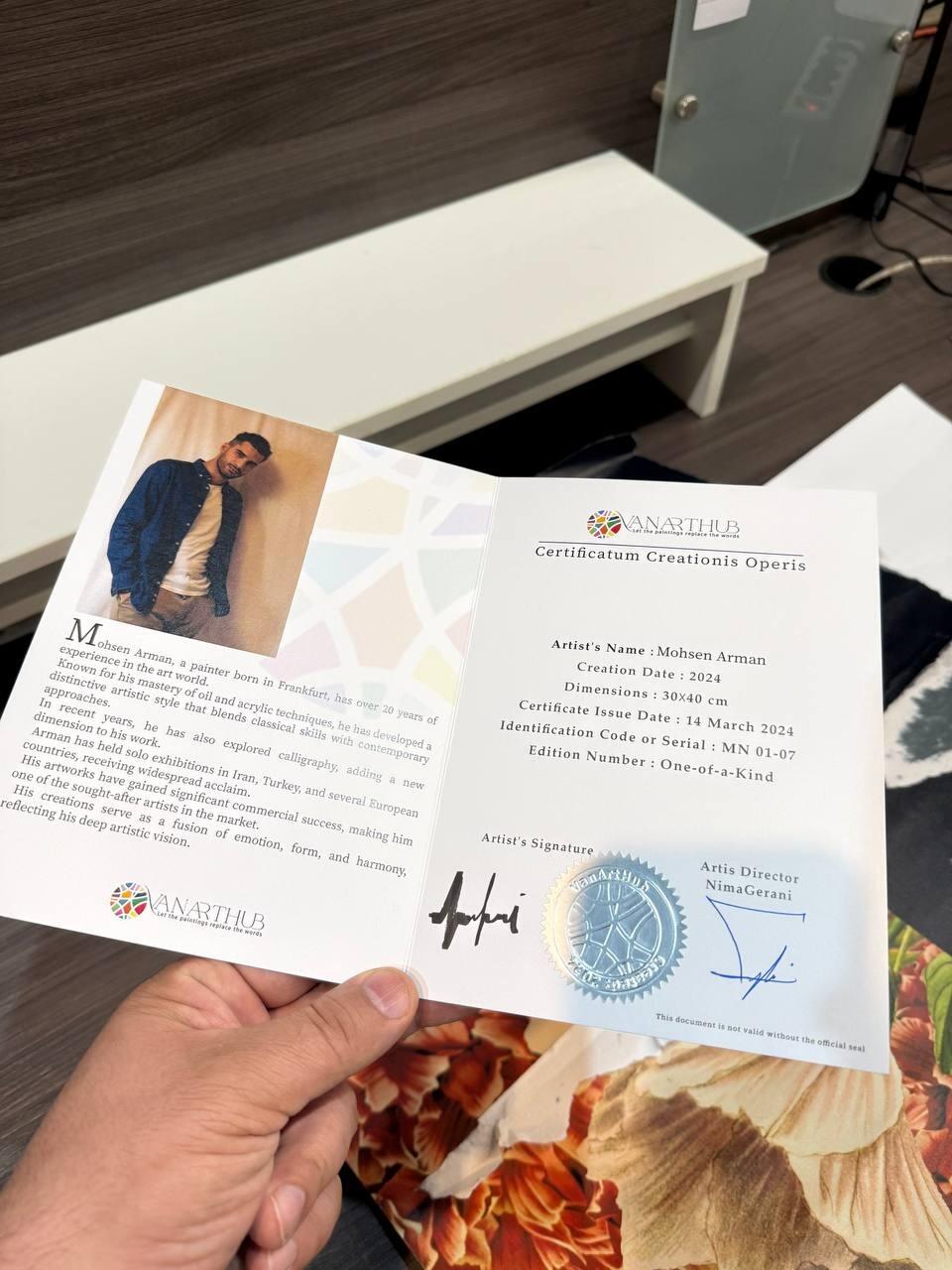
Every piece we sell is a signed one-of-a-kind original with a Certificate of Authenticity, free insured shipping across Canada and the USA, and a 14-day trial. Browse available originals.