Plant Dyes and Inks in Painting: Indigo to Walnut
Updated By VanArtHub Curatorial TeamShare
Plant dyes and inks, indigo from fermented leaves, madder red from a two-year-old root, walnut ink simmered from green husks, are having a genuine working revival in contemporary painting, and for once the revival is not just nostalgia. Artists reach for these colours because they behave differently: they layer, breathe, and age in ways factory pigments do not imitate well. This guide covers where each of the big three comes from, how it behaves, and the honest trade-offs, especially around fading.
Why painters are going back to plants
Three reasons, in our observation. First, the colours themselves: plant dyes tend toward complex, slightly variable hues that read as alive on a surface. Second, materials transparency: an artist who ferments indigo or boils walnut husks knows exactly what is in the jar, which matters to anyone building an animal-free practice. Third, process: making colour is slow, physical work, and for many artists that work is part of the art. Our guide to plant-based pigments and inks maps the full family; here we take the three you will meet most often.
Indigo: the blue that appears in air
Indigo is the strangest of the plant colours because the blue is not in the pot. In the West African adire tradition documented by the Victoria and Albert Museum, dyers fermented indigo leaves in softened water, dipped the cloth, and then pulled it out to let it oxidise: the colour develops as the dye meets the air, and repeated dips build it darker. That dip-and-oxidise cycle is why indigo work has depth you can almost count, layer by layer.
Contemporary painters borrow both the pigment and the logic. Indigo used in washes builds the same way, in patient veils rather than one opaque pass. It rewards artists who think in layers, which is most of the ones we admire.
Madder: red from a root
Madder is the great plant red, and it comes from underground. The Metropolitan Museum's Cloisters garden blog describes the plant, Rubia tinctorum, as a rough perennial herb whose dye is prepared from the dried roots of plants at least two years old, the older the root, the stronger the colour. Its history is about as deep as history gets: the Met notes an Egyptian leather quiver coloured with madder that may date to the third millennium BC, and Pliny was already complaining in Roman times about the profits the crop generated.
The working range is the surprise. Depending on the mordant, the mineral salt that fixes the dye, madder gives everything from soft pinks through bright reds to purplish reds and oranges. One root, a whole warm palette. As a lake pigment, madder red passed from the dye vat into oil and watercolour painting, where its descendants are still sold today.
Walnut ink, and the truth about old brown drawings
Walnut ink is the plant colour anyone can make. A University of Florida IFAS activity plan describes the process: black walnuts in their green husks are simmered for a full day, strained, and reduced until the liquid turns thick and golden brown or darker, with rusted iron added if a deeper shade is wanted. The husks stain everything they touch, which tells you how much colour they hold. The result is a warm, transparent brown that handles like watercolour.
Now the honest part, because a myth sits here. "The old masters drew in walnut ink" is repeated everywhere, and the record is messier. The Rijksmuseum's research project on Rembrandt's drawings identifies iron gall ink in the drawings, and notes the brown ink was often black originally, darkening and corroding into brown over the centuries. Much of the "walnut brown" we admire in old drawings is aged iron gall, not walnut. Even the modern market needs reading: Tom Norton's popular Walnut Drawing Ink states on the maker's own page that it is made with lightfast artist-grade pigments, not walnuts. If the plant origin matters to you, that distinction matters too.
| Colour | Plant source | Hue range | Working note |
|---|---|---|---|
| Indigo | Fermented indigo leaves | Blues, built in layers | Colour develops by oxidation; repeated passes darken it |
| Madder | Dried roots of Rubia tinctorum, two years old or more | Pinks, reds, oranges | Hue shifts with the mordant used |
| Walnut ink | Green husks of black walnuts, simmered and reduced | Warm transparent browns | Handles like watercolour; stains everything in the studio |
Lightfastness, honestly
Here is the trade-off, stated plainly: as a family, plant-derived colours are more vulnerable to light than modern synthetic pigments. Some fade faster than others, and preparation, concentration, and the surface all matter, but no honest account pretends the gap away. The very fact that makers sell pigment-based "walnut" inks and that old inks shifted colour over centuries is the market and the museum record both telling you the same thing.
What follows from that is placement, not avoidance. A work in plant colours belongs on a wall out of direct sun, ideally under glass with UV filtering, and it will reward the care. Some artists also embrace the slow shift as part of the work's life, which is a legitimate position as long as the buyer knows. When we sell a work in plant-based media, that is a conversation we are glad to have, and if you want to know exactly what an artist used, ask us and we will put the question to them directly. Whether inks in general fit an animal-free practice is its own topic, covered in our guide to whether ink is vegan, and the wider context lives in our vegan art hub. To see what the medium can do, browse the ink paintings collection.
Key Takeaways
- Indigo colour develops by oxidation: the cloth or wash darkens as it meets air, and repeated layers build depth.
- Madder red is prepared from the dried roots of plants at least two years old, and its hue shifts from pink to orange-red depending on the mordant.
- Walnut ink is simmered and reduced from the green husks of black walnuts; some popular commercial "walnut" inks are actually made from lightfast pigments, per the maker.
- Many famous brown old-master drawings are aged iron gall ink, not walnut: the Rijksmuseum notes the brown was often black originally.
- Plant colours are generally more light-sensitive than synthetics: hang them out of direct sun, ideally behind UV-filtering glass.
Frequently Asked Questions
What are plant-based dyes and inks?
They are colours extracted from plant material: leaves, roots, husks, barks, and saps. In painting, the ones you will meet most are indigo from fermented leaves, madder red from roots, and walnut ink from green husks, plus binders like gum arabic, which is itself a plant sap from acacia trees.
Is indigo vegan?
Plant indigo is, yes: it is extracted from fermented indigo leaves with no animal ingredients involved in the dye itself. As always, the full picture of a finished artwork includes the surface, ground, and brushes used, so for a specific work the artist's own confirmation is the reliable answer.
How is madder red actually made?
From the dried roots of the madder plant, Rubia tinctorum, harvested at two years old or more; older roots give stronger colour. The ground root is combined with a mordant, a mineral salt that fixes the dye, and the choice of mordant swings the result from pinks through bright reds to oranges.
What is walnut ink made from?
Traditional walnut ink is made from the green husks of black walnuts, simmered for hours, strained, and reduced to a thick, warm brown liquid. Be aware that some well-known commercial walnut inks state on the maker's page that they are made from lightfast artist pigments rather than walnuts.
Did the old masters really draw with walnut ink?
The story is common, but the examined record points mostly elsewhere. The Rijksmuseum's research on Rembrandt's drawings identifies iron gall ink and notes the brown we see today was often black when applied, browning with age. So treat "old master walnut ink" as folklore unless a specific drawing has been analysed.
Do plant dyes and inks fade?
As a family they are more light-sensitive than modern synthetic pigments, and some fade noticeably with sun exposure. Preparation, concentration, and surface all affect the rate, so the honest answer is qualitative: expect more vulnerability, hang works away from direct sun, and use UV-filtering glass when you can.
Are plant-based colours archival enough to buy?
Yes, with placement care, and with eyes open. A well-made work in plant colours, hung out of direct sun behind UV-filtering glass, can look good for a very long time. Some slow evolution of hue is possible and, for some artists, intentional. A buyer who knows that is making a sound purchase.
Why do contemporary painters bother with plant colours at all?
Because of how the colours behave and what they mean. Plant dyes give complex, layered hues, indigo literally deepens pass by pass, and making them keeps the artist in full control of what is in the work, which matters for animal-free practice. The slowness is a feature: the process is part of the art.
Does VanArtHub sell works made with plant dyes or inks?
Our catalogue includes original ink works, and mediums vary piece by piece; we do not label any painting vegan or plant-based ourselves. If a specific work interests you, ask us and we will confirm the actual materials with the artist before you buy, and pass the answer on exactly as given.
Sources
- Victoria and Albert Museum, "Adire: 'tied and dyed' indigo textiles"
- The Metropolitan Museum of Art, The Medieval Garden Enclosed, "Madder Red"
- University of Florida IFAS, "TH Activity Plan: Making Black Walnut Ink"
- Rijksmuseum, "Drawing out Rembrandt"
- Tom Norton Walnut Drawing Ink, maker's product page
Data sourced August 2026. If you spot something out of date, let us know and we will update the guide.
About VanArtHub
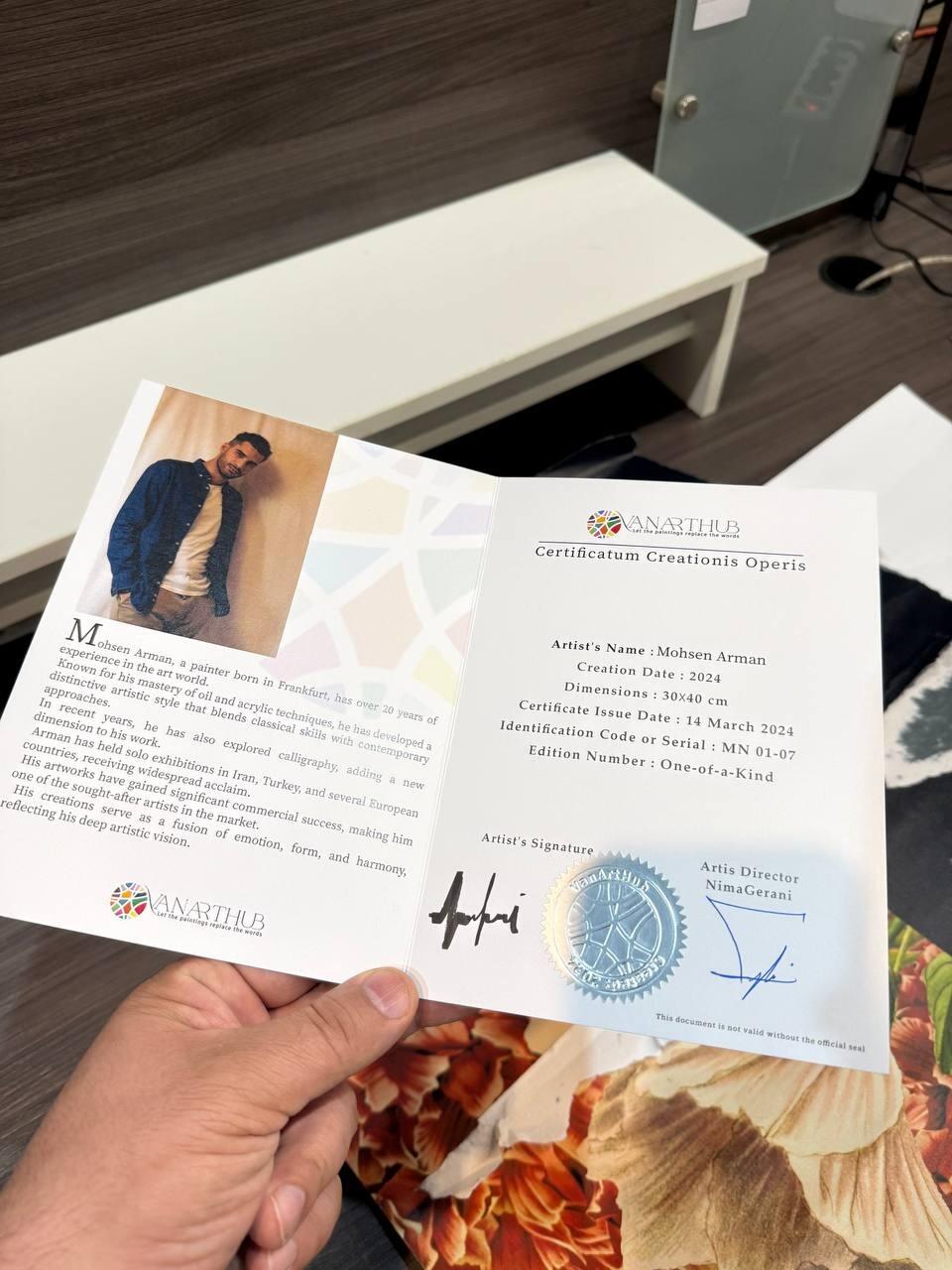
VanArtHub is a Vancouver gallery selling original, signed paintings, each with a Certificate of Authenticity, free fully insured shipping across Canada and the USA, and a 14-day trial. If a work's materials matter to you, we will find out exactly what the artist used before you commit. Start with the ink paintings collection.