Acid-Free, Archival, Conservation: What These Words Actually Mean
Updated By VanArtHub Curatorial TeamShare
Framing has a vocabulary problem. Three words get used almost interchangeably, they do not mean the same thing, and only one of them tells you what you actually need to know.
"Acid-free" means less than it sounds
It means the board is not acidic at the moment it is tested. It says nothing about what happens in fifteen years.
Here is why that matters. Most board is made from wood pulp, and wood pulp contains lignin, the compound that makes wood stiff. Lignin breaks down over time, especially with light and warmth, and as it breaks down it produces acid.
So a board can be entirely acid-free today, sit in a frame for a decade, and become acidic on its own. It then migrates that acid into whatever it is touching, which is your artwork.
The question to ask is whether it is acid-free and lignin-free. If a supplier will only say "acid-free", ask the second half. That one question separates a real claim from a marketing one.
"Archival" is not a standard at all
There is no governing definition. Anyone can print it on anything.
Sometimes it means genuinely good materials. Sometimes it means the same board with a better label. It is not a word to make a decision on.
"Conservation" is the useful one
Conservation-grade board is wood pulp that has been purified so the lignin and acid are removed, and usually buffered with an alkaline reserve to neutralise acid arriving from elsewhere. It is the sensible default for any original work and the difference in cost is small.
Museum grade, or cotton rag, is a step further: 100 percent cotton fibre, with no lignin in it to begin with. Worth it for anything valuable, irreplaceable, or intended to last generations.
What acid actually does
If you have ever opened an old frame and found a brown line burned around the edge of the image, exactly where the mat sat, you have seen it. The paper discolours, goes brittle, and takes on a stain in the precise shape of whatever was against it.
Because the mat touches the edges and the backing touches the entire reverse, it arrives from both directions at once. On cheap board it is visible in about ten to fifteen years, faster in a warm or bright room.
A paper conservator can sometimes reduce the staining. It is expensive, never complete, and the paper stays weakened. The only real answer is not to let it start.
The part everyone skips
People will pay for a good mat and then let ordinary corrugated cardboard go in behind the artwork, because nobody sees it.
The backing is in contact with the entire reverse of the sheet. It does more damage than the mat does. Corrugated cardboard is the worst common offender: highly acidic, and it prints its own ridge pattern into the back of the paper over time.
Everything in the package that touches the work has to be conservation grade: mat, backing, hinges and tape. One cheap component undoes the rest.
One case where buffered is wrong
Buffering suits most paper. Some materials, notably certain photographic processes and protein-based media, do better unbuffered.
So if a piece is a photograph rather than a work on paper, say so, and it will be matted accordingly. It is a small distinction that occasionally matters a great deal.
How to check a frame you already own
Open it, or ask us to. Corrugated cardboard is obvious on sight. Grey or brown board with a yellowing edge is almost certainly acidic. Conservation board stays white or cream all the way through the core, so if you can see the bevel, look at the cut edge for a discoloured line.
What we use: conservation-grade mat board and backing on everything on paper, as standard rather than as an upgrade, and cotton rag where the piece warrants it. No ordinary card, no corrugated board, and no pressure-sensitive tape anywhere in the package.
More in acid-free mats and backing, our conservation framing standards, and the glazing and conservation hub.
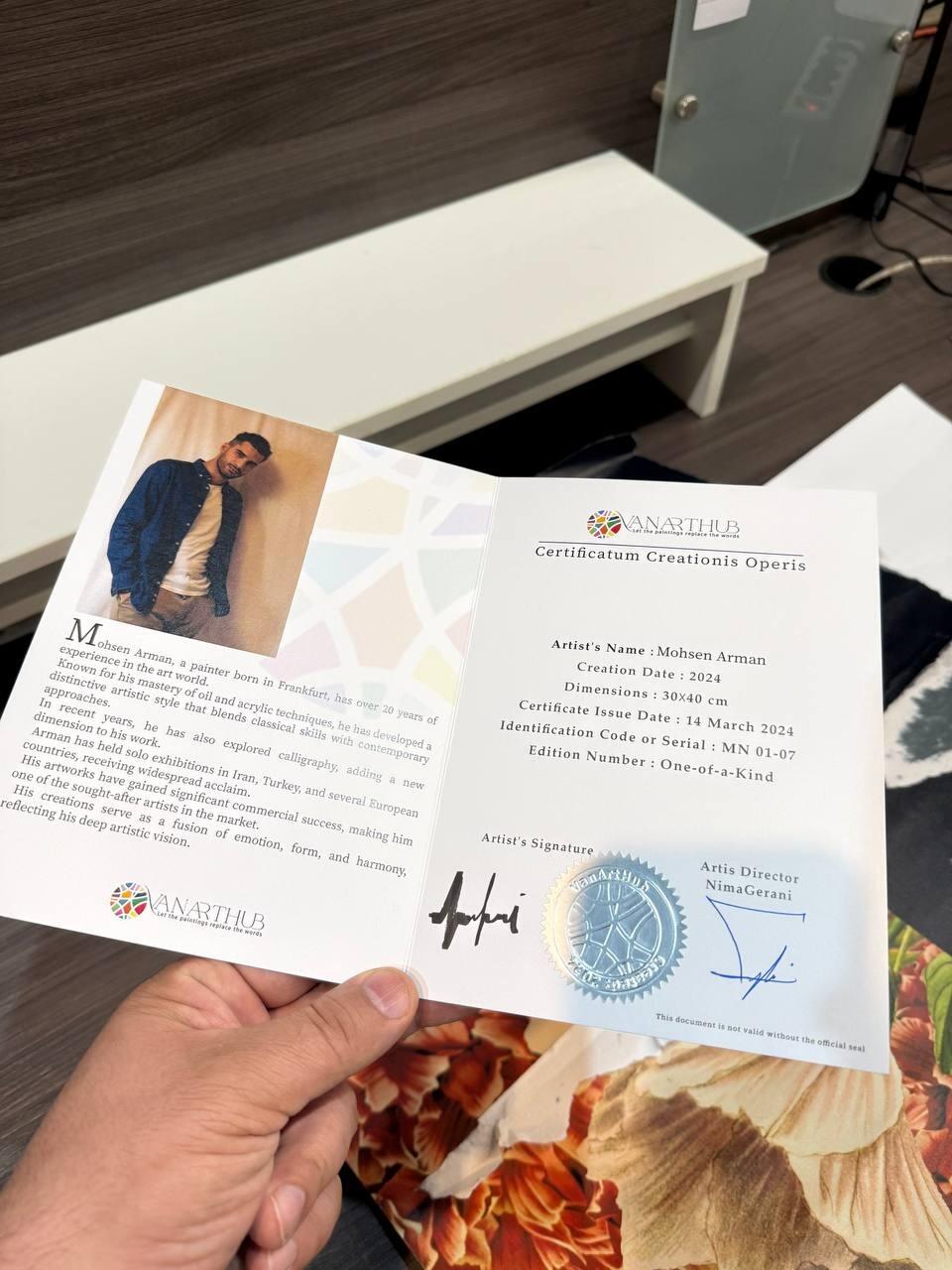
We frame in-house at our Vancouver gallery. Every piece we sell is a signed one-of-a-kind original with a Certificate of Authenticity, free insured shipping across Canada and the USA, and a 14-day trial.