Coffeehouse painting, called naqqashi-ye qahveh-khaneh in Persian, is a genre of large narrative paintings on canvas made for Iranian coffeehouses, showing scenes from the Shahnameh, from Persian romances and from the lives of the Shi'ite imams. The Encyclopaedia Iranica calls it "a special genre of Persian folk art, showing some affinities with Persian miniature painting". It is tied to naqqali, the Iranian art of dramatic storytelling, in which a storyteller, the naqqal, recited epic tales to coffeehouse customers. Its two great masters were Hossein Qollar-Aghasi, who died in 1966, and his pupil Mohammad Modabber, who died in 1967.
This page explains where the genre came from, how the storytellers used painted canvases, what the paintings show, and where examples are today. It also shows how Iran's modern artists collected and learned from these paintings. It is part of our guide to contemporary Iranian and Persian painting.
Key takeaways
- The Encyclopaedia Iranica says coffeehouse storytellers set up a painted screen and explained the story to customers, who paid them, and that the pictures usually showed episodes from the Shahnameh.
- A University of Michigan study names Hossein Qollar-Aghasi (died 1966) and his pupil Mohammad Modabber (died 1967) as the two great masters of coffeehouse painting.
- Modabber's painting of the story of Moslem ibn Aqil and his fatal trip to Kufa, made c. 1950 in oil on canvas and 204 by 253 cm, is in the National Museum of Iran in Tehran.
- UNESCO inscribed Naqqali, Iranian dramatic storytelling, on its List of Intangible Cultural Heritage in Need of Urgent Safeguarding in 2011.
- The Encyclopaedia Iranica records 711 coffeehouses in Tehran in 1929, 3,500 in late 1978 or early 1979, and more than 900 in 1990.
The coffeehouse in Iran
A qahveh-khaneh, or coffeehouse, is a place where drinks are prepared and served and where people meet. The Encyclopaedia Iranica entry by Ali Al-e Dawud considers it probable that the first coffeehouses in Iran opened under Shah Tahmasp (1524 to 1576), though the sources first mention them under Shah Abbas I, when several opened in Qazvin, Isfahan and other cities. Tea replaced coffee as the popular drink in the late 19th century, but the old name stayed.
From the start, coffeehouses were places for poetry and stories. The Iranica says poets recited their own work and Ferdowsi's, and names Molla Momen Kashi as famous for reciting the Shahnameh in Safavid times. Many coffeehouses kept a sardam, a raised platform often covered with lambskin, where the storyteller, preacher or poet sat. Recitations were planned for winter nights, and in later times they came "almost always" from the Shahnameh.
Naqqali: the storyteller's art
UNESCO describes naqqali as "the oldest form of dramatic performance in the Islamic Republic of Iran". The naqqal tells stories in verse or prose with gestures and movement, and sometimes with instrumental music and painted scrolls. UNESCO says naqqals wear simple costumes but may put on old helmets or armoured jackets to act out battles, that female naqqals perform before mixed audiences, and that the art needs "a retentive memory and the ability to improvise with skill".
The painted canvas was part of the performance. The University of Michigan study, written by Chaeri Lee, describes the pardeh, a portable large painting that some professional storytellers used. The canvas was covered with a white cloth, which the storyteller or his partner uncovered bit by bit while telling the tale, pointing to each figure with a cane. The study says coffeehouse painting is linked in visual terms to these canvases, with one difference: coffeehouse paintings carry the written names of each figure and event, so a viewer can follow them without a storyteller.
What the paintings show
The Encyclopaedia Iranica lists the usual subjects: episodes from the Shahnameh, "for example, the tragedy of Rostam and Sohrab or the exploits of Esfandiar", romances such as Yusof and Zoleykha, and the lives of the Shi'ite imams. The University of Michigan study adds scenes of Shi'ite martyrology, above all the battle of Karbala, which were displayed during the month of Moharram. Our page on the Shahnameh in painting summarises the epic's most painted stories.
The paintings are large and crowded. Modabber's painting of the story of Moslem ibn Aqil, now in the National Museum of Iran, measures 204 by 253 cm and is divided into thirty numbered panels that wind inward, counterclockwise, to the largest panel at the centre. The Michigan study says the painters often called their work khayal-pardazi, "dream-work", a term that points to its imaginative quality.
Most coffeehouse painters were anonymous bazaar artists. The Iranica says "a few signed their works at the bottom", and that screen painters were generally specialists in the work.
Coffeehouse paintings and events named in the sources, with dates and places
| Work or event |
Date |
Where it is or was |
Source |
| Mohammad Modabber, painting of the story of Moslem ibn Aqil and his trip to Kufa, oil on canvas, 204 by 253 cm |
c. 1950 |
National Museum of Iran, Tehran |
University of Michigan |
| Hossein Qollar-Aghasi, The Tragedy of Karbala |
1951 |
Sa'dabad Palace, Tehran |
University of Michigan |
| Coffeehouse painting of the battle of Karbala |
Photographed 2016 |
Tekiyeh (a hall for religious drama) of the Tajrish bazaar, Tehran |
University of Michigan |
| An Exhibition of Coffee-House Painting |
1967 |
Iran-America Society, Tehran |
Encyclopaedia Iranica |
| Les Peintres Populaires de la Légende Persane (Popular Painters of the Persian Legend) |
1970 |
Maison de l'Iran, Paris |
University of Michigan |
The masters
Hossein Qollar-Aghasi
The University of Michigan study calls Hossein Qollar-Aghasi, who died in 1966, one of the two great masters of the tradition and the teacher of Mohammad Modabber. His The Tragedy of Karbala of 1951 is at the Sa'dabad Palace in Tehran, and a reduced copy hangs in a café-gallery in the city. The Encyclopaedia Iranica also names his son, Fath-Allah Qollar-Aghasi, among the most admired coffeehouse painters.
Mohammad Modabber
Mohammad Modabber, who died in 1967, painted his Moslem ibn Aqil canvas for the coffeehouse of Mashhadi Safar Eskandariyan in the Sayyed Esmail bazaar in Tehran, according to the Michigan study, and signed it. The painting travelled to Paris in 1970 for the exhibition Les Peintres Populaires de la Légende Persane at the Maison de l'Iran, held at the same time as the 1970 Shiraz Arts Festival.
The Encyclopaedia Iranica lists a fourth name among the most admired recent painters, Hasan Esmail.
Decline and survival
Storytelling in coffeehouses faded in the 20th century. The Encyclopaedia Iranica explains that after radio broadcasting began in Iran in 1940, customers wanted news of the world, especially of the Second World War, more than stories, and reciters "soon began to disappear". Television reduced the profession further, and many former customers moved to modern cafés and restaurants. The numbers show the change: 711 coffeehouses in Tehran in 1929, 3,500 in late 1978 or early 1979 according to the guild, and more than 900 by 1990.
UNESCO gives the same reasons for the decline of naqqali: fewer coffeehouses, new forms of entertainment, ageing master performers, called morsheds, and less interest among young people. That is why it placed naqqali on its urgent safeguarding list in 2011.
The paintings themselves survived. The Iranica says the genre was "in danger of extinction under the impact of Western tastes" but that many examples were preserved by collectors. The Michigan study says coffeehouse paintings are now displayed in museums and public spaces during Moharram, reaching a wider audience than the male customers of the old coffeehouses, and that many traditional restaurants in Tehran hang copies on their walls.
How modern artists learned from coffeehouse painting
Iran's modernists took coffeehouse painting seriously. The University of Michigan study says Monir Shahroudy Farmanfarmaian and Marcos Grigorian were keen collectors and brought the paintings to the attention of Queen Farah, who added them to national collections. The Guggenheim Museum's page for its 2015 exhibition of Farmanfarmaian's mirror works lists coffeehouse paintings, "a popular form of Iranian narrative paintings", among the local art forms that shaped her after she returned to Iran in 1957. The Metropolitan Museum of Art says the Saqqakhaneh painter Sadegh Tabrizi drew on coffeehouse paintings, which it describes as large narrative canvases that storytellers carried, displayed and narrated.
Our history of modern Iranian art from the Saqqakhaneh movement to today covers these artists, and our page on Iranian women artists covers Farmanfarmaian's career.
For collectors
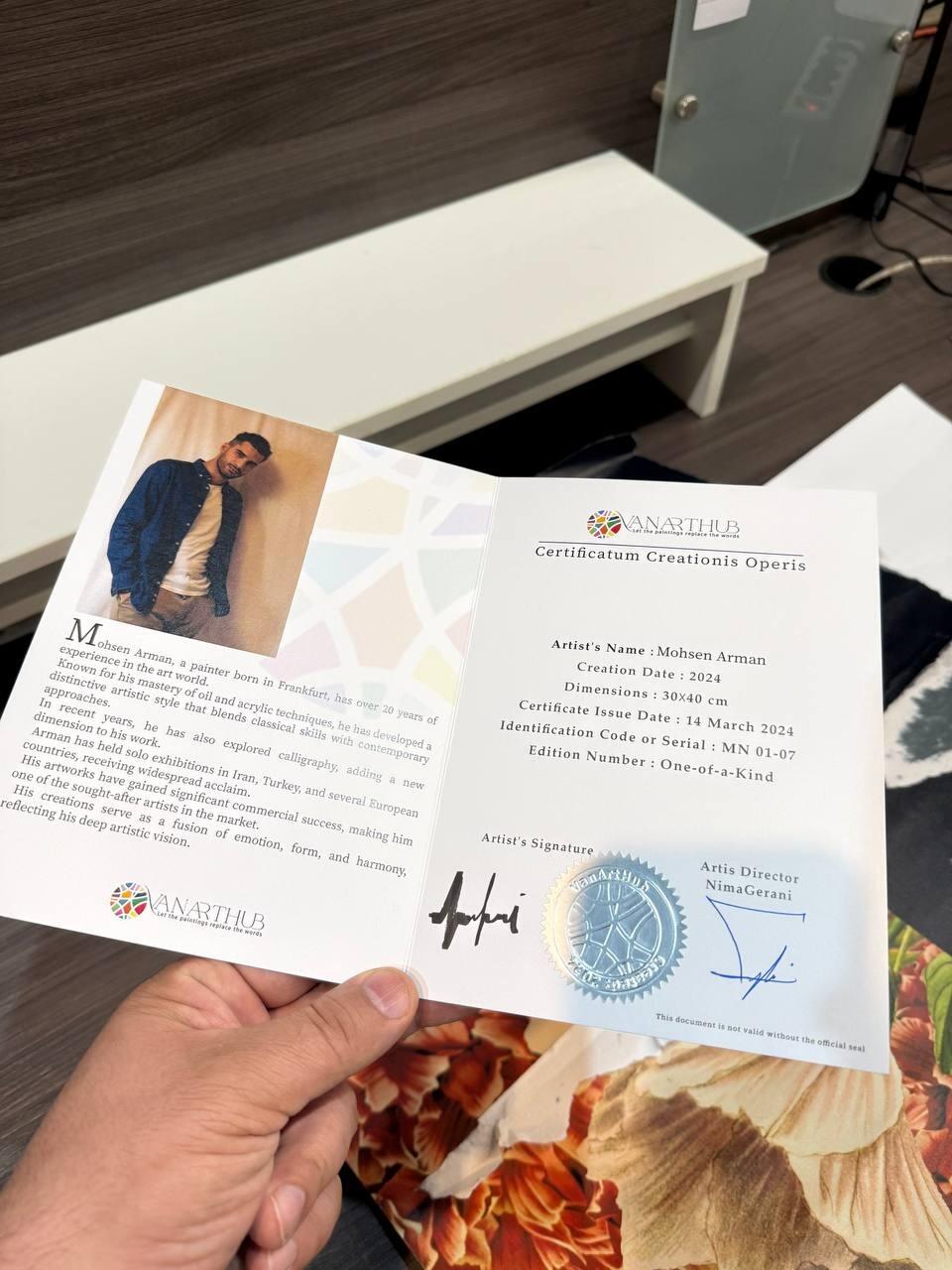
Coffeehouse paintings are large works on canvas, and the best-known ones named in the sources are in public collections in Tehran. Because restaurants and cafés also display copies, a buyer offered a coffeehouse painting should ask the same questions as for any other work: who made it, whether it is signed, where it has been, and what documents come with it. For works coming from Iran, US and Canadian sanctions rules also apply. Our page on how to buy contemporary Iranian art explains what those rules say.
Coffeehouse painters, like the manuscript painters before them, show many scenes in one frame. Our page on symbols in Persian painting explains how to read the images that recur in Persian painting.
Frequently asked questions
What is coffeehouse painting?
Coffeehouse painting is a genre of large narrative paintings on canvas made for Iranian coffeehouses, showing scenes from the Shahnameh, Persian romances and the lives of the Shi'ite imams. The Encyclopaedia Iranica calls it a special genre of Persian folk art with affinities to miniature painting, and notes that most of its painters were anonymous bazaar artists.
When did coffeehouse painting flourish?
Coffeehouse painting reached its best-known form in the mid-20th century: the key works of its two masters date from c. 1950 and 1951, and the masters died in 1966 and 1967. The University of Michigan study says the genre gained new appreciation in their lifetimes. Tehran saw An Exhibition of Coffee-House Painting at the Iran-America Society in 1967, and Paris a show in 1970.
What is naqqali?
Naqqali is Iranian dramatic storytelling, in which a performer called a naqqal tells stories in verse or prose with gestures, movement and sometimes music and painted scrolls. UNESCO describes naqqali as the oldest form of dramatic performance in Iran, once performed in coffeehouses, nomads' tents, houses and old caravanserais.
When did UNESCO list naqqali as intangible heritage?
UNESCO inscribed Naqqali, Iranian dramatic storytelling, in 2011 on its List of Intangible Cultural Heritage in Need of Urgent Safeguarding. UNESCO gives the reasons as the decline of coffeehouses, new forms of entertainment, the ageing of master performers called morsheds, and falling interest among younger people.
Who was Hossein Qollar-Aghasi?
Hossein Qollar-Aghasi was one of the two great masters of Iranian coffeehouse painting and the teacher of Mohammad Modabber, according to the University of Michigan. He died in 1966. His painting The Tragedy of Karbala, dated 1951, is at the Sa'dabad Palace in Tehran, and his son Fath-Allah Qollar-Aghasi also painted in the genre.
Who was Mohammad Modabber?
Mohammad Modabber was a master of Iranian coffeehouse painting and a pupil of Hossein Qollar-Aghasi, and he died in 1967. His signed painting of the story of Moslem ibn Aqil, made c. 1950 in oil on canvas and measuring 204 by 253 cm, is in the National Museum of Iran and travelled to Paris in 1970.
What stories do coffeehouse paintings show?
Coffeehouse paintings show stories from the Shahnameh, such as the tragedy of Rostam and Sohrab and the exploits of Esfandiar, romances such as Yusof and Zoleykha, and the lives of the Shi'ite imams, according to the Encyclopaedia Iranica. The University of Michigan adds scenes of the battle of Karbala, displayed during the month of Moharram.
What is a pardeh in Persian storytelling?
A pardeh is a portable large painted canvas that some Iranian storytellers used during a performance. The University of Michigan study says the pardeh was covered with a white cloth that the storyteller uncovered bit by bit, pointing to figures with a cane. Coffeehouse paintings, unlike the pardeh, carry written names for each figure.
Where can you see coffeehouse paintings today?
Coffeehouse paintings can be seen today in Tehran's public collections and public spaces. Mohammad Modabber's painting of the story of Moslem ibn Aqil is in the National Museum of Iran, Hossein Qollar-Aghasi's The Tragedy of Karbala of 1951 is at the Sa'dabad Palace, and a Karbala painting hangs in the tekiyeh of the Tajrish bazaar.
Why did coffeehouse storytelling decline?
Coffeehouse storytelling declined after radio broadcasting began in Iran in 1940, according to the Encyclopaedia Iranica, because customers wanted world news, especially of the Second World War, more than stories. Television later hit the profession harder, and many customers moved to modern cafés and restaurants.
Which modern Iranian artists collected coffeehouse paintings?
Monir Shahroudy Farmanfarmaian and Marcos Grigorian were keen collectors of coffeehouse paintings, according to the University of Michigan, and brought them to the attention of Queen Farah, who added them to national collections. The Guggenheim lists coffeehouse paintings among the art forms that shaped Farmanfarmaian after her return to Iran in 1957.
How many coffeehouses did Tehran have?
Tehran had 711 coffeehouses in 1929, owned by 613 proprietors, according to the Encyclopaedia Iranica. The guild counted 3,500 open in late 1978 or early 1979, but by 1990 the number still open in the city had fallen to more than 900 but fewer than 1,000, as proprietors and staff moved to other work.
References
-
COFFEEHOUSE. Ali Al-e Dawud, Encyclopaedia Iranica. Published 15 December 1992; last updated 8 September 2016; Internet Archive copy of 23 May 2025. Accessed 26 September 2026. The origins of the coffeehouse, recitations, the sardam, coffeehouse painting and its subjects and painters, the 1967 exhibition, the effect of radio and television, and the counts of coffeehouses in Tehran.
-
Naqqashi-ye qahveh-khaneh (coffeehouse painting). Chaeri Lee, in The Emamzadeh Yahya at Varamin, edited by Keelan Overton, University of Michigan. Published 15 January 2025. Accessed 26 September 2026. Modabber's painting, its size, panels and location; Qollar-Aghasi and his 1951 painting; the pardeh; khayal-pardazi; the 1970 Paris exhibition; collectors; and present-day display.
-
Naqqali, Iranian dramatic story-telling. UNESCO Intangible Cultural Heritage. Inscribed 2011. Accessed 26 September 2026. The description of naqqali, its performers and the reasons for its decline.
-
Monir Shahroudy Farmanfarmaian: Infinite Possibility. Mirror Works and Drawings, 1974 to 2014. Solomon R. Guggenheim Museum. Published 2015. Accessed 26 September 2026. Coffeehouse paintings among the influences on Farmanfarmaian after her return to Iran.
-
Artists of the Saqqakhana Movement (Heilbrunn Timeline of Art History). Maryam Ekhtiar and Julia Rooney, The Metropolitan Museum of Art. Published April 2014; Internet Archive copy of 16 December 2024. Accessed 26 September 2026. Sadegh Tabrizi's use of coffeehouse paintings and their use by storytellers.
Checked 26 September 2026. If something here is out of date, write to us and we will correct it.