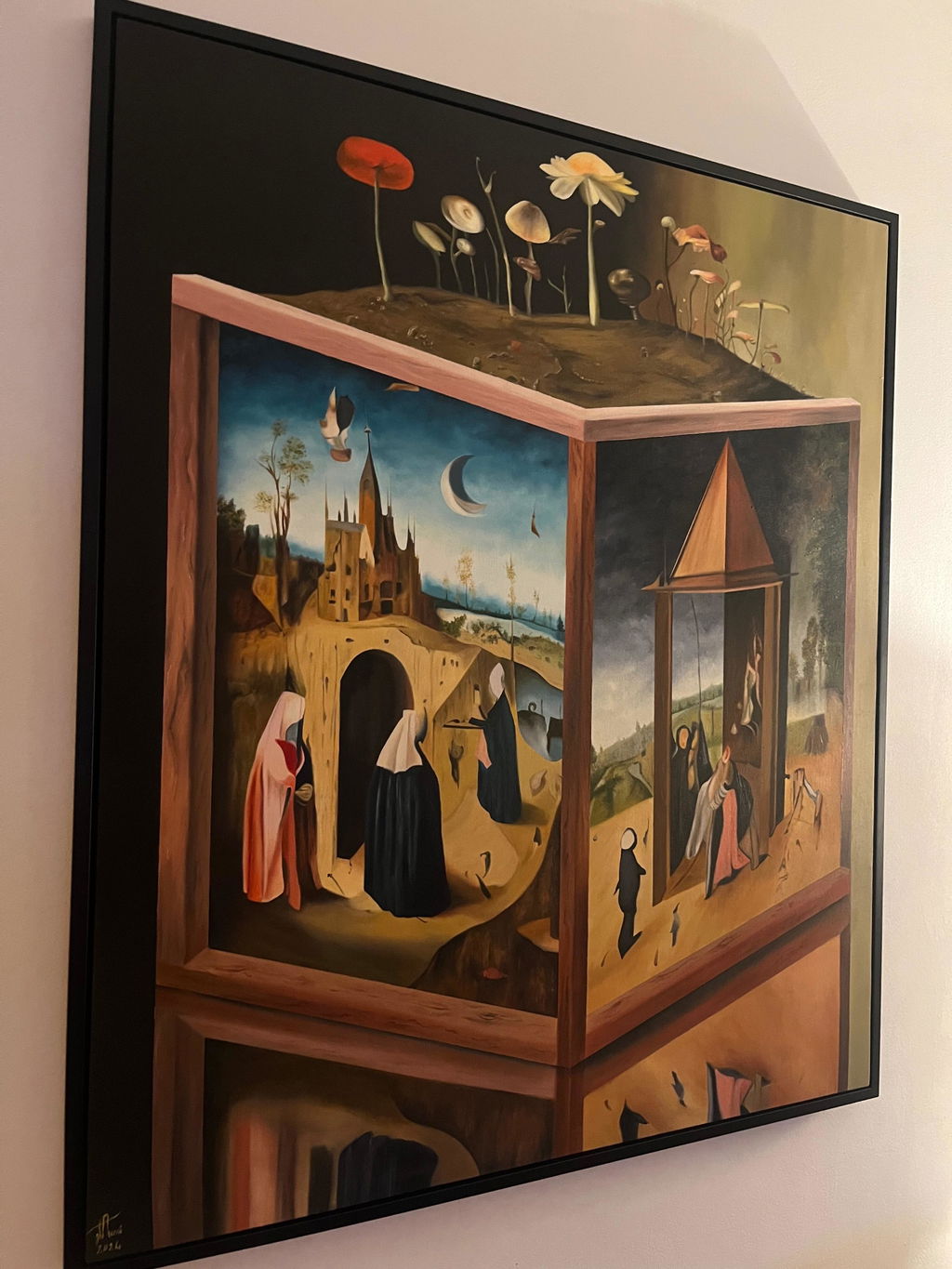
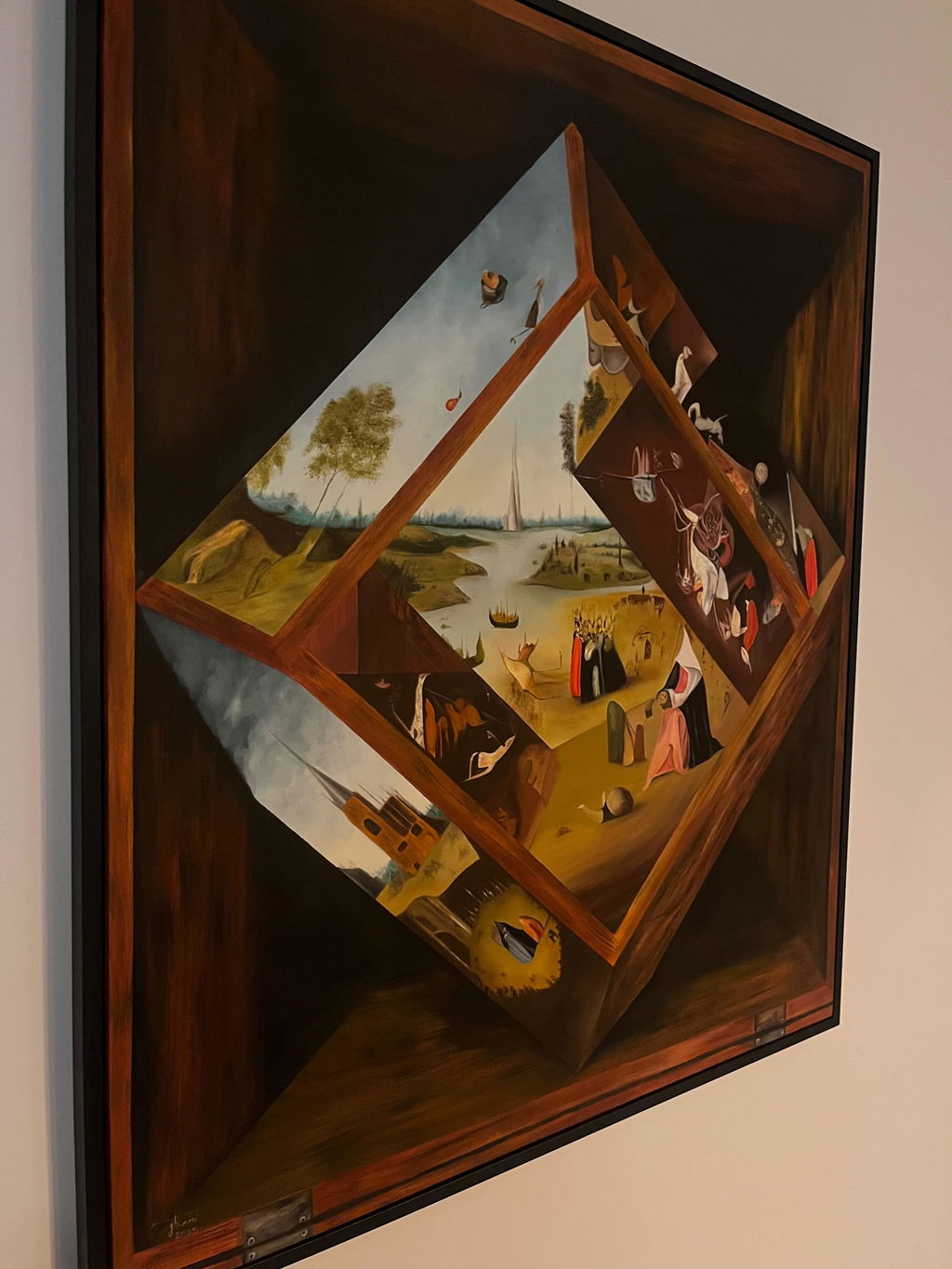
Yalda night, Shab-e Yalda or Shab-e Chelleh, is the Persian celebration of the longest night of the year, held on the last night of autumn. Families gather at the homes of their elders around a table of red fruits such as pomegranates and watermelon, recite poetry and tell stories, and many open the Divan of Hafez to read their fortune; UNESCO inscribed Yalda/Chella on its Representative List of the Intangible Cultural Heritage of Humanity in 2022.
This page explains the night, its date in 2026, its table and its customs as named sources describe them, then looks at how the poetry of Hafez and scenes of night appear in Persian painting, and ends with advice on giving art for Yalda. It is part of our guide to contemporary Iranian and Persian painting.
Key takeaways
- UNESCO inscribed Yalda/Chella in 2022 as a practice of Iran and Afghanistan, and describes it as "a traditional celebration of the sun and the warmth of life".
- UNESCO says the Yalda table holds a lamp for light, water for cleanliness, and red fruits such as pomegranates, watermelons, beetroots, jujube and grapes "to symbolize warmth".
- The Encyclopaedia Iranica says the night opens the great chelleh, a forty-day period of winter that runs from 1 Dey, 22 December, to 11 Bahman, 30 January.
- In 2026 Yalda falls on the evening of Monday, December 21; the US Naval Observatory puts the solstice at 20:50 UTC that day, which is 12:50 PM Pacific.
- The Encyclopaedia Iranica names divination with the Divan of Hafez, fal-e Hafez, as a favourite pastime of the night.
- The name Yalda is Syriac and means "nativity", and the Encyclopaedia Iranica says the night usually has negative connotations in Persian poetry because it is the longest and darkest of the year.
What Yalda is
UNESCO describes Yalda/Chella as a celebration practised in Iran and Afghanistan on the last night of autumn, when "families gather at the houses of elders and sit around a table adorned with a series of symbolic objects and foods". Broth, sweets, dried fruits and nuts made for the occasion are eaten during the gathering. The evening's activities range from reciting poetry and telling stories to games, music and giving gifts to new in-laws, brides and children. UNESCO says the event celebrates cultural identity, nature, respect for women, friendship, hospitality, cultural diversity and peaceful coexistence, and that it is passed down in families, helped in recent years by radio, television, publications and social media.
Two names: Yalda and Chelleh
The night has two names. The Encyclopaedia Iranica entry by Anna Krasnowolska on the winter festival of Sada says that in Islamic Persia the night of the winter solstice, "the last night of autumn", was known by its Syriac name, Shab-e Yalda, "the night of nativity", or as Shab-e Chelleh. The Iranica also notes the night's connection with Christianity.
Chelleh means a period of forty days. The Encyclopaedia Iranica entry by Mahmoud Omidsalar explains that the traditional calendar has three chellehs in a year, one in summer and two in winter. The great chelleh begins on the first day of winter, 1 Dey, which is 22 December, and lasts forty days to 11 Bahman, 30 January. The night that opens it is Shab-e Chelleh, or Shab-e Yalda. The Iranica says the coldest days of winter are the last four days of the great chelleh and the first four of the small one, which follows it.
Yalda is one of several Persian festivals of the dark season. The Sada entry records a festival on the first day of Dey called Khorram-ruz, "joyful day", or Navad-ruz, "ninety days", because ninety days were left until Nowruz. Our page on Nowruz in Persian art covers the spring festival at the other end of the winter.
Yalda 2026: the date
The Iranian calendar year 1405 began on 21 March 2026. The astronomer M. Heydari-Malayeri explains that the first six months of the Iranian calendar have 31 days and the next five have 30. Counting forward, the first day of Dey, the first day of winter in the calendar, falls on Tuesday, December 22, 2026. Yalda is the night before, so it falls on the evening of Monday, December 21, 2026. The US Naval Observatory gives the winter solstice as 20:50 UTC on December 21, 2026, which is 12:50 AM on December 22 in Tehran, during that same night.
Yalda 2026 in Pacific time, with the gift ship-by dates
| Event |
Date and time |
Note |
Source |
| Winter solstice |
Monday, December 21, 2026, 12:50 PM Pacific (20:50 UTC; 3:50 PM in Toronto) |
The moment of the December solstice |
US Naval Observatory |
| Yalda night (Shab-e Yalda, Shab-e Chelleh) |
Evening of Monday, December 21, 2026 |
The last night of autumn, 30 Azar 1405 |
UNESCO; Encyclopaedia Iranica; Heydari-Malayeri |
| 1 Dey 1405 |
Tuesday, December 22, 2026 |
First day of winter and of the great chelleh |
Encyclopaedia Iranica |
| Ship-by date for a gift in Canada |
Thursday, December 10, 2026 |
The gallery confirms dates when you order |
VanArtHub |
| Ship-by date for a gift in the USA |
Monday, December 7, 2026 |
The gallery confirms dates when you order |
VanArtHub |
The Yalda table
The table is the centre of the evening. The objects and foods on it, and their meanings, come from two sources: UNESCO's description and the customs gathered in the Encyclopaedia Iranica.
What goes on the Yalda table and what the sources say it means
| Item |
Meaning or belief |
Source |
| A lamp |
Light |
UNESCO |
| Water |
Cleanliness |
UNESCO |
| Red fruits: pomegranates, watermelons, beetroots, jujube, grapes |
Warmth |
UNESCO |
| Watermelon kept from summer |
Eating it is believed to protect a person's health in the summer heat |
Encyclopaedia Iranica |
| Carrots, pears, pomegranates and green olives |
In Khorasan, eating them is believed to protect against insect bites, especially scorpions |
Encyclopaedia Iranica |
| Broth, sweets, dried fruits and nuts |
Prepared for the occasion and eaten during the gathering |
UNESCO |
| A copy of the Divan of Hafez |
Used to read each person's fortune |
Encyclopaedia Iranica |
The Iranica adds that in some areas forty kinds of food should be served on the night of chelleh. Our page on symbols in Persian painting explains the pomegranate's place among the red fruits and what the sources say about it.
The customs of the night
Family, food and stories
The Encyclopaedia Iranica says that in most parts of Iran the extended family gathers for a fine dinner on the night of chelleh, followed by many kinds of fruit and sweets kept for the night. After dinner the older people entertain the others with tales and anecdotes. UNESCO likewise lists reciting poetry and storytelling first among the evening's activities.
Reading Hafez: the fal-e Hafez
The Iranica calls divination with the Divan of Hafez, fal-e Hafez, "another favorite and prevalent pastime of the night of chelleh". In his overview of the poet, Ehsan Yarshater writes that the Divan is "widely used in bibliomancy", which means telling the future by opening a book at random, and that Hafez's popular title is lesan al-ghayb, "the Tongue of the Unseen".
The Encyclopaedia Iranica entry on divination explains how a group reading works. The Divan is opened at random. Starting with the poem on that page, each poem is read in the name of one person in the group, in the order in which they are seated, and that poem is the person's fal, or fortune. One or three lines from the next poem, called the shahed, "witness", are then read. A poem already used for one person cannot serve for a second. The Iranica on chelleh adds a warning from folk belief: a person should not consult the Divan more than three times, "or the poet may get angry".
Gifts
Yalda is also a night for gifts. UNESCO names gifts to new in-laws, brides and children. The Encyclopaedia Iranica records that young engaged men send their fiancées a platter of seven kinds of fruit and a variety of gifts on the night of chelleh, and that in some areas the young woman's family sends gifts back.
The winter that follows Yalda
Yalda opens a season with its own folklore, and the Encyclopaedia Iranica entry on the chellehs records much of it. The two winter chellehs are imagined as two brothers, Ahman and Bahman, who argue during the four coldest days at the end of the great chelleh and the four at the start of the small one, a stretch called charchar, "four-four". The younger brother, Bahman, mocks the older for not making the cold harsh enough to hurt people and flocks. He says that with as much time he would freeze the unborn colts. Ahman answers that Bahman can do nothing, because "the spring arrives on your heels".
After the small chelleh comes a cold spell of seven or ten days in the month of Esfand, called sarma-ye pirezan, "the old woman's cold". The Iranica tells one version of its story: an old woman whose camels had not yet mated asked for the cold to last longer, because camels mate only in the cold, and her wish was granted.
Fire marks the dark season too. The Iranica entry on Sada says Iran's Zoroastrians keep a fire festival in mid-December, one hundred days before Nowruz, called Sada in Kerman and Hiromba in Yazd, and that the scholar Mary Boyce considered it older than the Sada held in the month of Bahman.
Yalda and night in Persian poetry and art
The longest night in poetry
The Encyclopaedia Iranica entry on Sada says that because Shab-e Yalda is the longest and darkest night of the year, and because of its link with Christianity, it "usually has negative connotations in Persian poetry". The entry cites examples from Manuchehri, Onsori, Naser-e Khosrow, Khaqani and Saadi.
The painted Divan of Hafez
The book read on Yalda is one of the most painted books in Persian art. The Encyclopaedia Iranica entry by Priscilla P. Soucek on Hafez and the visual arts says the 16th century was the high point for illustrated copies of the Divan, that the largest group was produced in Shiraz, and that the finest of those date to the 1580s. Its painters showed scenes suggested by single lines, such as gatherings in taverns and mosques. In the 17th century, illustrators drew lightly tinted couples, and one copy in the Chester Beatty Library in Dublin holds 490 tinted drawings. Our page on Persian poetry in painting follows the painted Hafez from the 15th century to the calligraphy pictures of the 20th.
Night scenes and winter festivals in painting
Persian painters also painted night itself. Harvard Art Museums holds Nighttime in a City, attributed to Mir Sayyid Ali and made in Tabriz in or near 1540, in opaque watercolour, gold and silver on paper. The museum's record calls it "probably a folio from an illustrated manuscript".
The other great winter festival of Iran has a famous painting. The Metropolitan Museum of Art owns The Feast of Sada, a page from the Shahnameh of Shah Tahmasp attributed to Sultan Muhammad. The Met's curator Maryam Ekhtiar explains that the feast celebrates the discovery of fire. The Encyclopaedia Iranica calls Sada "the most important Iranian winter festival". Our page on the Shahnameh in painting describes the manuscript it comes from.
Night and light in our gallery
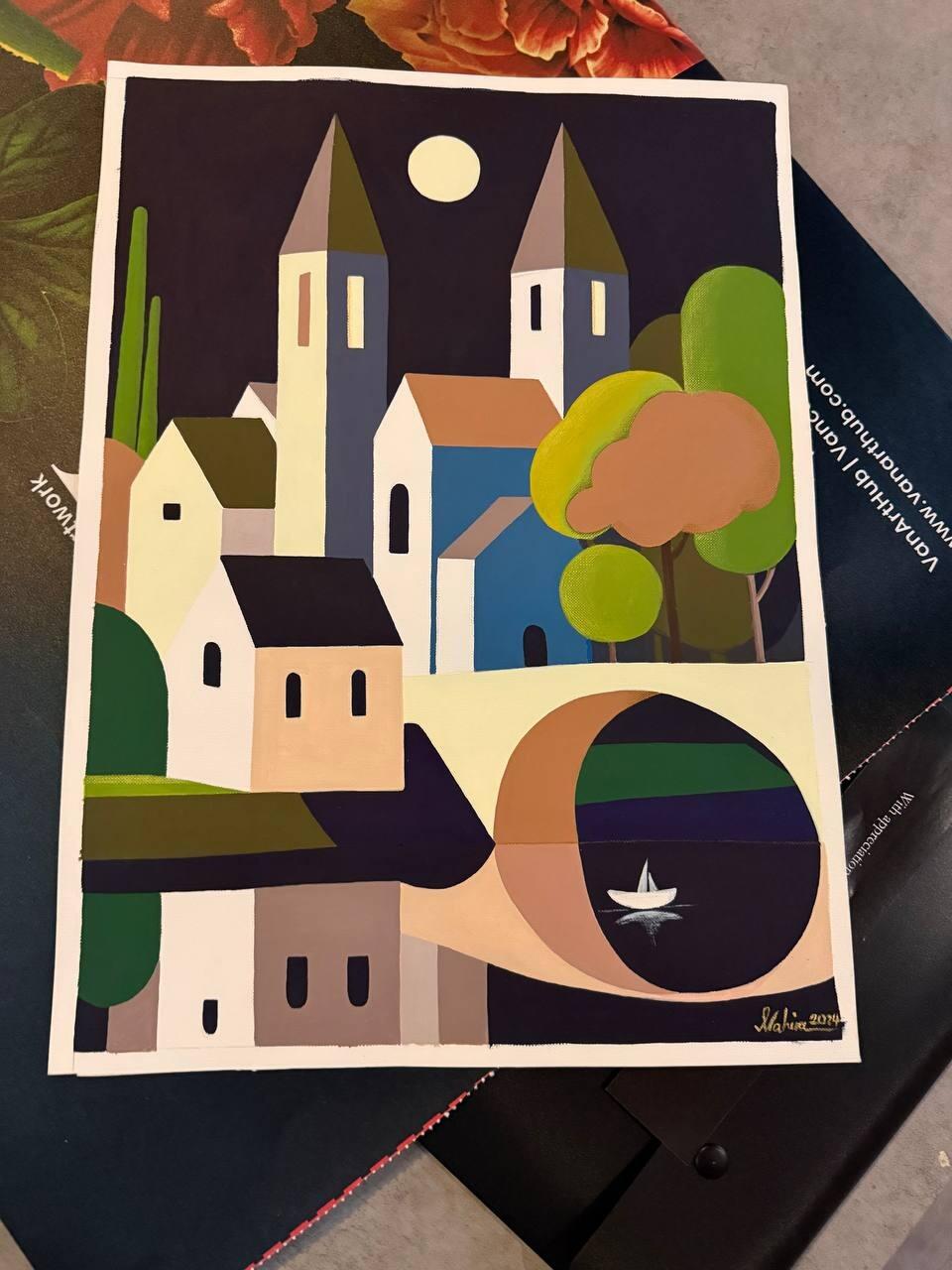
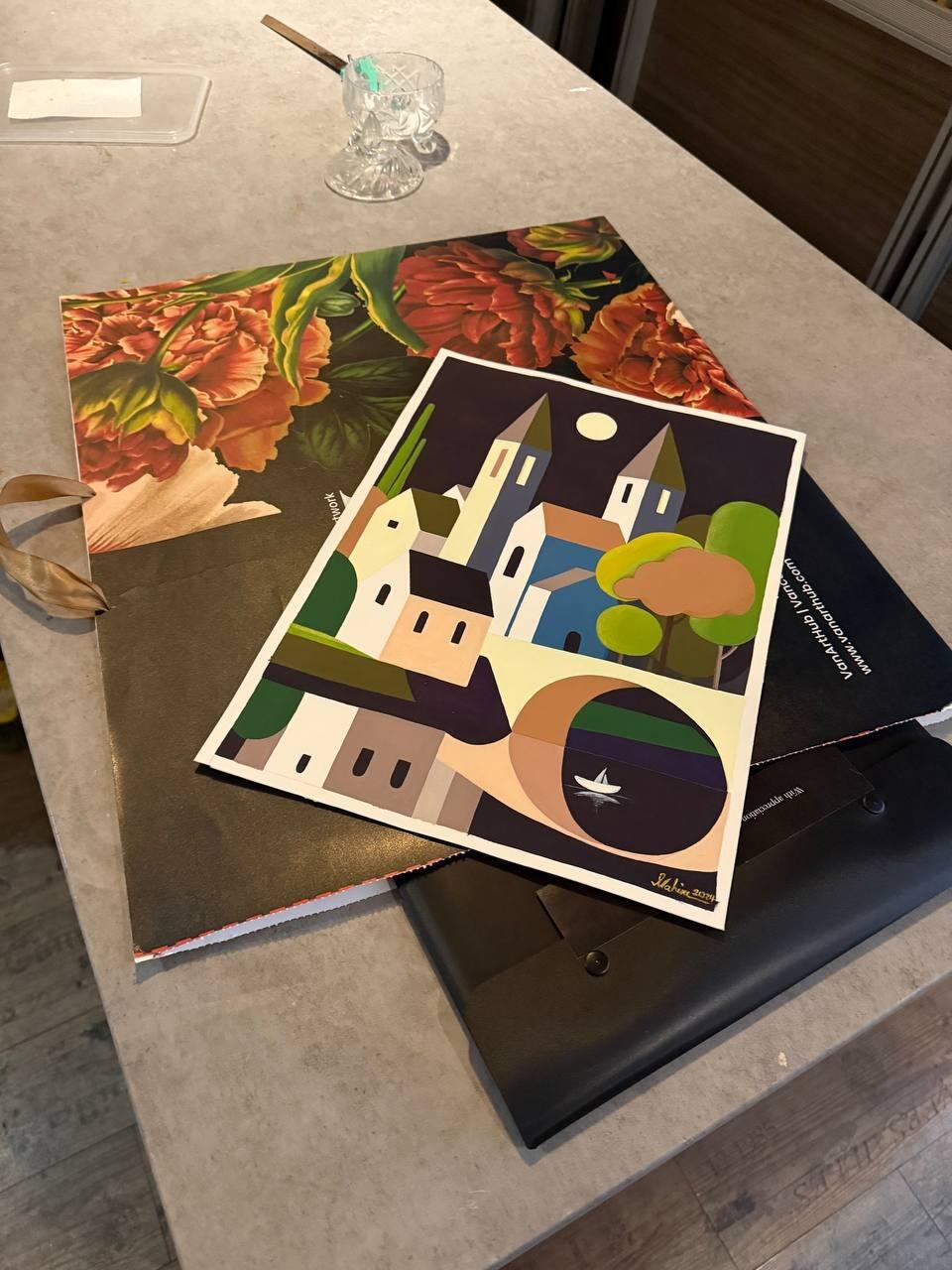
Kamal al-Din Ghotb, who has practised Persian painting for 41 years, works in the classical miniature tradition in oil and gold on paper. His Mi'raj paints the night ascension told in the classical Mi'raj-nama manuscripts. Its product page describes "a haloed rider" crossing "a lapis sky" on the winged steed Buraq, "carried upward through scrolling gold clouds by a host of angels", framed by couplets in nastaliq script. See his other pages in the Kamal al-Din Ghotb collection. For the colours of the Yalda table, browse our red paintings, and for night scenes by Canadian painters, our nocturne paintings.
Giving art for Yalda
A painting can join the gifts of the night. Yalda 2026 falls four days before Christmas, so our holiday art gifts page also applies. To arrive in time, a painting should ship by Thursday, December 10, 2026 for addresses in Canada, and by Monday, December 7, 2026 for addresses in the USA. We confirm the dates when you order.
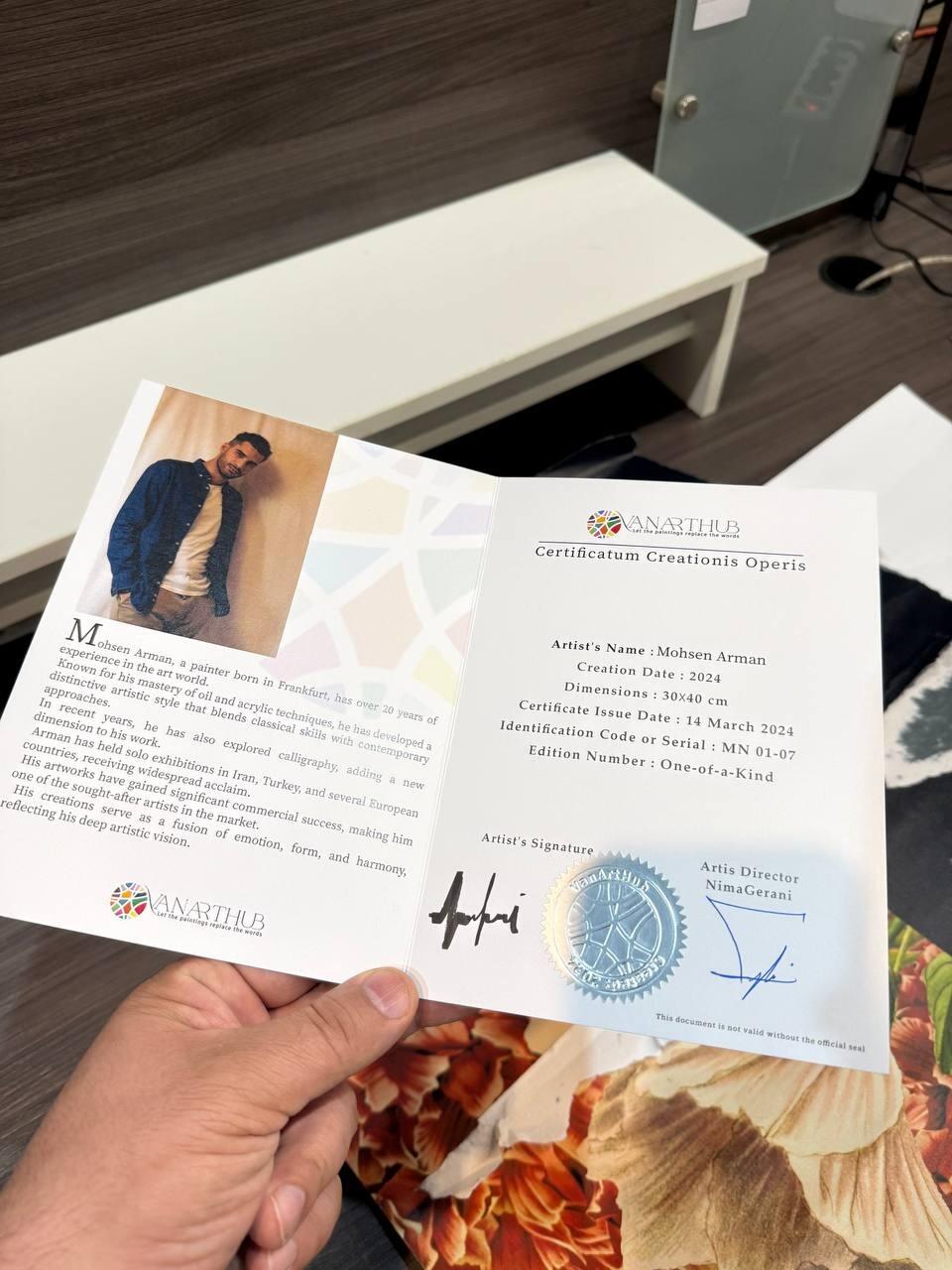
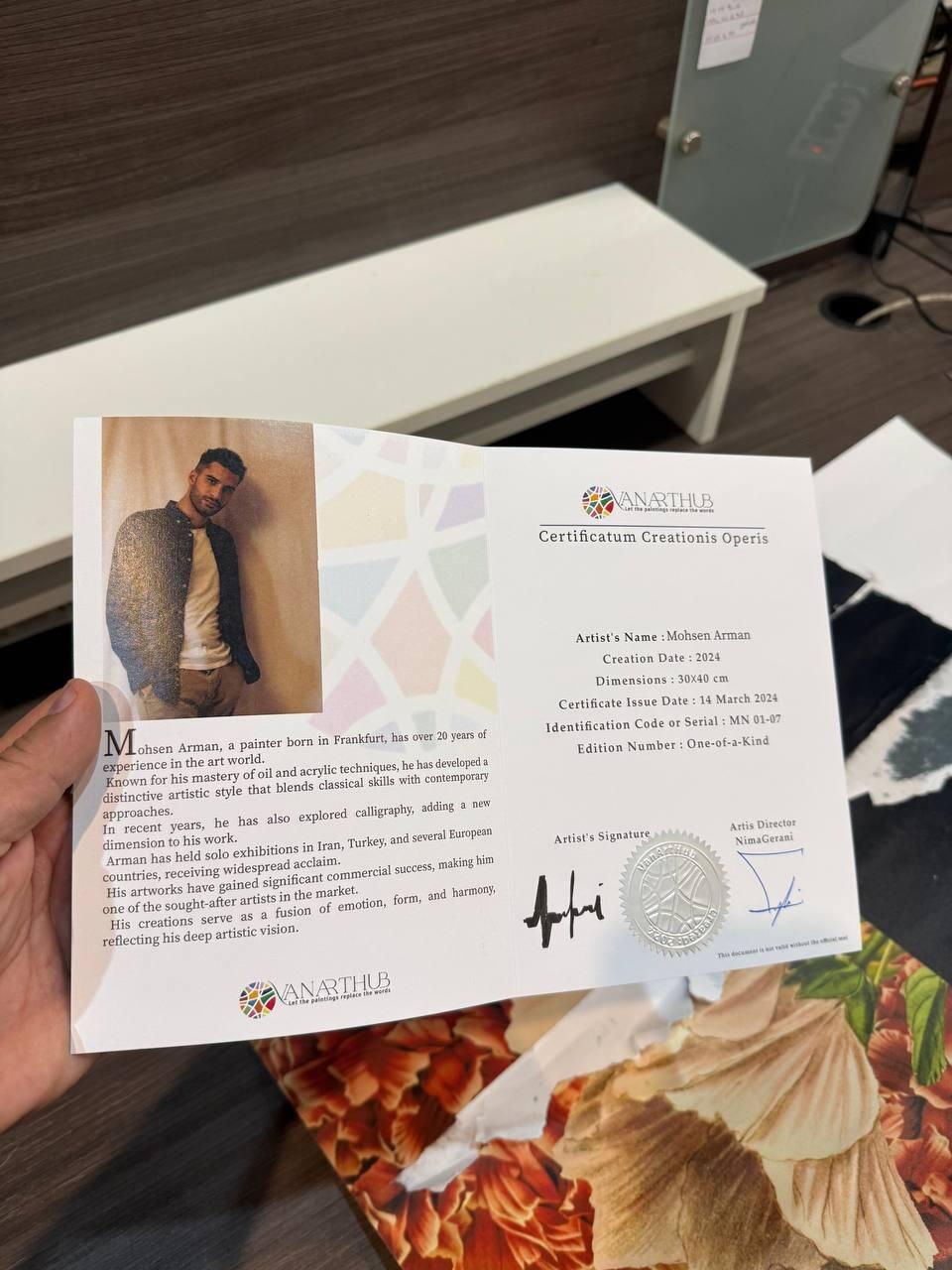
Shipping is free and insured, and every piece comes with a Certificate of Authenticity. You can ship it to yourself to give in person, or straight to the person receiving it. If the painting is not right, it can come back within 14 days of delivery for a full refund, and we pay the return shipping. Our page on how to buy art as a gift explains the steps, and our art gifts page gathers ideas by occasion.
Frequently asked questions
What is Yalda night?
Yalda night, Shab-e Yalda or Shab-e Chelleh, is the Persian celebration of the last night of autumn, the longest night of the year. UNESCO, which inscribed Yalda/Chella in 2022, describes families gathering at the homes of elders around a table with a lamp, water and red fruits, reciting poetry, telling stories and giving gifts.
When is Yalda in 2026?
Yalda in 2026 falls on the evening of Monday, December 21. The Iranian year 1405 began on 21 March 2026, so the first day of Dey, the first day of winter, is Tuesday, December 22, and Yalda is the night before. The US Naval Observatory puts the solstice at 12:50 PM Pacific on December 21.
What does the word Yalda mean?
Yalda is a Syriac word meaning "nativity", according to the Encyclopaedia Iranica entry on the Sada festival. In Islamic Persia the night of the winter solstice was known by this Syriac name as Shab-e Yalda, "the night of nativity", and also as Shab-e Chelleh, the night that opens the forty-day great chelleh of winter.
What is the chelleh of winter?
The chelleh of winter is a forty-day period in the traditional Iranian calendar. The Encyclopaedia Iranica says the great chelleh begins on 1 Dey, 22 December, and lasts to 11 Bahman, 30 January, followed by a small chelleh of twenty days. Its opening night is Shab-e Chelleh, the same night as Yalda.
When did UNESCO inscribe Yalda?
UNESCO inscribed Yalda/Chella on the Representative List of the Intangible Cultural Heritage of Humanity in 2022, as a shared element of Iran and Afghanistan. UNESCO calls the night "a traditional celebration of the sun and the warmth of life" and says it is passed down informally in families.
Why is watermelon eaten on Yalda night?
Watermelon is eaten on Yalda night because of a belief recorded in the Encyclopaedia Iranica: eating watermelon kept from summer on the night of chelleh protects a person's health during the next summer's heat. UNESCO lists watermelon among the red fruits on the Yalda table, which it says symbolize warmth.
What is fal-e Hafez?
Fal-e Hafez is fortune-telling with the Divan of Hafez, a favourite pastime of Yalda night according to the Encyclopaedia Iranica. The book is opened at random and each poem is read in turn for one person in the group, in seating order. One or three lines from the next poem, the shahed, are then read as a witness.
Why is Hafez called the Tongue of the Unseen?
Hafez is called lesan al-ghayb, the Tongue of the Unseen, because of stories about his inspired predictions, according to Ehsan Yarshater in the Encyclopaedia Iranica. Yarshater writes that the Divan of Hafez is widely used for telling fortunes, and that if a Persian home has one book of poetry, it is likely to be his.
How does Yalda appear in Persian poetry?
Yalda appears in Persian poetry mostly as an image of darkness. The Encyclopaedia Iranica says Shab-e Yalda usually has negative connotations for the poets because it is the longest and darkest night, and because of its link with Christianity. It cites examples in Manuchehri, Onsori, Naser-e Khosrow, Khaqani and Saadi.
What gifts are given on Yalda night?
Gifts on Yalda night go to new in-laws, brides and children, according to UNESCO. The Encyclopaedia Iranica adds that young engaged men send their fiancées a platter of seven kinds of fruit with other gifts on the night of chelleh, and that in some areas the young woman's family returns the favour with gifts of its own.
When should a painting ship to arrive for Yalda 2026?
A painting from VanArtHub meant for Yalda 2026 should ship by Thursday, December 10, 2026 to addresses in Canada and by Monday, December 7, 2026 to addresses in the USA. The gallery confirms the dates at order. Shipping is free and insured, and the painting can be returned within 14 days of delivery for a full refund.
References
-
Yalda/Chella (English: a festival held on the last night of autumn). UNESCO Intangible Cultural Heritage. Inscribed 2022 (decision 17.COM 7.b.15). Accessed 27 September 2026. The description of the night, the table, the activities and the gifts.
-
CELLA (English: a forty-day period). Mahmoud Omidsalar, Encyclopaedia Iranica. Published 15 December 1990; Internet Archive copy of 26 July 2026. Accessed 27 September 2026. The chellehs of winter, the customs of the night, fal-e Hafez and gifts between engaged couples.
-
SADA. Anna Krasnowolska, Encyclopaedia Iranica. Published 15 August 2009; Internet Archive copy of 25 September 2026. Accessed 27 September 2026. The Syriac name Yalda, the night in Persian poetry, and the winter festivals.
-
DIVINATION. Mahmoud Omidsalar, Encyclopaedia Iranica. Published 15 December 1995; Internet Archive copy of 10 September 2026. Accessed 27 September 2026. How a group reading of the Divan of Hafez works.
-
HAFEZ i. An Overview. Ehsan Yarshater, Encyclopaedia Iranica. Published 15 December 2002; Internet Archive copy of 7 September 2026. Accessed 27 September 2026. The Divan in Persian homes, bibliomancy and the title Tongue of the Unseen.
-
HAFEZ xii. Hafez and the Visual Arts. Priscilla P. Soucek, Encyclopaedia Iranica. Published 15 December 2002; Internet Archive copy of 29 August 2026. Accessed 27 September 2026. Illustrated copies of the Divan of Hafez and the 17th-century tinted drawings.
-
Nighttime in a City, probably a folio from an illustrated manuscript. Harvard Art Museums. Undated collection record. Accessed 27 September 2026. Attribution, date, place and materials.
-
Celebrating Nauruz with The Shahnama of Shah Tahmasp. Rachel High, interview with Maryam Ekhtiar, The Metropolitan Museum of Art. Published 17 March 2015; Internet Archive copy of 3 October 2025. Accessed 27 September 2026. The Feast of Sada and its meaning.
-
Earth's Seasons and Apsides, 2026. Astronomical Applications Department, US Naval Observatory. Undated data service. Accessed 27 September 2026. The time of the December solstice in 2026.
-
A concise review of the Iranian calendar. M. Heydari-Malayeri, arXiv. Published 27 September 2004. Accessed 27 September 2026. The lengths of the months of the Iranian calendar.
-
Solar Hijri calendar. Wikipedia. Undated. Accessed 27 September 2026. The table showing that the year 1405 began on 21 March 2026.
-
Mi'raj, by Kamal al-Din Ghotb. VanArtHub. Undated. Accessed 27 September 2026. The gallery's description of the painting.
-
How to Buy Art as a Gift. VanArtHub. Undated. Accessed 27 September 2026. Shipping a gift to the buyer or the recipient, and the 14-day return window.
Checked 27 September 2026. If something here is out of date, write to us and we will correct it.