Nowruz, "New Day", is the Persian new year, and it begins at the moment of the spring equinox in March. UNESCO first listed Nowruz as intangible cultural heritage in 2009, and in Persian art the festival appears in painted royal feasts, spring gardens, decorated eggs and, according to some scholars, the gift-bearers carved on the stairways of Persepolis.
This page explains the festival and the symbols of its Haft-sin table as named sources describe them, shows where Nowruz appears in Persian art, and ends with advice on giving a painting as a Nowruz gift in 2027. It is part of our guide to contemporary Iranian and Persian painting.
Key takeaways
- The United Nations says UNESCO added Nowruz to its Representative List of the Intangible Cultural Heritage of Humanity on 30 September 2009, and that the General Assembly recognized 21 March as the International Day of Nowruz in 2010.
- In 2027 the spring equinox falls on Saturday, March 20, at 20:25 UTC by the US Naval Observatory's figure, which is 1:25 PM in Vancouver and Los Angeles.
- Because the equinox comes after noon in Tehran, the first day of the Iranian year 1406 is Sunday, March 21, 2027, following the rule described by the astronomer M. Heydari-Malayeri.
- The Encyclopaedia Iranica says the Haft-sin table "as we know it is not old" and seems to have come into fashion only in the last century, while many of its objects carry older meanings.
- Britannica says the Shahnameh credits King Jamshid with founding Nowruz, and names a British Library Shahnameh made in Shiraz in 1560 that illustrates Khosrow celebrating the festival.
- The Encyclopaedia Iranica records that many scholars believe Persepolis was built for celebrating Nowruz, while others say there is no evidence for Nowruz in the Achaemenid period.
What Nowruz is
Mary Boyce begins her Encyclopaedia Iranica entry by calling Nowruz "the holiest and most joyful festival of the Zoroastrian year". Zoroastrianism was the state religion of Iran under the Sasanian kings, from 224 to 651, according to Britannica. Boyce says that as far back as records go, Nowruz has been a celebration of early spring, "when the sun begins to regain strength and overcome winter's cold and darkness". Its name first appears in Pahlavi texts of the Sasanian era, as nog roz.
Britannica explains that Nowruz falls on the first day of the month of Farvardin in the Iranian calendar, which is usually March 21 in the Western calendar. It began in the Zoroastrian religion and is now a largely secular festival in Iran and in many countries with Persian cultural influence, including Iraq, India, Afghanistan and much of Central Asia. Iranians abroad keep it too. The current UNESCO listing is shared by 13 countries: Afghanistan, Azerbaijan, India, Iran, Iraq, Kazakhstan, Kyrgyzstan, Mongolia, Pakistan, Tajikistan, Turkiye, Turkmenistan and Uzbekistan. Mongolia joined in 2024.
The festival has been joined to Islamic tradition as well. The Encyclopaedia Iranica entry by A. Shapur Shahbazi on Nowruz in the Islamic period cites a tradition that the Prophet Muhammad accepted a bowl of sweets as a Nowruz gift, and says the Saljuq sultan Malekshah fixed the start of the year at the spring equinox in 1079.
The days around Nowruz
Nowruz sits inside a season of customs. Britannica describes Chaharshanbe Suri, held on the Tuesday evening before Nowruz, the eve of the last Wednesday of the year, when people jump over bonfires. Maryam Ekhtiar, a curator in the Department of Islamic Art at the Metropolitan Museum of Art, says the jump is "thought to rid the jumper of the bad and bring in the good". Britannica adds that houses are cleaned before the new year, and that the holiday ends on the 13th day with Sizdah Bedar, when families picnic outdoors. The Encyclopaedia Iranica says that on this day people throw away the green sprouts from the Haft-sin table.
Nowruz 2027: the dates
The Iranian year begins at the exact moment of the spring equinox, called tahvil-e sal, "the turn of the year". The astronomer M. Heydari-Malayeri explains the rule for the calendar date: if the equinox falls before noon in Tehran, that day is the first day of the year, and if it falls after noon, the next day is. In 2027 the equinox falls at 20:25 UTC on March 20, according to the US Naval Observatory. In Tehran that is 11:55 PM, after noon, so the new year day in Iran is Sunday, March 21, 2027. The table of Solar Hijri years on Wikipedia gives the same date for the start of the year 1406.
Nowruz 2027 in Pacific time, with the days around it
| Event |
Date and time |
What happens |
Source |
| Chaharshanbe Suri |
Evening of Tuesday, March 16, 2027 |
Bonfires on the eve of the last Wednesday of the year |
Britannica; Metropolitan Museum of Art |
| Spring equinox (tahvil-e sal) |
Saturday, March 20, 2027, 1:25 PM Pacific (20:25 UTC; 4:25 PM in Toronto) |
Families gather at the Haft-sin table at the turn of the year |
US Naval Observatory; Metropolitan Museum of Art |
| Nowruz, 1 Farvardin 1406 |
Sunday, March 21, 2027 |
New year day in Iran; visits, new clothes and gifts |
Heydari-Malayeri; Britannica |
| International Day of Nowruz |
March 21 every year |
Recognized by the UN General Assembly in 2010 |
United Nations |
| Sizdah Bedar, 13 Farvardin |
Friday, April 2, 2027 |
Outdoor picnics end the holiday |
Britannica; Encyclopaedia Iranica |
The dates for Chaharshanbe Suri and Sizdah Bedar are counted from the new year day using the rules in the sources: the last Wednesday before March 21, and the 13th day of Farvardin.
The Haft-sin table and what its items mean
Haft-sin means "seven S's". It is a cloth, sofreh, spread on a table or the floor, holding at least seven items whose Persian names begin with the letter sin, the Persian S, along with other objects. The Met's Maryam Ekhtiar says every household sets its own Haft-sin, and family members gather around it when the year changes. Britannica says the display belongs mainly to Iran, and that Kurds, Afghans and Tajiks keep Nowruz with other customs.
The sources give meanings for the items, and they do not always agree. The table below shows what each source says. Where a source gives no meaning for an item, the cell is left empty.
Items on the Haft-sin table and the meanings named sources give them
| Item |
What it is |
Meaning, according to Britannica |
Meaning, according to the Met's curator |
| Sabzeh |
Sprouted wheat, barley or lentils |
Growth; the centrepiece, a symbol of rebirth |
Rebirth |
| Samanu |
Sweet pudding made from sprouted wheat |
Strength |
Good food |
| Senjed |
A dried fruit: Britannica calls it lotus tree fruit, the Iranica jujube |
Love |
Love |
| Serkeh |
Vinegar |
Age and patience |
Age and patience |
| Sib |
Apple |
Beauty |
Health and beauty |
| Sir |
Garlic |
Health |
Medicine |
| Somaq |
Sumac berries |
Sunrise |
The colour of sunrise, when good conquers evil |
| Sekkeh |
Coins |
Prosperity |
Prosperity and wealth |
| Sonbol |
Hyacinth |
Spring |
Spring (hyacinth or narcissus) |
| Painted eggs |
Coloured eggs |
Fertility |
Fertility |
| Goldfish |
A fish in a bowl of water |
Progress |
Life |
| Mirror |
Placed at the head of the table |
Self-reflection |
The images of Creation, which ancient Persian belief placed on the first day of spring |
| Candles |
Beside the mirror |
Enlightenment |
Enlightenment and happiness |
| A book |
The Qur'an, the Shahnameh, the Divan of Hafez, or another holy book |
Wisdom |
|
An older layer of meaning
The Encyclopaedia Iranica entry on the Haft-sin, also by A. Shapur Shahbazi, adds history the other sources leave out. It says "the haft sin as we know it is not old": it is rarely mentioned by 19th-century travellers who described Nowruz, and seems to have come into fashion in the last century through the media. The entry also says the essential objects of the Nowruz table are ancient and full of meaning, and reads many of them through Zoroastrian belief. In that reading, the eggs stand for people, the milk for cattle, the candles for purifying fire and the coins for wealth. Garlic was valued as medicine and as protection against the evil eye, and the fish in its bowl recalls the Kara fish of Zoroastrian myth, which guards against harmful creatures.
The same entry records the book placed on the table: a copy of the Qur'an, with the Shahnameh or the Divan of Hafez also used. Britannica adds the Avesta for Zoroastrians, the Bible for Christians, a Torah or prayer book for Iran's Jews and the Kitab-i-Aqdas for Baha'is. So two of the most painted books in Persian art, the Shahnameh and the Divan of Hafez, can sit on the Nowruz table. Our pages on the Shahnameh in painting and Persian poetry in painting show how painters illustrated them.
Spring and the garden in Persian art
Persian painting is full of spring. Blossoming trees, flowering meadows, running water and walled gardens fill the backgrounds of court manuscripts. Our page on symbols in Persian painting explains what the sources say about the garden as paradise, the cypress, and the rose and the nightingale.
Poets linked these images to the new year. The Encyclopaedia Iranica entry on Nowruz in the Islamic period quotes Hafez, writing in the 14th century, that "the melody of the Nowruz breeze" rekindles the inner light and "inspires the song of the nightingale intoxicated by flowers". Mary Boyce's entry retells a spring festival from the Persian romance Vis and Ramin, where the king's banquet is held outdoors "under blossoming trees" with music and birdsong, while ordinary people celebrate in fields and gardens, racing horses, dancing and picking flowers. Boyce notes that scholars debate whether this passage describes Nowruz or a later spring festival.
Nowruz in painted manuscripts
Jamshid and the royal feast
The Shahnameh gives Nowruz its founding story. Britannica says that according to the Shahnameh, King Jamshid built a jewelled throne that rose into the sky and declared that day the "new day". Britannica illustrates its article with a page from a Shahnameh made in Shiraz in 1560, now in the British Library, showing Khosrow celebrating Nowruz.
The Met's Maryam Ekhtiar explains that every annual holiday was marked by a royal feast, a bazm, and that the Shahnameh of Shah Tahmasp shows the preparations for the Nowruz feast. In that painting, attributed to Mirza Ali and now in the Nasser D. Khalili Collection of Islamic Art, the ruler sits enthroned with a shallow wine cup and a handkerchief, both signs of royalty, while attendants and cooks bring wine and fruit and roast a lamb. The musician Barbad plays a string instrument called a barbat, hidden in a tree. The Met itself owns The Feast of Sada from the same manuscript, attributed to Sultan Muhammad and dated to the years near 1525. Ekhtiar says Sada celebrates the discovery of fire and falls fifty days before Nowruz.
Painted eggs at the Safavid court
Painted eggs link the Nowruz table to fine art. The Encyclopaedia Iranica entry on Nowruz in the Islamic period cites the French traveller Chardin, who described Nowruz at the Safavid court. On the eve of Nowruz, he wrote, people sent each other coloured eggs as gifts, and the shah gave some five hundred to the women of his household, "encased in gold and decorated with four miniature paintings". The custom continues on a public scale: Britannica shows giant decorated eggs set out in Mellat Park in Tehran in March 2016.
Nowruz and the reliefs of Persepolis
Persepolis is the group of stone palaces begun by the Achaemenid king Darius I the Great and completed by his successors, and looted and burned by Alexander of Macedon in 330 BCE, according to the Encyclopaedia Iranica. Our page on the history of Persian art places it in the wider story. Its stone stairways carry long carved processions. The Encyclopaedia Iranica entry on Persepolis by A. Shapur Shahbazi describes, on the Apadana, the great audience hall, twenty-three delegations of gift-bearers, each in its own national dress and each separated from the next by a cypress tree. On another stairway, dignitaries climb the steps holding a flower, a fruit or an egg.
Whether these scenes show Nowruz is an open question. The Iranica says many scholars, among them Herzfeld, Ghirshman and Porada, maintain that Persepolis was built as the site for celebrating Nowruz, while others, among them Nylander and Calmeyer, "deny that there is any evidence for celebrating Nowruz in the Achaemenid period". The entry's author adds that the case for Nowruz "cannot be taken lightly". Britannica also presents both sides: some scholars suggest the reliefs show tribute brought to the king at a Nowruz festival, and others call this "a much later explanation".
Later tradition made the link for them. The Iranica says Iranians came to credit the ruins to the legendary king Jamshid, who was believed to have founded Nowruz when his palace was built. The site's Persian name, Takht-e Jamshid, "Jamshid's Throne", comes from that belief.
Giving a painting as a Nowruz gift
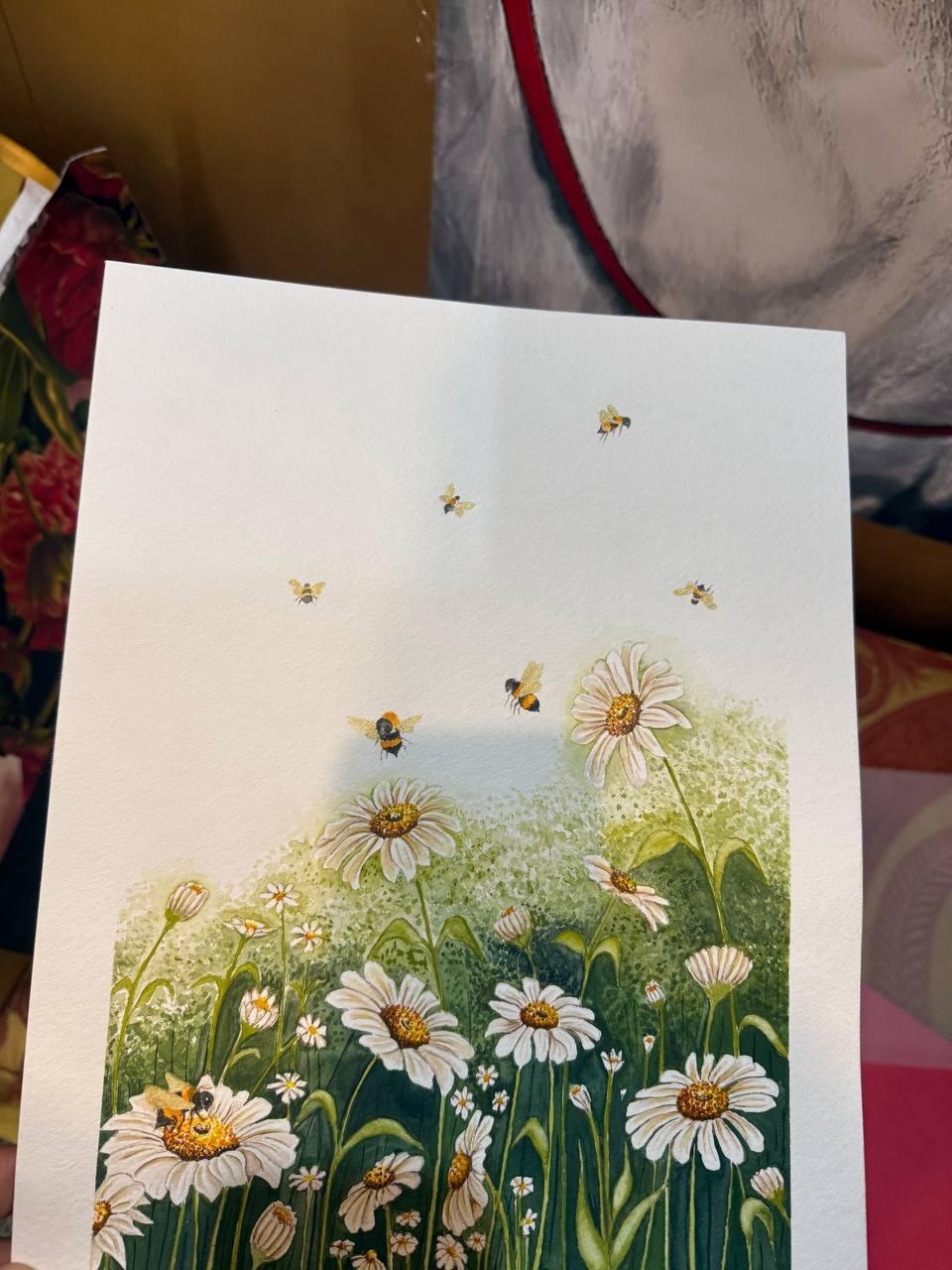
Gifts belong to Nowruz. The Met's Maryam Ekhtiar says that at Nowruz people wear new clothes, visit their loved ones, and the older family members give the younger ones gifts. Mary Boyce records that in the Zoroastrian villages she studied, friends exchanged token gifts, "typically sprays of cypress and pine, or pomegranates". An original painting is a gift that stays in the home after the table is cleared, and a spring subject fits the season.
Ship-by dates for Nowruz 2027
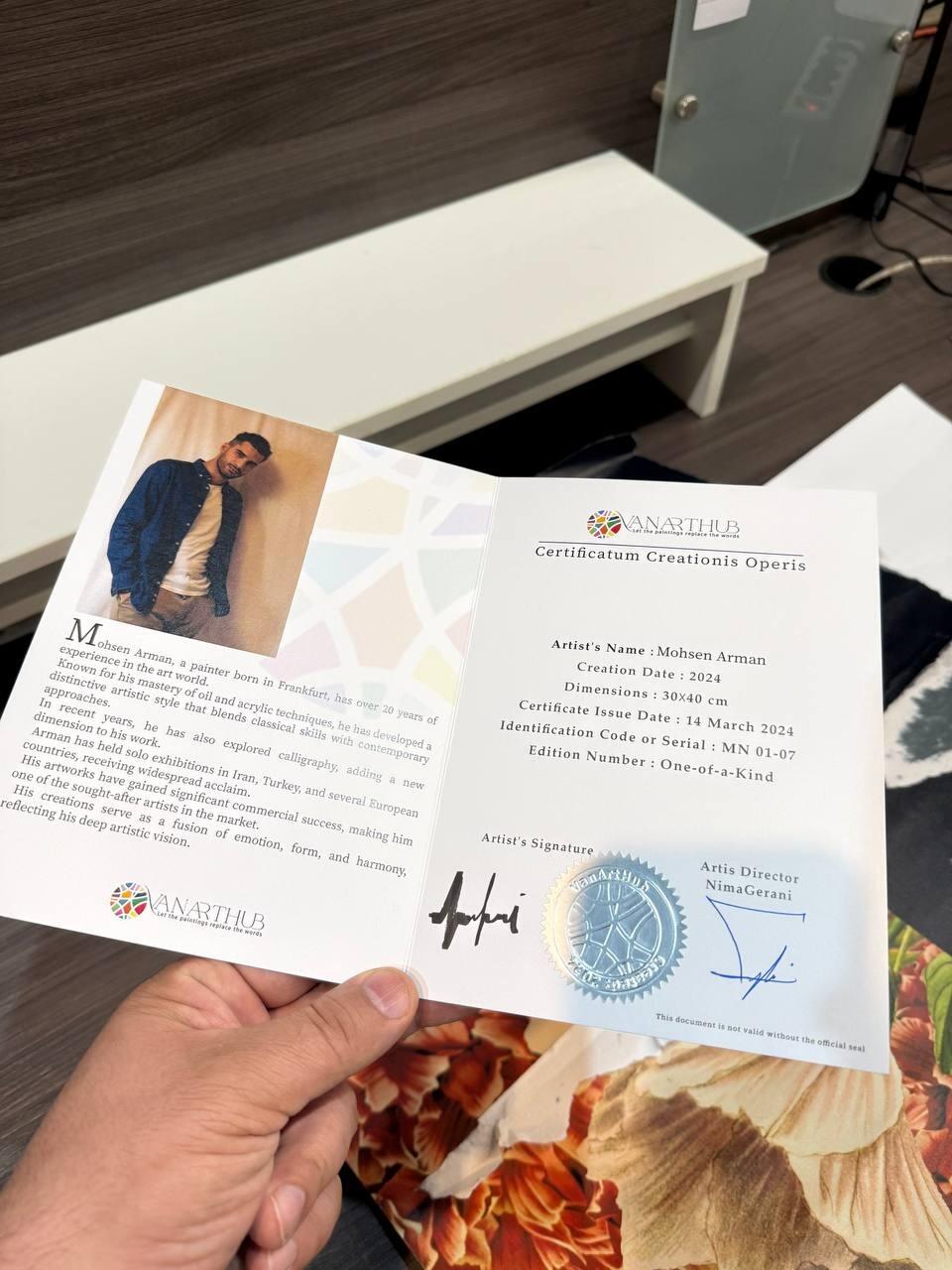
To arrive before the equinox on Saturday, March 20, 2027, a painting from our gallery should ship by Wednesday, March 10, 2027 for addresses in Canada, and by Friday, March 5, 2027 for addresses in the USA. We confirm the dates when you order. Shipping is free and insured, and every piece comes with a Certificate of Authenticity. You can ship it to yourself to give in person or straight to the person receiving it. If the painting is not right, it can come back within 14 days of delivery for a full refund, and we pay the return shipping. Our page on how to buy art as a gift explains how this works, and our art gifts page shows ideas by occasion.
Spring subjects in our gallery
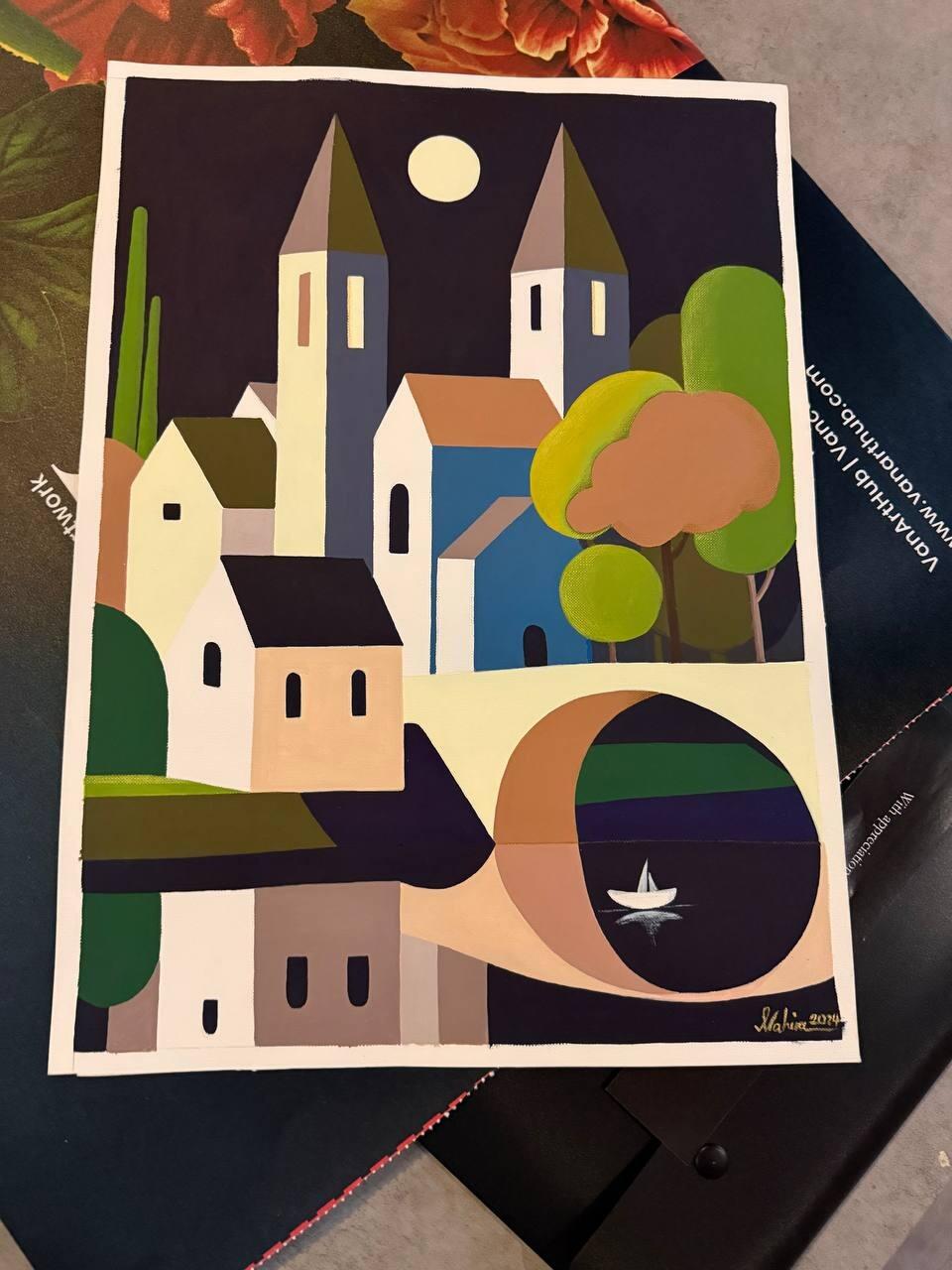
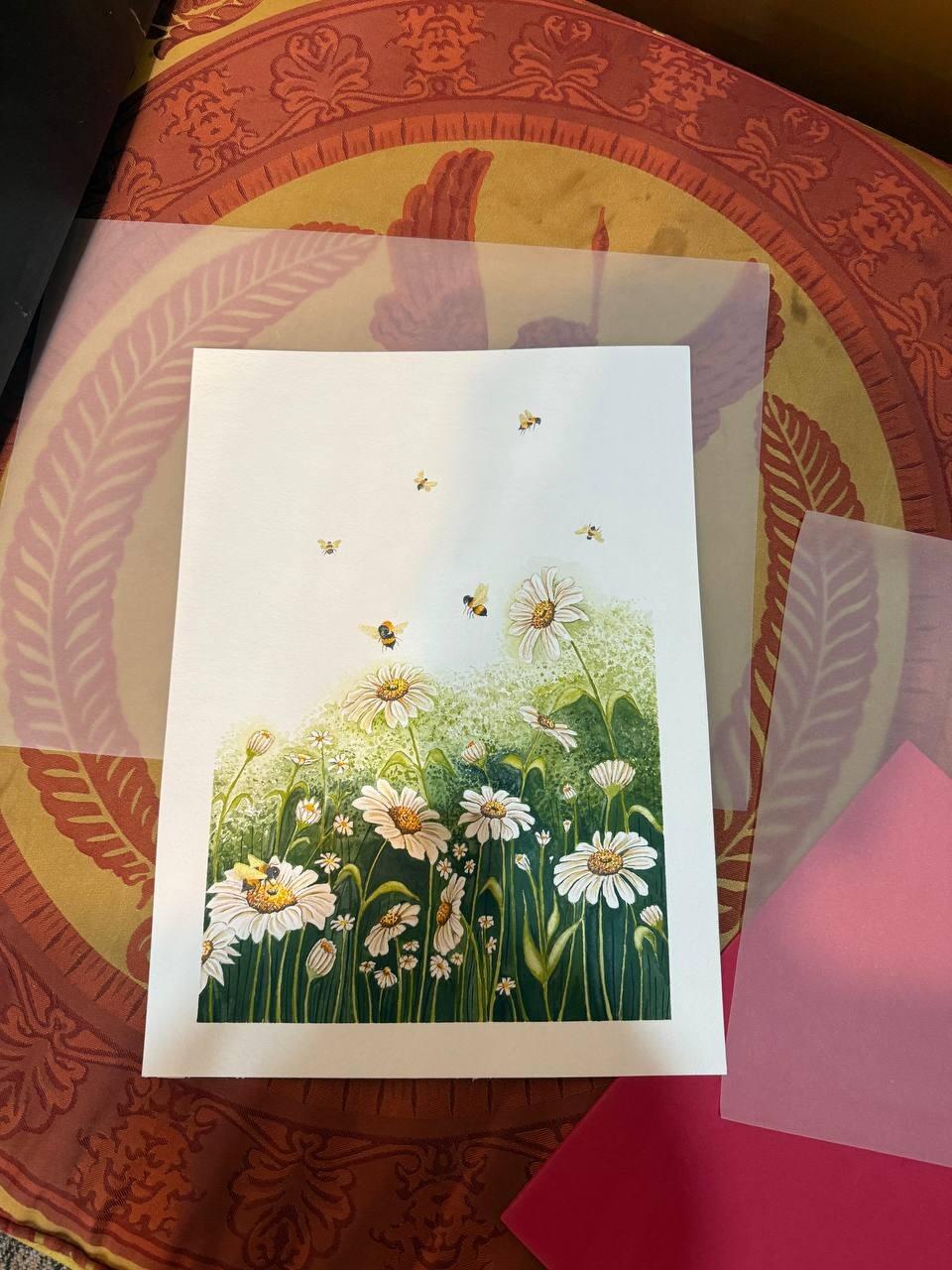
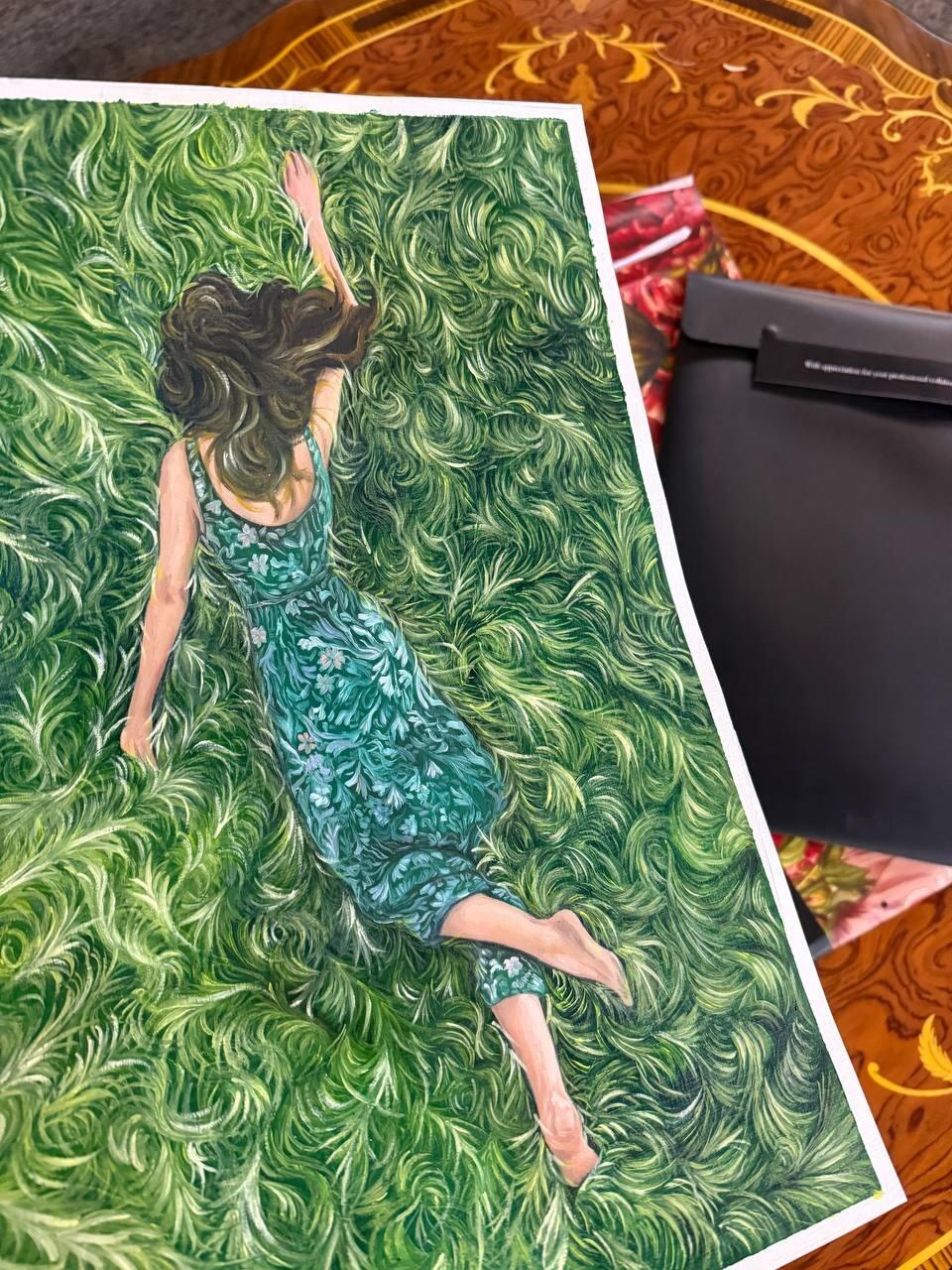
Several paintings we sell carry the imagery of the season. The product page for Kamal al-Din Ghotb's Siyavash Passing Through the Fire describes the prince emerging from the flames "into a flowering spring landscape", with a blossoming tree on gold. His Muraqqa: The Gold Shamseh includes flower-and-bird panels of crimson roses, white blossoms and yellow poppies, and a falconry party resting beneath a blossoming tree. See his work in the Kamal al-Din Ghotb collection. For the green of the sabzeh, browse our green paintings, and for flowers, our floral paintings by Canadian artists.
Frequently asked questions
What does Nowruz mean?
Nowruz means "new day" in Persian. The name first appears in Pahlavi texts as nog roz, according to the Encyclopaedia Iranica. Britannica explains that Nowruz marks the first day of Farvardin, the first month of the Iranian calendar, and falls at the spring equinox, usually on March 21 in the Western calendar.
When is Nowruz in 2027?
Nowruz 2027 begins with the spring equinox on Saturday, March 20, 2027, at 20:25 UTC by the US Naval Observatory's figure, which is 1:25 PM Pacific and 4:25 PM in Toronto. The equinox falls after noon in Tehran, so the new year day in Iran, 1 Farvardin 1406, is Sunday, March 21, 2027.
When did UNESCO list Nowruz as intangible heritage?
UNESCO added Nowruz to its Representative List of the Intangible Cultural Heritage of Humanity on 30 September 2009, according to the United Nations. The listing has since been extended, and the current version, inscribed in 2024 when Mongolia joined, is shared by 13 countries including Iran, Afghanistan, Tajikistan, India and Turkiye.
How is the date of Nowruz fixed in Iran?
The date of Nowruz in Iran follows a noon rule described by the astronomer M. Heydari-Malayeri. If the spring equinox falls before noon in Tehran, that day is the first day of the year. If it falls after noon, the next day is. The rule places the new year at the midnight closest to the moment of the equinox.
What are the seven items on the Haft-sin table?
The seven Haft-sin items listed by Britannica are sabzeh (sprouts), samanu (wheat pudding), senjed (dried lotus fruit), serkeh (vinegar), sib (apple), sir (garlic) and somaq (sumac). Each Persian name starts with the letter sin. Coins, hyacinth, painted eggs, a goldfish, a mirror, candles and a book are often added beside them.
How old is the Haft-sin custom?
The Haft-sin custom in its present form is recent, according to the Encyclopaedia Iranica, which says it seems to have come into fashion only in the last century, helped by the media. Nineteenth-century travellers rarely mention it. The Iranica adds that many objects on the Nowruz table, such as eggs, water, candles and coins, carry ancient meanings.
Which book is placed on the Haft-sin table?
The book on the Haft-sin table depends on the family's faith. The Encyclopaedia Iranica names the Qur'an, with the Shahnameh or the Divan of Hafez also used, and Britannica adds the Avesta, the Bible, the Torah or a Jewish prayer book, and the Kitab-i-Aqdas. Britannica says the book stands for wisdom.
Do the Persepolis reliefs show Nowruz?
The Persepolis reliefs are the subject of a scholarly debate about Nowruz. The Encyclopaedia Iranica says Herzfeld, Ghirshman, Porada and others hold that Persepolis was built for celebrating Nowruz, while Nylander, Calmeyer and others find no evidence for Nowruz in the Achaemenid period. Britannica also presents both views of the gift-bearing processions.
Who founded Nowruz in the Shahnameh?
King Jamshid founded Nowruz in the Shahnameh, according to Britannica. After building a prosperous kingdom, Jamshid made a jewelled throne that rose into the sky and declared that day the "new day". Later tradition, the Encyclopaedia Iranica adds, credited Jamshid with the ruins of Persepolis, which Iranians call Takht-e Jamshid.
Which Persian painting shows the preparations for the Nowruz feast?
A page from the Shahnameh of Shah Tahmasp, attributed to Mirza Ali and held in the Nasser D. Khalili Collection, shows the preparations for the Nowruz feast. The Met's curator Maryam Ekhtiar describes the ruler enthroned with a wine cup and handkerchief, cooks roasting a lamb, and the musician Barbad playing in a tree.
When should a painting ship to arrive for Nowruz 2027?
A painting from VanArtHub meant for Nowruz 2027 should ship by Wednesday, March 10, 2027 to addresses in Canada and by Friday, March 5, 2027 to addresses in the USA, so it arrives before the equinox on March 20. The gallery confirms the dates at order. Shipping is free and insured, with a 14-day return window.
References
-
Nawrouz, Novruz, Nowrouz, Nowrouz, Nawrouz, Nauryz, Nooruz, Nowruz, Navruz, Nevruz, Nowruz, Navruz. UNESCO Intangible Cultural Heritage. Inscribed 2024 (decision 19.COM 7.b.56). Accessed 27 September 2026. The 13 countries sharing the current listing and Mongolia's addition.
-
International Day of Nowruz, 21 March. United Nations. Undated. Accessed 27 September 2026. The UNESCO inscription of 30 September 2009 and General Assembly resolution 64/253 of 2010.
-
NOWRUZ i. In the Pre-Islamic Period. Mary Boyce, Encyclopaedia Iranica. Last updated 13 July 2016; Internet Archive copy of 2 September 2026. Accessed 27 September 2026. The origins of Nowruz, the spring festival in Vis and Ramin, and Nowruz gifts in Zoroastrian villages.
-
NOWRUZ ii. In the Islamic Period. A. Shapur Shahbazi, Encyclopaedia Iranica. Last updated 13 July 2016; Internet Archive copy of 2 September 2026. Accessed 27 September 2026. Malekshah's calendar of 1079, Hafez's Nowruz verse, Chardin's painted eggs and Sizdah Bedar.
-
HAFT SIN. A. Shapur Shahbazi, Encyclopaedia Iranica. Published 15 December 2002; Internet Archive copy of 2 September 2026. Accessed 27 September 2026. The items on the table, the recent date of the custom and the older meanings of its objects.
-
Nowruz. Charles Preston, Encyclopaedia Britannica. Last updated 29 June 2026; Internet Archive copy of 2 August 2026. Accessed 27 September 2026. The date, the customs, the meanings of the Haft-sin items, Jamshid, and the Persepolis debate.
-
Celebrating Nauruz with The Shahnama of Shah Tahmasp. Rachel High, interview with Maryam Ekhtiar, The Metropolitan Museum of Art. Published 17 March 2015; Internet Archive copy of 3 October 2025. Accessed 27 September 2026. Nowruz customs, the Haft-sin meanings, the Nowruz feast painting and The Feast of Sada.
-
PERSEPOLIS. A. Shapur Shahbazi, Encyclopaedia Iranica. Published 15 August 2009; Internet Archive copy of 10 March 2026. Accessed 27 September 2026. The debate over Nowruz at Persepolis, the Apadana delegations and the name Takht-e Jamshid.
-
Earth's Seasons and Apsides, 2027. Astronomical Applications Department, US Naval Observatory. Undated data service. Accessed 27 September 2026. The time of the March equinox in 2027.
-
A concise review of the Iranian calendar. M. Heydari-Malayeri, arXiv. Published 27 September 2004. Accessed 27 September 2026. The noon rule for the date of Nowruz and the moment of tahvil-e sal.
-
Solar Hijri calendar. Wikipedia. Undated. Accessed 27 September 2026. The table showing that the year 1406 begins on 21 March 2027.
-
How to Buy Art as a Gift. VanArtHub. Undated. Accessed 27 September 2026. Shipping a gift to the buyer or the recipient, and the 14-day return window.
-
Siyavash Passing Through the Fire and Muraqqa: The Gold Shamseh. Kamal al-Din Ghotb, VanArtHub. Undated. Accessed 27 September 2026. The spring landscape and flower panels described on each product page.
Checked 27 September 2026. If something here is out of date, write to us and we will correct it.