Persian calligraphy uses a family of scripts built on the Arabic alphabet: Kufic, the six classical scripts called naskh, thuluth, muhaqqaq, rayhani, tawqi and riqa, and three scripts that the Encyclopaedia Iranica says carry distinctive Persian features, ta'liq, nastaliq and shekasteh nastaliq. Kufic and the six classical scripts served mainly for the Qur'an and other books, for inscriptions and for official documents, while nastaliq, which developed in Iran in the 14th century, became the script of Persian poetry and of most Persian writing from the early 15th century onward.
This page describes each script with the source that explains it, shows how to tell the scripts apart in a painting or on a building, and ends with calligraphy in modern painting. Nastaliq has its own page, Persian calligraphy in painting, so it is kept short here. This page is part of our guide to contemporary Iranian and Persian painting.
Key takeaways
- The Encyclopaedia Iranica says the vizier Ibn Muqla, who died in 940, selected fourteen styles of writing, defined the geometric shapes of the letters and set down 12 essential rules of calligraphy.
- According to the Encyclopaedia Iranica, the master Yaqut al-Musta'simi chose six scripts, thuluth, naskh, rayhan, muhaqqaq, tawqi and riqa, and these six gradually replaced every other script except Kufic.
- The Encyclopaedia Iranica says Kufic was in common use in Persia for five centuries after the Arab conquest, mainly for copying the Qur'an and for decorating buildings, vessels and books.
- The Smithsonian's National Museum of Asian Art says that before nastaliq, Persian was written mainly in naskh for prose and poetry and in ta'liq for administrative documents.
- The Metropolitan Museum of Art says shekasteh, the "broken script", developed in the 17th century, reached its peak in the 18th and 19th centuries, and was used mainly for private letters and administrative documents.
- The Encyclopaedia Iranica calls thuluth "the most beautiful and admired of the Islamic scripts" and says it has been called the "mother script".
Where the scripts come from
The writing system used in Persia since early Islamic times grew out of the Arabic alphabet. The Encyclopaedia Iranica entry by Gholam-Hosayn Yusofi explains that the Arabic script derived from the Nabatean and Syriac scripts, and that naskh came from the first and Kufic, also called Hiri, from the second. After the coming of Islam, naskh was used mainly for letters and documents and Kufic for copies of the Qur'an, and later for inscriptions on stone and on coins.
New styles multiplied as written Arabic spread to Egypt, North Africa and Persia. The Iranica says that around the turn of the 10th century the vizier Ibn Muqla, who lived from 885 or 886 to 940, and his brother "put a stop to the proliferation of different styles". They selected fourteen styles, improved the pens, defined the geometric shapes of the letters and set down 12 rules. In their system the two basic parts of handwriting were straightness and roundness. Two later masters built on this work. Ibn al-Bawwab, who died in 1022 or 1023, improved thuluth, naskh and riqa and began measuring letters in dots made with the pen, so that the height of a tall letter or the length of a stroke followed a fixed standard. Yaqut al-Musta'simi, who died in the 1290s, then chose six scripts to refine. The Iranica says these six, known in Persian as the setta-ye yaquti, gradually replaced all the others except Kufic.
Persia shared these scripts with the rest of the Islamic world. The Iranica adds that the distinctive Persian contribution appears mainly in four later scripts: ta'liq, shekasteh ta'liq, nastaliq and shekasteh nastaliq. The Met's essay on calligraphy in Islamic art reminds readers that calligraphy "is principally a means to transmit a text, albeit in a decorative form", and that not everyone who saw an inscription could read it.
The scripts at a glance
The main scripts of Persian calligraphy, with the Encyclopaedia Iranica's description unless another source is named
| Script |
When it developed |
What it looks like |
What it was used for |
| Kufic |
Early Islamic period; common in Persia for five centuries after the Arab conquest, and decorative Kufic into the 16th century |
Mostly straight strokes. In manuscripts only one eighth to one sixth of the strokes are round; the building style is made entirely of straight lines |
Copies of the Qur'an; decoration of buildings, vessels and books |
| Naskh |
In use from the beginning; refined after Ibn Muqla's rules of the late 9th and early 10th centuries; a Persian naskh was adopted by Ahmad Neyrizi, who died in 1742 |
Small, even, balanced letters, half straight and half round; "full, neat, and clear and easy to read" |
Most Qur'ans and books; today the printed script of books and newspapers |
| Muhaqqaq |
Developed from Kufic in the early Abbasid period; the first script Ibn Muqla defined |
Large letters with regular spaces; tall upright letters; each word sits on one line; strokes of even thickness |
Qur'ans and other precious books, until it fell out of use |
| Rayhani |
Said to be devised by Ibn al-Bawwab, but in use only many years later |
A thinner, finer form of muhaqqaq with shorter vertical strokes |
Qur'ans; it outlasted muhaqqaq |
| Thuluth |
Grew from an older large script derived from Kufic; described by Ibn Muqla |
Mostly round; large but compact letters; hair-thin, sharp ends; lines may be written so close they interlace |
Chapter headings of the Qur'an, book titles, frontispieces and, above all, inscriptions and tilework |
| Tawqi |
A derivative of thuluth; the name means "signature" |
Smaller, rounder and more compact than thuluth, with strokes of even thickness |
Decrees, dispatches and diplomas; colophons, the closing notes of a book |
| Riqa |
Developed from tawqi to save time and space |
Small, fully rounded letters with closed loops |
Short messages, title pieces and colophons; it endured in Persia after it gave way elsewhere |
| Ta'liq |
Mid-13th century, refined in the 14th; the Smithsonian shows a ta'liq decree of 1292 |
A "hanging" script in which words and separate letters could be joined, for speed |
Books and collections of poems; official letters and administrative documents |
| Nastaliq |
Second half of the 14th century in Iran; the Smithsonian gives c. 1350 |
Mostly round, with only one third to one sixth of the strokes straight; round strokes slope down from right to left |
Persian poetry and prose; most Persian writing from the early 15th century |
| Shekasteh nastaliq |
Early 17th century; given its definite form by Darvish Abd al-Majid Taleqani, who died in 1771 |
Shrunken, "broken" nastaliq; letters and words joined; lines that rise and fall (the Met) |
Decrees, documents and letters, later books and poems |
Kufic, the first script of the Qur'an in Persia
The Encyclopaedia Iranica says Kufic was in common use in Persia for five centuries after the Arab conquest, "mainly for copying the Qur'an and for decorating buildings, vessels, and books", and that decorative Kufic reached its highest artistic perfection in Persia, where it was used widely up to the 16th century. It describes two main styles. The manuscript style has simple shapes, and only one eighth to one sixth of its strokes are round. The building style, called ma'qeli or banna'i, is made entirely of straight lines set upright or at angles, and its legibility depends on the design. The Iranica says ma'qeli can still be seen in Timurid and Safavid buildings in Mashhad and Isfahan, and that a few tile designers still work in it.
Some early manuscripts use a variety that modern scholars call Persian-style Kufic, in which letters were written separately and then joined by hair-thin lines made with the corner of the pen. The Met holds a Qur'an page from eastern Iran or present-day Afghanistan, made c. 1180, that shows the change that followed. Its record says the page "exemplifies the transition during the Seljuq period from Qur'ans written in kufic script on parchment to those copied in the more rounded new-style writing on paper".
The six classical scripts
Naskh
Naskh first stood beside Kufic as an everyday hand. The Encyclopaedia Iranica says that once Ibn Muqla had defined the shapes of the letters, naskh became so beautiful that "most Korans and other books came to be written in it". Its great merit is proportion: letters of the same shape are the same size everywhere, and the script is "full, neat, and clear and easy to read correctly". Near the end of the Safavid period Ahmad Neyrizi, who died in 1742, developed the style known as Persian naskh. The Iranica adds that modern naskh is the script in which the Qur'an and "all kinds of books, newspapers, and periodicals" are printed in Iran, Afghanistan and the Arab countries.
Thuluth
The name thuluth means "one third". The Iranica reports Ibn Muqla's explanation that in thuluth one third of the letter strokes are straight and two thirds round. The pen moves so smoothly that it "has been said to 'dance'", letter endings taper into thin tails, and the lines are sometimes written so close that they interlace. The Iranica calls thuluth the most admired Islamic script and one of the most difficult. In Persia it was, and still is, used for the chapter headings of the Qur'an, book titles, frontispieces and chapter headings, "and above all for inscriptions and tile work", but seldom for the text of a Qur'an, "probably because it cannot be read by everybody".
Muhaqqaq and rayhani
Muhaqqaq is the script closest to Kufic. The Iranica calls it "a stately but simple script, with large-sized letters and regular spaces", used for Qur'ans and other precious books. Each letter has a fixed shape, the tall letters are taller than in other scripts, and each word usually sits on one line. The pen moves slowly with even pressure, so the strokes do not swell and thin. Rayhani, said to be devised by Ibn al-Bawwab, is a thinner, finer form of muhaqqaq with shorter upright strokes. Both were used for Qur'ans in many Muslim countries up to the 16th and 17th centuries. The Iranica suggests they fell out of use because they had to be written slowly, and says rayhani lasted longer.
Tawqi and riqa
Tawqi, "signature", is a smaller and more compact relative of thuluth. The Iranica says it was used mainly for decrees, dispatches and diplomas to be signed by caliphs or viziers, and for colophons, the closing notes that name the scribe, the patron, the place and the date. Riqa was developed from tawqi to save time and space in short messages. Its letters are small, mostly round and have closed loops. In Persia riqa gradually replaced tawqi, and the Iranica says riqa endured in Persia after it had given way to other scripts in Turkey and the Arab countries. The Iranica also notes that the modern Arabic handwriting called roq'a is a different script, a simplified naskh from Ottoman Turkey.
The Persian scripts: ta'liq, nastaliq and shekasteh
Ta'liq
Ta'liq means "hanging". The Encyclopaedia Iranica says it combined elements of naskh, tawqi and riqa and came into use in the mid-13th century, was refined in the 14th, and was used for books and collections of poems. Because words and separate letters could be joined, it could be written fast, which suited official correspondence. The Smithsonian's exhibition text agrees that scribes favoured ta'liq for administrative and diplomatic documents, and shows a decree of the Ilkhanid ruler Gaykhatu dated 1292 written in it. A faster form, shekasteh ta'liq, was said to be defined by Taj al-Din Salmani in the 15th century. The Iranica says it stayed in use in government and judicial offices for several centuries.
Nastaliq
Nastaliq joins the names of naskh and ta'liq. The Smithsonian says a script called naskh-i ta'liq emerged c. 1350, was later shortened to nasta'liq, and was used "throughout the Persian-speaking world" by 1430. The Iranica says most of its strokes are round, the round strokes slope down from right to left, and it is so compact that it fits more text into fewer lines. Scribes wrote it in two sizes: the Smithsonian calls the minute form used for copying whole books khafi, and the large form used for a few verses on a single sheet jali. The Met's folio of verses by Mir Emad, dated 1608 to 1609, sets its lines diagonally, and the museum says nastaliq is "ideally suited for love poetry replete with mystical allusions and Sufi metaphors". The masters of nastaliq, the practice sheet called siah-mashq, and the script's place in painting are covered on our page on Persian calligraphy in painting.
Shekasteh nastaliq
Shekasteh means "broken". The Iranica says that as nastaliq was written faster and faster, a form emerged in the early 17th century in which some letters were shrunk and separate letters and words were joined. Mixed with features of the older ta'liq, it came to be called simply shekasteh, and it replaced ta'liq as the script of decrees and documents before spreading to books, poems and albums. The Iranica credits Mortazaqoli Khan Shamlu and Mohammad Shafi' Heravi, called Shafi'a, as its pioneers, and says it "reached the peak of artistic perfection" with Darvish Abd al-Majid Taleqani, who died in 1771 and whose style is still the norm. In the 19th century, simpler office styles were developed from it by writers such as Qa'em-maqam Farahani.
The Met owns a page of calligraphy in shekasteh by Abd al-Majid Taleqani, dated 1763. Its record says the script "had little currency outside the borders of Iran", served "primarily for private correspondence and administrative documents", and that in it "words fluidly rise and fall". The Iranica calls shekasteh the fastest of all the scripts to write, and says some features of Darvish's style can make it difficult to read.
How to recognise each script in a work of art
These checks are our own suggestion, built on the features the sources describe. None replaces a trained reader, but together they narrow the choice.
-
Count straight and round strokes. Kufic is mostly straight lines and angles. Naskh is half straight and half round. Thuluth, nastaliq and riqa are mostly round.
-
Look at the baseline. In muhaqqaq each word sits on one line. In nastaliq the round strokes slope down from right to left, so each word appears to step downward. In shekasteh the words rise and fall across the line.
-
Look at the size and the spacing. Large letters with generous, even spaces point to muhaqqaq. Large letters stacked and interlaced in a band point to thuluth. Small, even letters in many lines point to naskh.
-
Look for vowel marks and ornaments. The Iranica says thuluth usually carries all its vowel signs and often extra decorative marks to fill the spaces, while nastaliq is so compact that it uses vowel signs only to remove doubt.
-
Ask what the object is. A tile band or a mosque inscription is most often thuluth, or the straight-lined ma'qeli Kufic in geometric tile designs. The chapter heading of a Qur'an is often thuluth and its text naskh. The verses in the panels of a Persian miniature, or on an album page, are usually nastaliq, the script the Encyclopaedia Iranica says was reserved for poetry across the Persian-speaking world from the early 15th century. A decree or a private letter with lines that rise and fall is likely shekasteh.
Calligraphy on buildings
The Encyclopaedia Iranica says an inscription is first written by the calligrapher on paper in large, clear letters and then transferred to stone or tile. Inscriptions are placed on the facades, walls and doorways of mosques, shrines and important secular buildings, and "they are most often written in thuluth" because its large, rounded letters fit easily into tile patterns and carved designs. The texts are often verses from the Qur'an, sayings of the Prophet, poems, dates and founders' names.
Isfahan shows this at its best. The Iranica entry on the Isfahan school says the calligrapher Ali-Reza Abbasi, appointed head of Shah Abbas I's library in 1598, designed the monumental inscriptions of the Shaikh Lotfallah Mosque and the Masjed-e Shah, written in large thuluth with densely stacked designs. The Smithsonian adds that he was praised for his skill in the six traditional cursive scripts and also wrote nastaliq, though his rival Mir Emad was considered the greater master of that script.
Calligraphy in modern painting
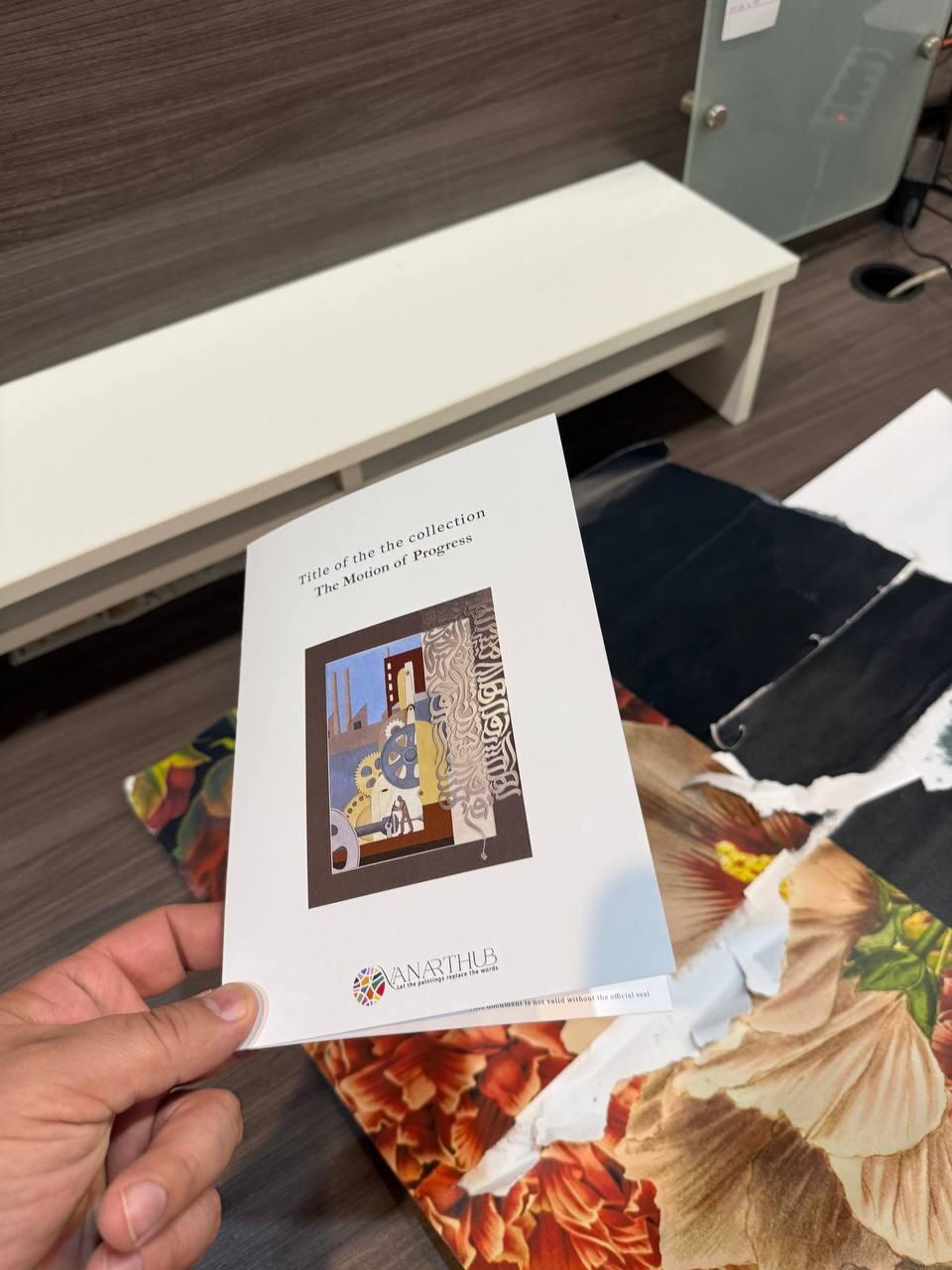
Calligraphy entered modern painting in the 1960s. The Encyclopaedia Iranica says that since the 1960s "certain calligraphers have attempted to combine calligraphy with painting", sometimes producing "fine and original works of art", while many leading calligraphers regard the practice as a questionable innovation and class it as painting. Painters from outside the calligraphic tradition used letters too. The Met holds Faramarz Pilaram's Calligraphic Drawing 1 and 2, dated 1979, in ink and acrylic on paper.
The history of the Saqqakhaneh artists, the naqqashi-khat or painting-calligraphy movement, and painters such as Charles Hossein Zenderoudi and Mohammad Ehsai is told on our page on Persian calligraphy in painting. For the poems these scripts carry, see Persian poetry in painting, and for the gold ornament that surrounds them on a page, Persian illumination.
Calligraphy in our gallery's paintings
Two painters we work with use Persian script in different ways. Kamal al-Din Ghotb, who has practised Persian painting for 41 years, sets nastaliq inside classical compositions. The product page for Muraqqa': The Gold Shamseh describes an illuminated panel with nastaliq "in cloud-shaped reserves on a dense gold ground, pressed with oval seals", and couplets written diagonally on a lilac ground. Muraqqa': The Blue Robe frames a musician with couplets in nastaliq. His works are gathered in the Kamal al-Din Ghotb collection.
The page for Melina Ghaemi, an Iranian-Canadian abstract painter, lists "Persian calligraphic gesture" among her inspirations, beside the abstract painters Joan Mitchell and Helen Frankenthaler.
Frequently asked questions
What are the six classical scripts of Persian and Islamic calligraphy?
The six classical scripts of Islamic calligraphy are thuluth, naskh, rayhan, muhaqqaq, tawqi and riqa. The Encyclopaedia Iranica says the master Yaqut al-Musta'simi, who died in the 1290s, chose these six to refine, and that they gradually replaced every other script except Kufic. In Persian they are called the setta-ye yaquti, and calligraphers in Persia wrote all six beside the later Persian scripts.
Who was Ibn Muqla?
Ibn Muqla was a vizier in the service of the caliph al-Muqtadir who lived from 885 or 886 to 940. The Encyclopaedia Iranica says he and his brother selected fourteen styles of writing, improved the pens, defined the geometric shapes of the letters and set down 12 rules of calligraphy. In his system the basic parts of handwriting were straightness and roundness, and later masters built on his rules.
What is Kufic script?
Kufic is the angular early script of the Arabic alphabet. The Encyclopaedia Iranica says it was in common use in Persia for five centuries after the Arab conquest, mainly for copying the Qur'an and decorating buildings, vessels and books. Its manuscript form has few round strokes, and its building form, ma'qeli, is made entirely of straight lines.
How is thuluth different from naskh?
Thuluth and naskh differ in size, shape and use. The Encyclopaedia Iranica describes thuluth as mostly round, with large, compact letters and interlacing lines, used for headings, titles and inscriptions. Naskh has small, balanced letters, half straight and half round, and is clear and easy to read, which is why most Qur'ans and books were written in naskh.
Why is thuluth called the mother script?
Thuluth is called the mother script, omm al-khotut, because it is the most beautiful and admired of the Islamic scripts, according to the Encyclopaedia Iranica. The same source says thuluth is also one of the most difficult scripts and requires perfect skill. Its name means one third, which Ibn Muqla linked to the share of straight strokes in its letters.
What does ta'liq mean in Persian calligraphy?
Ta'liq means "hanging" and names a Persian script that came into use in the mid-13th century, according to the Encyclopaedia Iranica. Ta'liq allowed words and letters to be joined, so it could be written fast and suited official correspondence. The Smithsonian shows a ta'liq decree of 1292, and ta'liq later became one of the two parents of nastaliq.
What does shekasteh mean?
Shekasteh means "broken" and names the fast form of nastaliq that emerged in the early 17th century. The Encyclopaedia Iranica says scribes shrank some letters and joined separate letters and words, and the Met says the script had little use outside Iran. Shekasteh served for decrees, documents and private letters before it spread to books and poems.
Who perfected shekasteh calligraphy?
Darvish Abd al-Majid Taleqani, who died in 1771, perfected shekasteh calligraphy, according to the Encyclopaedia Iranica, which says the script reached "the peak of artistic perfection" in his work and that his style is still the norm. The Metropolitan Museum of Art in New York owns a page of his calligraphy dated 1763.
Which script is used for printed Persian today?
Printed Persian today uses a modern form of naskh. The Encyclopaedia Iranica says modern naskh has been developed for typesetting and typing and is the script in which the Qur'an and all kinds of books, newspapers and periodicals are printed in Iran, Afghanistan and the Arab countries. The Iranica adds that interest in nastaliq revived after the Second World War, and that large numbers of people now take lessons in it.
What are khafi and jali nastaliq?
Khafi and jali are the small and large forms of nastaliq, according to the Smithsonian's National Museum of Asian Art. Khafi, the minute form, was used for copying whole manuscripts. Jali, a large form with long strokes and strong changes in width, was often used to write two verses on a single sheet for an album. Calligraphers usually specialised in one of the two.
Which script was used for the inscriptions of Isfahan's mosques?
The great inscriptions of Isfahan's mosques were written mainly in thuluth. The Encyclopaedia Iranica says the calligrapher Ali-Reza Abbasi, head of Shah Abbas I's library from 1598, designed the monumental inscriptions of the Shaikh Lotfallah Mosque and the Masjed-e Shah in large thuluth, with densely stacked letters that became a visual symbol of later Safavid buildings.
How can you tell nastaliq from naskh in a painting?
Nastaliq and naskh can be told apart by their strokes and their baseline. Nastaliq is mostly round, and its round strokes slope down from right to left, so words seem to step downward; it fills the verse panels of Persian miniatures. Naskh has small, level, even letters, half straight and half round, and is the script of most Qur'ans and printed books.
References
-
CALLIGRAPHY. Gholam-Hosayn Yusofi, Encyclopaedia Iranica. Published 15 December 1990; Internet Archive copy of 3 September 2026. Accessed 27 September 2026. The origin of the scripts, Ibn Muqla, Ibn al-Bawwab and Yaqut, the description and use of every script, inscriptions, and calligraphy combined with painting.
-
Nasta'liq: The Genius of Persian Calligraphy. Smithsonian National Museum of Asian Art. Exhibition 13 September 2014 to 3 May 2015; Internet Archive copy of 9 November 2025. Accessed 27 September 2026. The scripts used for Persian before nastaliq, the 1292 ta'liq decree, the date of c. 1350, khafi and jali, and Ali-Reza Abbasi.
-
Calligraphy in Islamic Art. Department of Islamic Art, The Metropolitan Museum of Art. Published October 2001; Internet Archive copy of 15 January 2026. Accessed 27 September 2026. Calligraphy as a means of carrying a text in decorative form.
-
Folio from a Qur'an Manuscript, ca. 1180. The Metropolitan Museum of Art. Undated; Internet Archive copy of 20 February 2026. Accessed 27 September 2026. The change from Kufic on parchment to rounded new-style writing on paper in the Seljuq period.
-
Page of Calligraphy, dated 1176 AH/1763 CE, by Abd al-Majid Taleqani. The Metropolitan Museum of Art. Undated; Internet Archive copy of 20 April 2026. Accessed 27 September 2026. The date, use and appearance of shekasteh.
-
Folio with Verses in Nasta'liq Script, by Mir 'Imad al-Hasani. The Metropolitan Museum of Art. Undated; Internet Archive copy of 17 April 2026. Accessed 27 September 2026. Nastaliq written in diagonal lines for poetry.
-
Calligraphic Drawing 1 and 2, Untitled, by Faramarz Pilaram (object record). The Metropolitan Museum of Art Open Access API. Undated. Accessed 27 September 2026. The date of 1979 and the medium of ink and acrylic on paper.
-
ISFAHAN xi. School of Painting and Calligraphy. Massumeh Farhad, Encyclopaedia Iranica. Published 15 December 2007; Internet Archive copy of 5 December 2025. Accessed 27 September 2026. Ali-Reza Abbasi's thuluth inscriptions in Isfahan and Mir Emad's nastaliq.
-
Muraqqa': The Gold Shamseh, by Kamal al-Din Ghotb. VanArtHub. Undated. Accessed 27 September 2026. The nastaliq panel and diagonal couplets in the painting.
-
Melina Ghaemi. VanArtHub. Undated. Accessed 27 September 2026. Her listed inspirations.
Checked 27 September 2026. If something here is out of date, write to us and we will correct it.