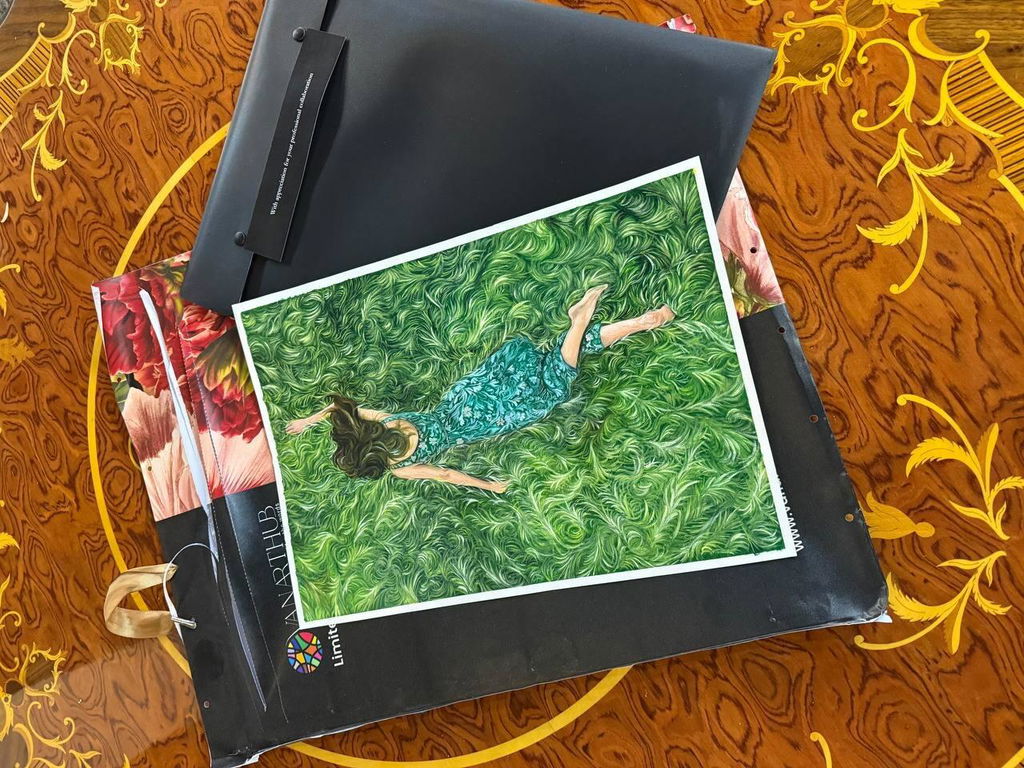
A painting shipped from Canada to the United States by VanArtHub reaches you 5 to 10 business days after it is packed. On the day it arrives, photograph the box before you open it, open it with care, lift the painting by its stretcher bars without pressing on the canvas, and check the paint surface in good light. If the box has been out in the cold, the Canadian Conservation Institute advises leaving a wrapped painting unopened for 24 hours so it can adjust to indoor conditions.
This page covers the day of delivery and the weeks after it. The handling and climate advice comes from the Canadian Conservation Institute, an institute of the Government of Canada, and each point is referenced at the end. If anything looks wrong, photograph it and contact us the same day.
Key takeaways
- VanArtHub delivers to the USA in 5 to 10 business days after packing, free and fully insured.
- The Canadian Conservation Institute advises allowing 24 hours for a wrapped painting that has been exposed to cold to adjust to indoor conditions before it is unwrapped, to prevent condensation.
- The Institute gives 40 to 60 percent relative humidity as an acceptable range for paintings, and a temperature set point anywhere from 16 to 25 degrees Celsius (60.8 to 77 degrees Fahrenheit).
- The Institute says acrylic paint becomes more likely to crack below 5 degrees Celsius (41 degrees Fahrenheit), and that neither oil nor acrylic paintings should be handled at those temperatures.
- When lifting an unframed canvas by its stretcher bars, keep hand pressure off the canvas, front and back.
How long delivery takes
We ship from our studio in Vancouver. Deliveries to the USA take 5 to 10 business days once the painting is packed, and deliveries inside Canada take 3 to 7. Shipping is free and every painting is insured for its full value while it travels.
Part of that time is the border. The carrier's customs broker files the US customs entry using the commercial invoice we prepare, and the box moves on once US Customs releases it. Our page on US customs paperwork for art from Canada explains that step, and what to do if a carrier asks you for money at delivery.
We pack each painting by hand. The face is covered with a smooth protective layer so nothing touches the paint, the corners are reinforced, and the wrapped painting sits in a rigid outer box or crate sized to the work, with cushioning so it cannot shift.
Before you open the box
Take photographs of the box first, on every side, before you cut any tape. If the outside shows crush marks, punctures or a damaged corner, those photos are the record of how it arrived. Our post on how to photograph a painting you own gives tips that work for the box and the painting alike.
Then think about temperature. A box can spend hours in an unheated truck or on a porch. The Canadian Conservation Institute says that if a crated and wrapped painting has been exposed to cold, you should allow 24 hours for the crate and its contents to adjust to indoor conditions before opening and unwrapping, to prevent moisture condensing on cold surfaces. Its note on environmental guidelines explains the risk: exposing an unwrapped cold painting straight away to a warm, humid room can make condensation form on the painting's cold surfaces.
The Institute also says acrylic paint layers become more susceptible to cracking as the temperature goes below 5 degrees Celsius (41 degrees Fahrenheit), and that neither oil paintings nor acrylic paintings should be handled when they are that cold. In winter, bring the box inside, set it flat in a room at normal temperature, and wait the 24 hours.
Opening the box and lifting the painting
The Canadian Conservation Institute's note on handling paintings opens with a plain statement: "Most damage to paintings and their frames occurs during handling." Its advice for any move is to plan it, clear a path, and prepare a safe place to set the painting down before you lift it. The table sets out the points that apply at home.
Handling points from the Canadian Conservation Institute's notes on paintings, as they apply to unpacking at home
| What to do |
Why, according to the Institute |
| Prepare a clean, padded, flat surface before you lift the painting out |
The Institute says to have a safe, padded resting place ready, with nothing else lying on it, before a painting is moved. |
| Take off rings, bracelets and anything hanging from your neck or shoulder |
Personal accessories can snag on, hit or scratch the paint and frame. |
| Wear clean, well-fitting cotton or latex gloves |
Gloves stop oils, moisture and dirt passing from your hands to the painting. Loose gloves give a poor grip. |
| Lift an unframed canvas by its stretcher bars, with no hand pressure on the canvas, front or back |
Hits to the canvas can start cracks that may not show at first and develop over time as the canvas moves with humidity changes. |
| Use two people for an easel-sized painting, each with one hand on the lower edge or corner and one hand on the side toward the top |
The Institute says most paintings, even easel-sized ones, need two handlers. |
| Never carry a painting by its hanging wire, by the top of its frame or by one side alone |
Frames are weakest at the corner joints, and the weight can pull them apart. |
| Avoid touching painted edges |
On modern and contemporary work, the painted edges are part of the work. |
For a small unframed painting, the Institute suggests holding it with the flat of your palms against its edges. For a large or heavy one, it recommends more handlers, and a cart when one is available.
When you take off the wrapping, lift the protective layer straight up off the face of the painting. Keep all the packing materials and the box. If there is ever a transit claim, the way the painting was packed is part of the evidence, as our post on insuring original art shipped from Canada to the USA explains.
Checking the surface and the edges
Look at the painting in good light. Check the paint surface, then the four corners, then the edges and the stretcher bars at the back.
The Canadian Conservation Institute lists the kinds of damage that happen during handling: stains, dirt deposits, paint loss, surface abrasion, dents, tears in the canvas, and scratches. Those are the things to look for, on the front and on the back.
Letting the painting adjust to your room
A painting on canvas responds to the air around it. The Institute explains that a canvas absorbs moisture, and that glue, ground and paint layers can swell and soften when it does. The Canadian Conservation Institute's note on environmental guidelines says rapid changes in relative humidity can seriously damage stretched paintings on canvas.
Climate figures for paintings from the Canadian Conservation Institute
| Measure |
Figure given by the Institute |
| Acceptable relative humidity |
40 to 60 percent |
| Recommended temperature set point |
Anywhere from 16 to 25 degrees Celsius (60.8 to 77 degrees Fahrenheit) |
| Temperature below which paintings should not be handled |
5 degrees Celsius (41 degrees Fahrenheit) |
| Wait before unwrapping after cold exposure |
24 hours |
When a painting moves between conditions that differ widely, the Institute describes a slow method: the painting is loosely but completely wrapped, partly sealed in plastic with blotting paper or cotton sheeting inside, and allowed to adjust to the new room over several weeks. The Institute also says paintings kept at temperatures within the human comfort zone are not at risk from temperature-related problems. For most deliveries, the steps that apply are the 24-hour wait after cold exposure and a wall away from heat, vents and sun.
Choose that spot with care. The Institute advises avoiding display near heating and cooling units, on poorly insulated exterior walls, and in direct sunlight. Our post on humidity, temperature and storing a canvas goes further into the home climate, and our page on caring for an original painting covers cleaning and long-term care.
If something is wrong
If the box or the painting shows any damage, stop unwrapping, photograph what you see, and contact us the same day through our contact page. Send the photos of the box and of the painting, and keep every piece of packing. Every painting we ship is insured for its full value, and we deal with the carrier.
For the other parts of a cross-border purchase, our page on buying safely from a Canadian gallery covers credit card protection, and the guide to buying original art from Canada as a US collector covers every step from choosing to hanging.
Frequently asked questions
How many business days does VanArtHub take to deliver a painting to the USA?
VanArtHub takes 5 to 10 business days to deliver a painting to the USA, counted from when the painting is packed in the Vancouver studio. Deliveries within Canada take 3 to 7 business days. Shipping is free in both countries, and every painting is insured for its full value while it travels.
What should I photograph before opening a box with a painting in it?
A buyer should photograph every side of the box before cutting any tape, with close-ups of any crush marks, punctures or damaged corners. Those photos record how the box arrived. Every VanArtHub painting ships insured for its full value, and photos taken on the day of delivery are the first thing to send us if anything is wrong.
Should I wait before unwrapping a painting that arrived in cold weather?
A painting that arrived in cold weather should stay wrapped for 24 hours before unwrapping, according to the Canadian Conservation Institute. The Institute says a crated and wrapped painting exposed to cold needs that time to adjust to indoor conditions, which prevents moisture from condensing on its cold surfaces. Set the box flat in a room at normal temperature.
Why can a cold painting be damaged in a warm room?
A cold painting can be damaged in a warm room because moisture condenses on its cold surfaces. The Canadian Conservation Institute says exposing an unwrapped cold painting straight away to a warm, humid environment causes this condensation. It also says acrylic paint becomes more susceptible to cracking below 5 degrees Celsius, or 41 degrees Fahrenheit.
What humidity range does the Canadian Conservation Institute give for paintings?
The Canadian Conservation Institute gives 40 to 60 percent relative humidity as an acceptable range for paintings. Its note on environmental guidelines says rapid changes in relative humidity can seriously damage stretched paintings on canvas, and that a backing board on the stretcher reduces the effect of daily humidity swings.
What room temperature suits an original painting at home?
An original painting at home is suited by a room temperature anywhere from 16 to 25 degrees Celsius, which is 60.8 to 77 degrees Fahrenheit. The Canadian Conservation Institute gives that range as the recommended set point, and says paintings kept within the human comfort zone face no temperature-related risk.
How should I hold an unframed canvas?
An unframed canvas should be held by its stretcher bars, with no hand pressure on the canvas at the front or the back. The Canadian Conservation Institute gives this rule in its note on basic handling of paintings. For a small unframed work, it suggests holding the painting with the flat of your palms against its edges.
Should I wear gloves to handle a painting?
Clean, well-fitting cotton or latex gloves are the right choice for handling a painting, according to the Canadian Conservation Institute. Gloves stop natural oils, moisture and dirt passing from your hands to the painting. The Institute warns that loose gloves are a hazard because they give a poor grip and catch on projecting surfaces.
How many people should carry a medium-sized painting?
Two people should carry a medium-sized painting, according to the Canadian Conservation Institute. Each person places one hand on the lower edge or corner and the other hand on the side toward the top corner to balance the weight. The Institute says a painting should never be carried by its hanging wire or the top of its frame.
What damage should I look for after unpacking a painting?
After unpacking a painting, look for stains, dirt deposits, paint loss, surface abrasion, dents, tears in the canvas and scratches. The Canadian Conservation Institute lists these as the kinds of damage that happen during handling. Check the paint surface first, then the corners, edges and stretcher bars, with a light held low to the side.
What should I do if a painting from VanArtHub arrives damaged?
A buyer whose painting from VanArtHub arrives damaged should stop unwrapping, photograph the box and the painting, and contact us the same day with the photos. Keep the box and every piece of packing. Every VanArtHub painting is insured for its full value in transit, and we deal with the carrier.
References
-
Caring for paintings. Canadian Conservation Institute, Government of Canada. Published 2018. Accessed 26 September 2026. The 24-hour wait after cold exposure, the 5 degree Celsius handling limit, display locations to avoid, damage from hits to the canvas, and moisture in canvas, glue and paint layers.
-
Environmental Guidelines for Paintings: Canadian Conservation Institute (CCI) Notes 10/4. Canadian Conservation Institute, Government of Canada. Published 2017. Accessed 26 September 2026. The 40 to 60 percent humidity range, the 16 to 25 degree Celsius set point, the human comfort zone, condensation on cold paintings, backing boards, and slow acclimatization over several weeks.
-
Basic Handling of Paintings: Canadian Conservation Institute (CCI) Notes 10/13. Canadian Conservation Institute, Government of Canada. Published 2018. Accessed 26 September 2026. Most damage occurs during handling, the types of damage, preparing a resting place, gloves, accessories, two handlers, lifting by the stretcher bars, painted edges and small works.
Checked 26 September 2026. If something here is out of date, write to us and we will correct it.