Gesso and Ground Layers: The Part of a Painting You Never See
Updated By VanArtHub Curatorial TeamShare
Every painting you have ever looked at has a layer you have never seen. It sits between the fabric and the first brushstroke, it is usually white, and the artist put it there before the picture existed. It decides how much paint soaks in, how bright the colours read, and whether the surface will crack in forty years. Conservators think about it constantly. Buyers have almost never heard of it.
The layer between the cloth and the picture
Raw canvas is thirsty and rough. Paint applied straight onto it sinks in, loses its colour, and the oil in the paint slowly attacks the fibres. So the artist coats the fabric first. That coating is the ground.
Gesso is one kind of ground. The word gets used loosely, and it is worth separating two things that share a name. Traditional gesso is chalk or gypsum bound with animal glue, used on wooden panels for centuries, and it dries hard and brittle. Modern acrylic gesso, the white liquid sold in every art shop, is chalk and titanium white pigment bound in acrylic polymer. It stays flexible, which is why it works on canvas that moves.
The CCI's overview of how a painting is built and how it deteriorates treats the ground as its own structural layer with its own failure behaviour, sitting between the support and the paint. That framing is the useful one. Three layers, three different materials, all of them responding to the room at different speeds.
Under all of that there is often a size layer, a thin sealant applied directly to the fabric so the ground does not soak through.
Why the ground colour changes the whole painting
Most modern canvas comes pre-primed brilliant white. That white is doing real work. Oil paint is slightly translucent, so light passes through the colour, hits the ground, and comes back through the paint to your eye. A white ground sends back a lot of light and makes colour look clean and bright.
Artists who want something else tone the ground first. A warm earth ground, common in traditional portrait painting, kills the glare and makes flesh tones easier to judge. A mid-grey ground makes it simpler to see whether a colour is lighter or darker than its neighbour. A dark ground gives a heavy, low-key painting where the lights have to be built up.
You can often see this on the finished work. Look at the edges of brushstrokes and in the thin passages where the artist left the ground showing through. If flecks of warm brown or grey peek out between strokes, the ground was toned, and that was a decision made on day one.
Absorbency: the property that decides how the paint behaves
How much the ground drinks changes everything the artist can do on top. An absorbent ground pulls oil out of the paint and gives a matte surface where brushstrokes stop moving almost immediately. A sealed ground leaves the paint sitting on top, glossy and workable for far longer, which is what blending and soft edges need.
This is also where paintings go wrong. If too much oil is drawn out, the paint is left underbound, meaning there is not enough binder holding the pigment together. Underbound paint chalks, looks dull, and is fragile. The opposite fault is a ground so glossy the paint has nothing to grip.
The named things that go wrong, and what they look like
The CCI publishes a glossary of condition terms that conservators use in reports. Several of them describe the ground rather than the paint, and knowing the words changes what you can ask a seller.
| Term | What you see | Underlying cause |
|---|---|---|
| Cleavage | Layers separating from each other | Loss of adhesion between ground and support, or ground and paint |
| Blind cleavage | Nothing visible on the surface | Separation between layers with the paint still bridging over it |
| Blister | A raised bubble in the surface | A local area lifting away from the layer below |
| Cupping | Small squares of paint curling at their edges | Cracks through paint and ground, with the islands drawing up |
| Concentric or cobweb cracks | Rings or a spider pattern in one spot | A blow or pressure applied to that point |
| Chalking | Powdery, dull surface that marks easily | Underbound paint, often from an over-absorbent ground |
Blind cleavage deserves the extra attention. The name means exactly what it says: the layers have already come apart underneath and the surface still looks perfect. There is no way for a buyer to detect it by eye, which is a genuine limit on what any visual inspection can promise you.
What this means for a painting hanging in your home
The ground is the layer most sensitive to humidity swings, because it usually contains a water-reactive binder and it is trapped between two materials that expand at different rates.
The CCI recommends a stable 40 to 60 percent relative humidity for paintings on canvas or wood, with 50 percent as the usual central value, and warns that levels over 70 to 75 percent encourage mould. The word doing the work in that sentence is stable. A room that swings from 30 to 65 percent every day is harder on the ground layer than a room that sits quietly at 55.
The same guidance notes that high humidity pockets form against exterior walls and near water pipes, which is exactly where people like to hang large paintings. If your only good wall is an outside wall, hang the work on spacers so air can move behind it.
Water is the emergency case. If a painting gets wet, call a conservator as soon as possible. The effects can take minutes to hours to appear, simple air drying is often unsuitable, and wet canvas can shrink dramatically, which cracks and buckles the ground and paint together. Do not try to dry it yourself.
Do not try to fix the surface yourself
We will be blunt, because this is where owners cause real damage. The CCI states that untrained individuals should not attempt to remove dirt or discoloured varnish from a painting, and that you should never use commercial paint cleaners or picture restoring preparations.
It also rules out the tools people reach for first: never use dry or moist dust cloths, stiff bristle brushes, or feather dusters. A feather duster catches on any lifted flake and takes it off. And water-based solutions can weaken the bond between pigment and medium, leach surfactants out of acrylic paint, and blanch the surface white.
Blanching usually happens to someone who was being careful with a damp cloth. If a painting looks dull or dirty, the answer is a paintings conservator and a quote.
What we can and cannot tell you about a painting's ground
Every piece we sell is a contemporary original by a living artist, which is good news for this subject. Modern acrylic gesso on commercially primed canvas is a well-understood and stable system. Most ground failures in the conservation literature involve nineteenth-century commercial grounds or experimental studio recipes.
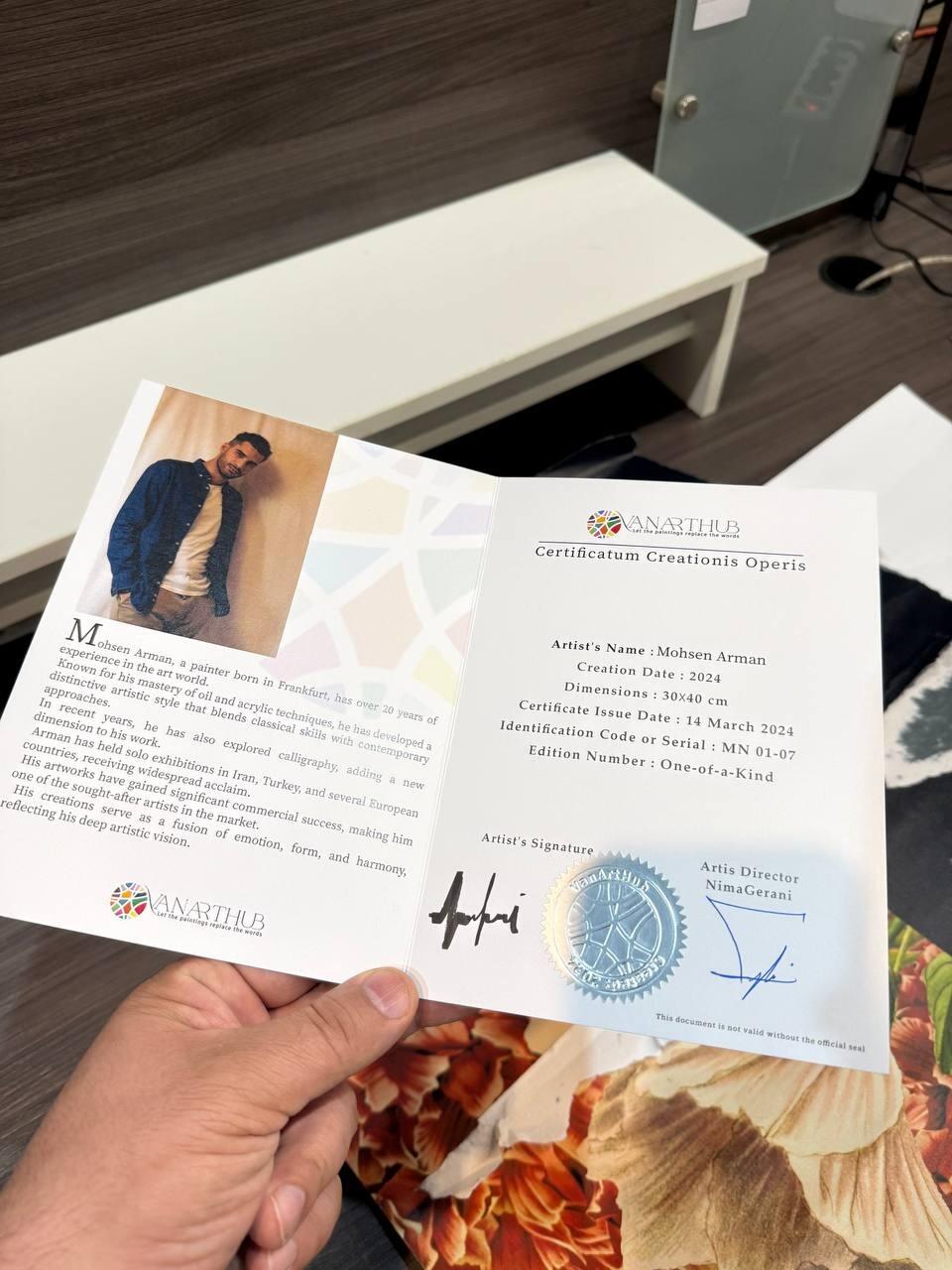
Here is the honest limit. We can tell you the medium and the support, and both go on the Certificate of Authenticity. We cannot tell you how many coats of gesso an artist applied or whether they toned it, unless we ask them. Sometimes we do ask, and if that detail matters to you, write to us before you buy and we will find out from the artist rather than guessing.
And a case where you should not buy from us: if you are looking for an antique painting with a documented restoration history and a conservator's report, we are the wrong gallery. We sell new work by living artists. A specialist in historical paintings will serve you far better.
Key Takeaways
- The ground is the coating between the fabric and the first brushstroke. It controls absorbency, colour, and adhesion.
- Traditional gesso is chalk and animal glue and dries brittle. Modern acrylic gesso stays flexible, which suits canvas.
- A white ground makes colour look bright because light passes through the paint and bounces back off it.
- Toned grounds show as flecks of warm brown or grey between brushstrokes. That tells you the artist's first decision.
- Blind cleavage means the layers have separated with no visible sign. No visual inspection can rule it out.
- Never clean a painting yourself. The CCI rules out dust cloths, stiff brushes, feather dusters, and household cleaners.
Frequently Asked Questions
What is gesso in a painting?
Gesso is a white ground layer applied to canvas or panel before painting begins. Modern acrylic gesso is chalk and titanium white pigment in an acrylic binder, and it stays flexible. Traditional gesso is chalk or gypsum in animal glue, which dries hard and brittle and suits rigid wooden panels.
Does the ground colour affect the finished painting?
Yes, strongly. Oil paint is partly translucent, so light travels through it, reflects off the ground, and returns to your eye. A white ground gives bright, clean colour. A warm or grey toned ground lowers the key of the whole painting and often shows through between brushstrokes.
What does it mean if a painting looks chalky or powdery?
It usually means the paint is underbound, with too little binder holding the pigment together. One common cause is an over-absorbent ground drawing oil out of the paint film as it dried. Underbound paint marks easily and is fragile. Have a conservator look at it before touching the surface.
What is blind cleavage?
It is separation between layers of a painting with nothing visible on the surface. The paint still bridges over the gap, so the work looks sound. It is listed in the Canadian Conservation Institute's condition glossary, and it is the reason a clean visual inspection cannot guarantee a stable structure.
What humidity is safe for a painting on canvas?
A stable level between 40 and 60 percent relative humidity, with 50 percent as the usual central value. Above roughly 70 to 75 percent, mould becomes a risk. Stability matters more than the exact number, so a room that holds steady at 55 is better than one swinging daily between 30 and 65.
My painting got wet. What should I do first?
Call a paintings conservator immediately. The Canadian Conservation Institute warns that damage may take minutes to hours to appear and that simple air drying is often unsuitable. Wet canvas can shrink sharply, cracking and flaking the ground and paint together. Do not attempt to dry it yourself.
Is it safe to dust a painting?
Not with the usual tools. The CCI rules out dry and moist dust cloths, stiff bristle brushes, and feather dusters, because they catch on lifted paint and pull it away. Commercial paint cleaners and picture restoring preparations are also ruled out. Ask a conservator about surface cleaning.
What does the Certificate of Authenticity cover?
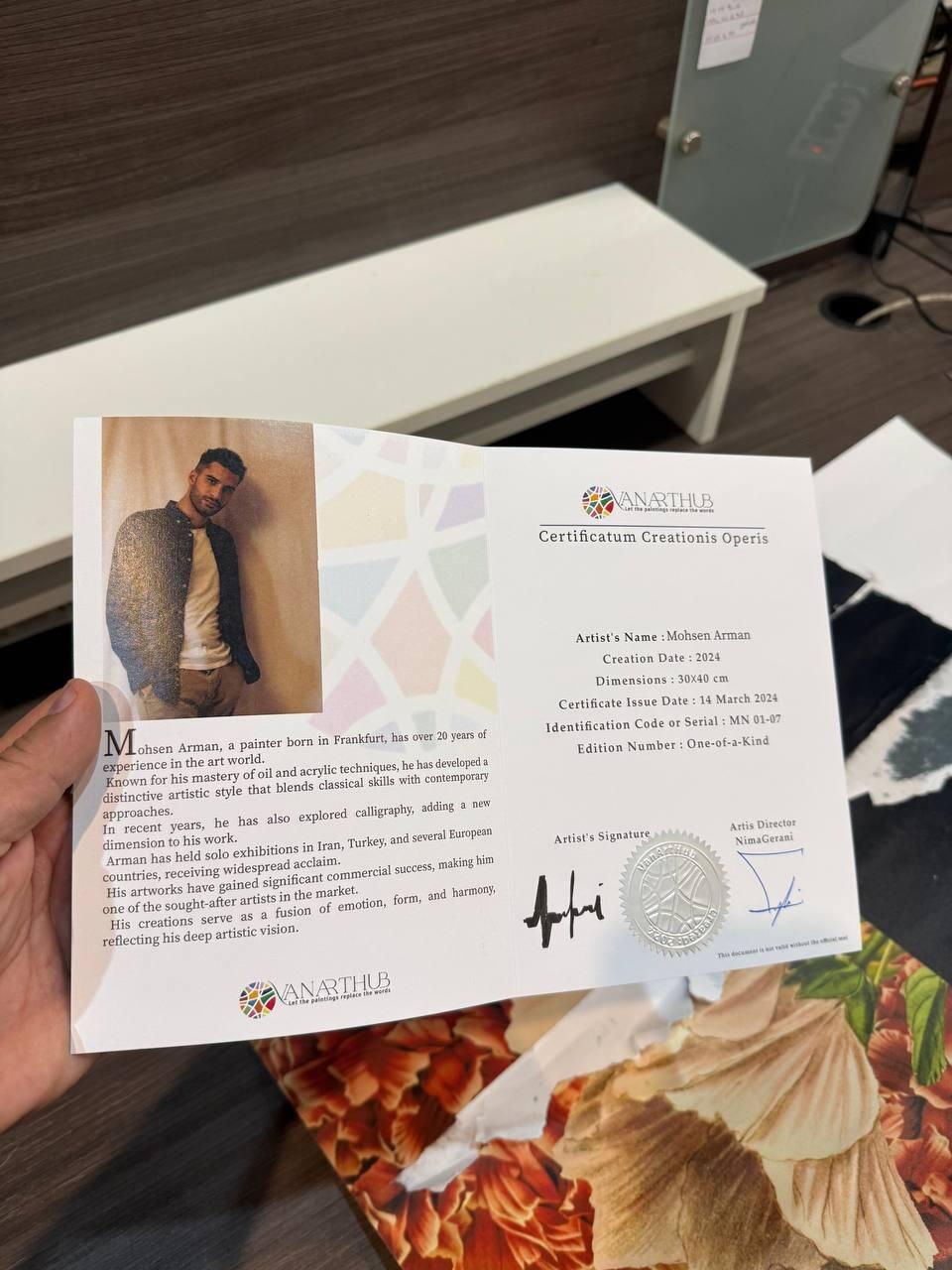
It records the artist, title, year, medium, and dimensions of your specific piece, signed by us as the gallery that sold it. Every original we ship carries one. It is the document you will want if you ever insure, donate, or resell the work.
How long do I have to return a painting?
Fourteen days from delivery. Hang it, live with it, see it in morning and evening light. If it is not right, tell us within those 14 days and we send a prepaid insured return label and refund you in full once it is back. We pay the return shipping.
Sources
- Canadian Conservation Institute, Know Your Paintings: Structure, Materials and Aspects of Deterioration (CCI Notes 10/17)
- Canadian Conservation Institute, Condition Reporting, Paintings Part III: Glossary (CCI Notes 10/11)
- Canadian Conservation Institute, Environmental Guidelines for Paintings (CCI Notes 10/4)
- Canadian Conservation Institute, Cleaning Paintings: Precautions (CCI Notes 10/1)
- Canadian Conservation Institute, Emergency Treatment of Water-damaged Paintings on Canvas (CCI Notes 10/5)
Sources checked 1 September 2026. If you spot something out of date, tell us and we will update the guide.
About VanArtHub
VanArtHub is an online gallery in Vancouver selling original, signed, one-of-a-kind paintings by independent artists. No prints and no reproductions. Every piece ships with a Certificate of Authenticity, free fully insured delivery to Canada and the USA, and a 14-day trial so you can decide at home. See original oil paintings or abstract works where the ground often shows between strokes, and read what not to do when cleaning a painting. Our full policy lives on the Buy with Confidence page.