Linseed Oil vs Alkyd Mediums and How They Age
Updated By VanArtHub Curatorial TeamShare
Two oil paintings can use the same brand of paint and the same colours, yet age in different ways. One stays crisp and bright, another warms slightly over the years. A large part of the reason is not the paint at all. It is the medium the artist mixed into it. If you collect oil paintings, it helps to know the two most common mediums and how each one behaves over time.
What is a painting medium?
A medium is a liquid the artist adds to tube paint to change how it behaves. Tube paint on its own is thick and stiff. A medium can make it flow more smoothly, thin it for fine detail, speed up or slow down drying, add gloss, or help the paint stick well to the layer underneath. It is not the same as a solvent like turpentine, which only thins and then evaporates. A medium stays in the paint film and becomes part of the finished surface, so its qualities are baked into the painting for good.
Because the medium becomes part of the paint layer, its long-term behaviour, how fast it dried, how flexible it stays, whether it warms in colour, follows the painting for its whole life. That is why it matters to a collector, not just to the painter.
You do not need to become a chemist to buy well. But knowing the basics helps you read a seller, ask a sensible question, and understand what you are seeing when an older oil painting looks slightly warmer than the day it was made. It also helps you tell normal aging apart from actual damage, so you do not panic over a change that is completely natural.
Linseed oil: the traditional choice
Linseed oil is pressed from flax seeds and has been the main oil-painting medium for centuries. It is the reason oil paint has its deep, slightly glossy richness. It flows well under the brush, blends softly, and dries by reacting with the air over time, not by evaporating. That slow reaction is what gives a linseed film its strength and its glow.
Two things define how linseed ages. First, it dries slowly. A thin layer can feel touch-dry in several days, but the paint keeps curing underneath for months, and a thick passage can stay soft far longer. Second, linseed can yellow slightly over the years. The film takes on a faint warm cast, most noticeable in whites and pale blues and least noticeable in dark or warm colours. Linseed stays flexible for a long time, which helps the paint move with the canvas instead of cracking. This deep, warm quality is part of why so many collectors prefer oil; our comparison of oil versus acrylic versus mixed media paintings covers how oil reads next to other mediums.
Alkyd: the modern medium
Alkyd is a synthetic resin medium developed in the twentieth century. It is designed to work like oil but dry faster and more evenly. Mixed into oil paint, an alkyd medium can bring a layer to touch-dry in about a day, which lets a painter build up layers quickly instead of waiting a week between them.
Alkyd tends to form a tough, stable film and generally yellows less than linseed over time, so whites and pale colours often hold truer. The trade-off is in the working feel. Alkyd sets up faster and handles a little differently under the brush, and some painters find it less forgiving for slow, soft blending. Many traditional painters still reach for linseed for exactly that reason. Neither medium is better in a general sense. They are different tools, and a good painter picks the one that suits the work.
It is worth saying that many painters mix the two, or move between them across a single painting. An artist might block in the early layers with an alkyd medium so the work dries fast enough to keep building, then switch to linseed for the final layers where flow and blending matter most. So a real painting is often not purely one or the other. What you are buying is the result of those choices, and a sound, well-built oil surface holds up well regardless of the exact mix.
What this means for how your painting ages
Here is the practical takeaway. A well-made oil painting ages gracefully with either medium. Both have been used in works that have lasted in museums for a very long time. The differences are real but usually small, and they mostly show up in two ways: how soon the surface is fully hard, and how much the whites warm over decades.
With linseed, expect a slightly longer curing time and the chance of a faint warm shift over many years, especially in pale areas. With alkyd, expect a faster, harder set and generally less yellowing. In both cases the change is slow and gentle, not something you notice week to week. This kind of durability is part of what gives a real original its lasting value, which we get into in what gives an artwork its value.
A note about yellowing, and why light matters
Linseed yellowing is often talked about as if it were damage. Usually it is not. A well-known point among conservators is that linseed's slight warming tends to be worse when a painting sits in the dark for a long time, and it often eases when the piece gets normal daylight again. Ordinary indoor daylight helps keep an oil film clear over the years.
So the everyday advice is simple. Hang your oil paintings where they get regular, gentle daylight, and avoid storing them face-to-the-wall in a dark closet for years at a time. At the same time, keep them out of strong, direct sun, which brings its own problems by fading colours and stressing the paint. Steady, moderate room light is the sweet spot. This is general, well-established knowledge, and it applies to almost any oil piece you own.
Should you ask what medium a piece was painted in?
You can, and a serious seller will know or be able to find out. But do not let it become the whole decision. Medium is one factor among many, and for most collectors the quality of the painting and the honesty of the seller matter far more than whether it was linseed or alkyd. What matters most is that the work is a genuine original, painted with sound materials, and documented.
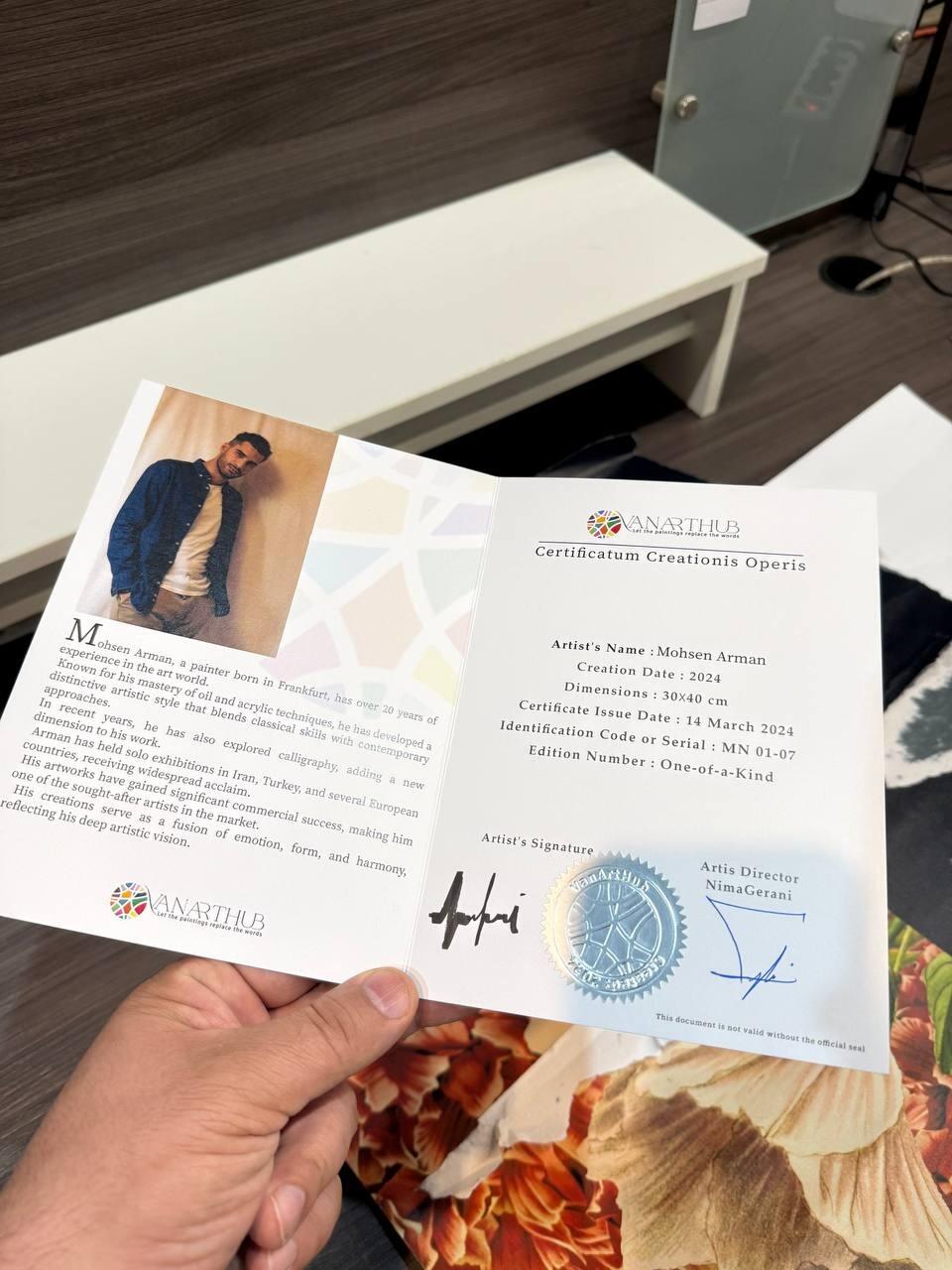
That is where the paperwork comes in. Every piece we sell is an original and ships with a Certificate of Authenticity, which records the work and the artist so you have a clear provenance. If you are new to that document, our guide on what a Certificate of Authenticity is for art explains what it should contain.
The short version
A medium is the liquid an artist adds to tube paint to change how it flows, dries, and finishes, and it stays in the film for the life of the work. Linseed oil is the traditional choice: it flows and glows, stays flexible, but dries slowly and can warm slightly over decades, most in the whites. Alkyd is a modern resin medium that dries much faster, forms a tougher film, and yellows less, with a slightly different feel some painters like less. Neither is better. Both age well when the piece gets steady daylight and stays out of hard sun. We sell originals only, based in Vancouver, each with a Certificate of Authenticity and a 14-day trial so you can live with the surface before you decide.