Commissioning is the most certain way to own artwork made without animal-derived materials, because you choose the materials before the first brushstroke. Instead of verifying a finished painting after the fact, you write the paint range, the black pigment, the primer, and the varnish into a short brief, and the artist works within it. This page explains what goes in that brief, lists the steps of a typical commission, and is honest about the two things no guide can promise in advance: cost and time, which are agreed between you and the artist.
Key takeaways
- A commission lets you specify every material up front instead of verifying it afterwards.
- Four items belong in every materials brief: the paint range, the black pigment, the primer on the surface, and the varnish.
- Ask for carbon black (PBk7) or Mars black (PBk11) instead of bone black (PBk9); per Golden's Just Paint journal, both are non-animal and slightly cooler in tone.
- Request the final material list in writing and keep it with the artwork's records.
- There is no standard price or schedule for a commission; both are set by agreement with the artist.
Why commissioning suits a vegan buyer
With a finished painting, verification runs backwards: you ask what was used and hope the artist kept records. With a commission the order flips. You state the materials first, the artist confirms they can work within them, and the question is settled before any paint touches the canvas. You also gain everything else a commission offers: the exact size for your wall, a palette that fits the room, and a subject with personal meaning.
For background on which materials carry animal ingredients and why, start with our vegan art guide. The short version: the risk points are the black pigment, the primer and sizing, a few historic colours, and the finish.
The materials brief, item by item
Keep the brief short and specific. One page is enough, and a clear brief is easier for the artist to accept.
| Brief item |
What to write |
Why it matters |
| Paint range |
Name an agreed brand and range, chosen using the maker's own vegan information |
Ranges differ within one brand, and formulations change, so the range is the real unit of choice |
| Black pigment |
Carbon black (PBk7) or Mars black (PBk11); no bone or ivory black (PBk9) |
Golden states bone black is made from carbonized cattle bones, and PBk9 also appears inside some mixed colours |
| Surface and primer |
Cotton or linen canvas primed with acrylic gesso, not rabbit-skin glue |
Traditional gesso and sizing use rabbit-skin glue; modern acrylic gesso is synthetic, per Golden |
| Varnish |
A synthetic varnish; no shellac |
Shellac is a resin secreted by the lac insect |
| Brushes (optional) |
Synthetic brushes, if the artist's tools matter to you |
Brush hair does not stay in the object, so this line depends on your own standard |
For the paint line, our guide to vegan paint brands and ranges collects the makers' own statements, and the pages on vegan canvas and gesso and vegan varnishes and mediums go deeper on the surface and the finish. Acrylics are a common choice for this kind of brief because the binder is a synthetic polymer, though individual pigments still need checking.
The steps of a commission
-
Choose the artist by style. Materials can be specified; style cannot. Look for an artist whose existing work you would happily hang as it is. Watching artists at work helps you judge fit; see watch art being made.
-
Share the idea. Size, orientation, palette, reference images, and where the piece will hang.
-
Send the materials brief. The table above, adjusted to your own standard on brushes.
-
Agree price, deposit, and schedule in writing. A clear agreement protects both sides before work begins.
-
Review progress at agreed points. One or two photo check-ins during the work are normal.
-
Approve, varnish, deliver. Give final approval before the varnish goes on, since the varnish is itself one of the brief items.
Cost and time, honestly
There is no standard rate for a commissioned painting. The price depends on size, complexity, materials, and the artist's practice, and it is agreed between you and the artist before work begins. Put the figure, the deposit, and what happens if either side withdraws into the written agreement. For scale only: ready-made originals at VanArtHub start at about $531, while a commission is priced on its own terms by the artist.
Time works the same way. Paintings built in layers need drying time between stages, and varnish is applied only after the paint has dried properly, so the artist's quoted schedule is the real number. Ask for it in writing, and add margin if the piece is for a fixed date. If the schedule does not fit your occasion, a finished original with a verified materials answer is the faster path; our guide on how to buy original art covers that route.
Keep the record
When the piece is finished, ask the artist for the final material list in writing: paint range, black pigment, primer, varnish. Keep it with the artwork. It answers any future question about the piece, and it matters if the work is ever sold on or passed down.
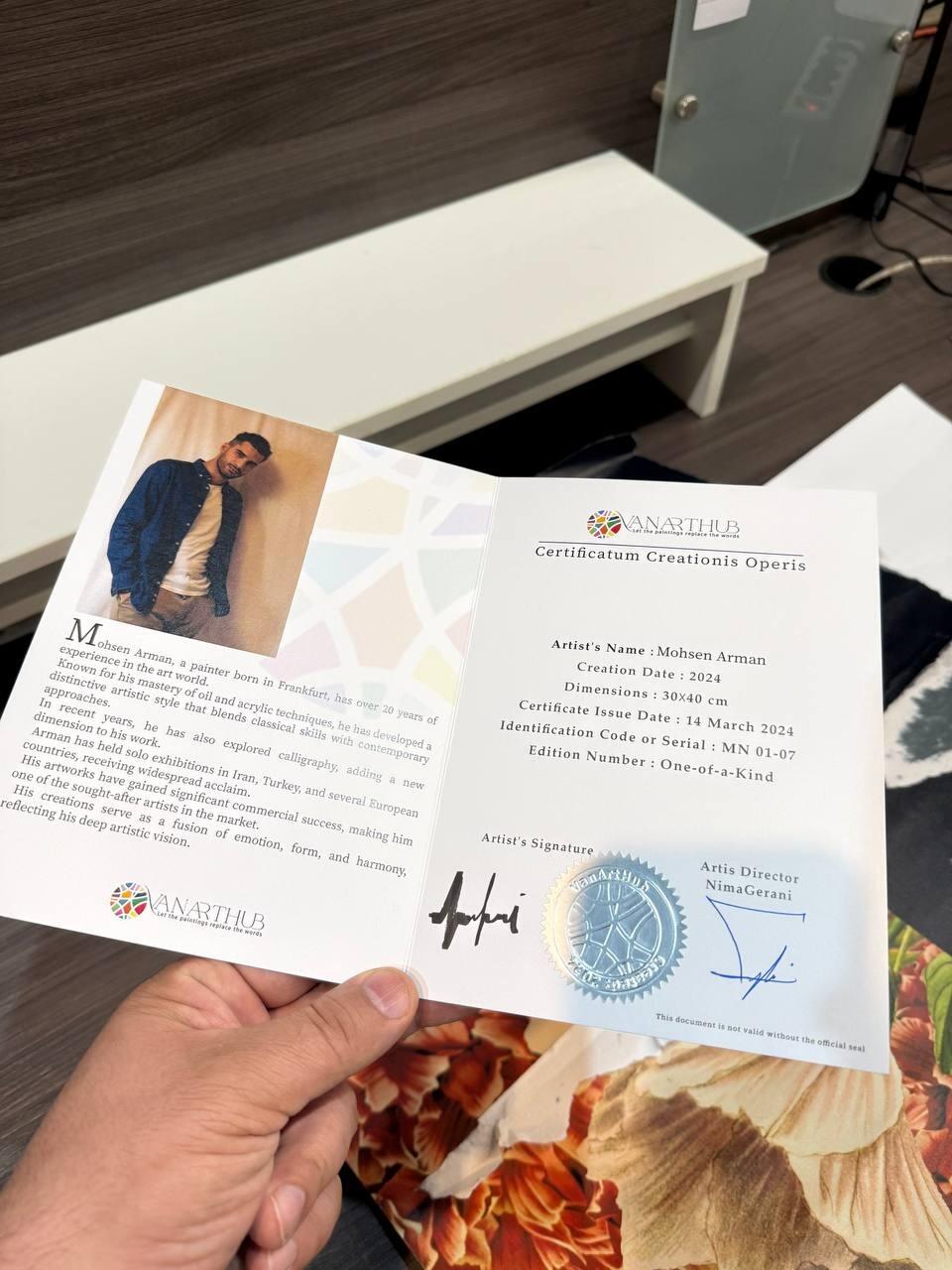
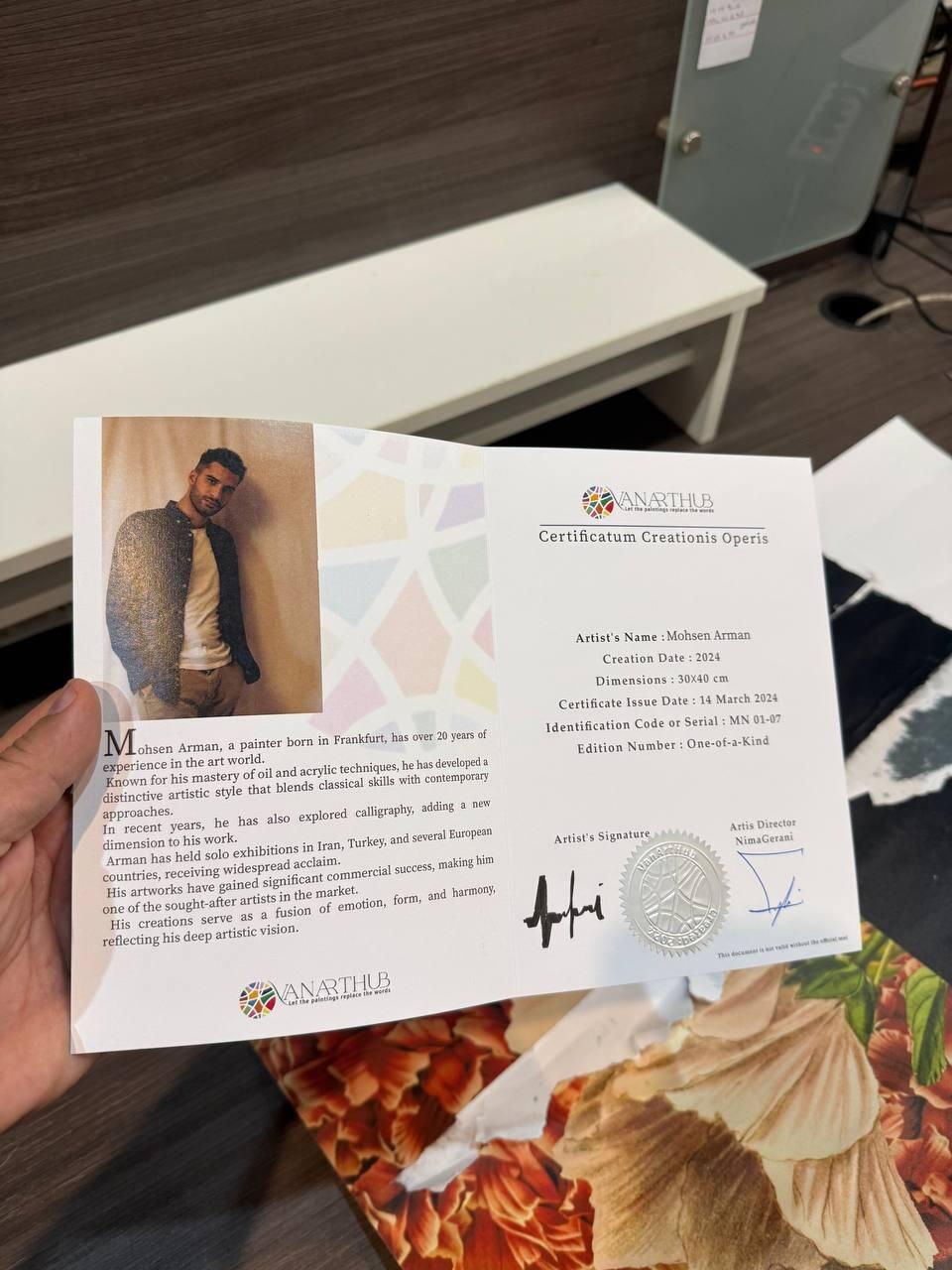
If a VanArtHub artist's existing work already fits what you want, ask us and we will put the materials question to the artist before you buy. Every piece we ship comes with a Certificate of Authenticity and a 14-day trial with a full refund. And if clean indoor air is part of why materials matter to you, the companion page on low-VOC paints and mediums is worth reading before you write the brief.
Common questions
Can I require vegan materials in an art commission?
Yes. Put the materials in the written brief before work begins: the paint range, a non-animal black pigment, an acrylic-primed surface, and a synthetic varnish. The artist then confirms they can work within it, or tells you what they cannot source.
Which black pigment should I ask for in a vegan commission?
Ask for carbon black (PBk7) or Mars black (PBk11). Bone black and ivory black (PBk9) are made from charred animal bones, and per Golden's Just Paint journal the non-animal blacks are slightly cooler in tone.
How much does a commissioned vegan painting cost?
There is no standard rate. The price depends on size, complexity, materials, and the artist's practice, and it is agreed between you and the artist in writing before work begins.
How long does a vegan art commission take?
The artist sets the schedule. Layered paintings need drying time between stages, and varnish goes on only after the paint has dried, so ask for a written timeline and add margin if the piece is for a fixed date.
What if a colour I want has no vegan version?
Ask the artist to propose the nearest alternative pigment and to note the substitution in the material list. Judge by the pigment code rather than the colour name, since a name does not fix the ingredients and the code does.
A commission rewards patience with a painting that is yours in every detail, materials included. For how commissioning works at this store, see the custom painting commission guide. If you would rather start sooner, browse contemporary Canadian art and ask us to put your materials question to the artist before you buy.