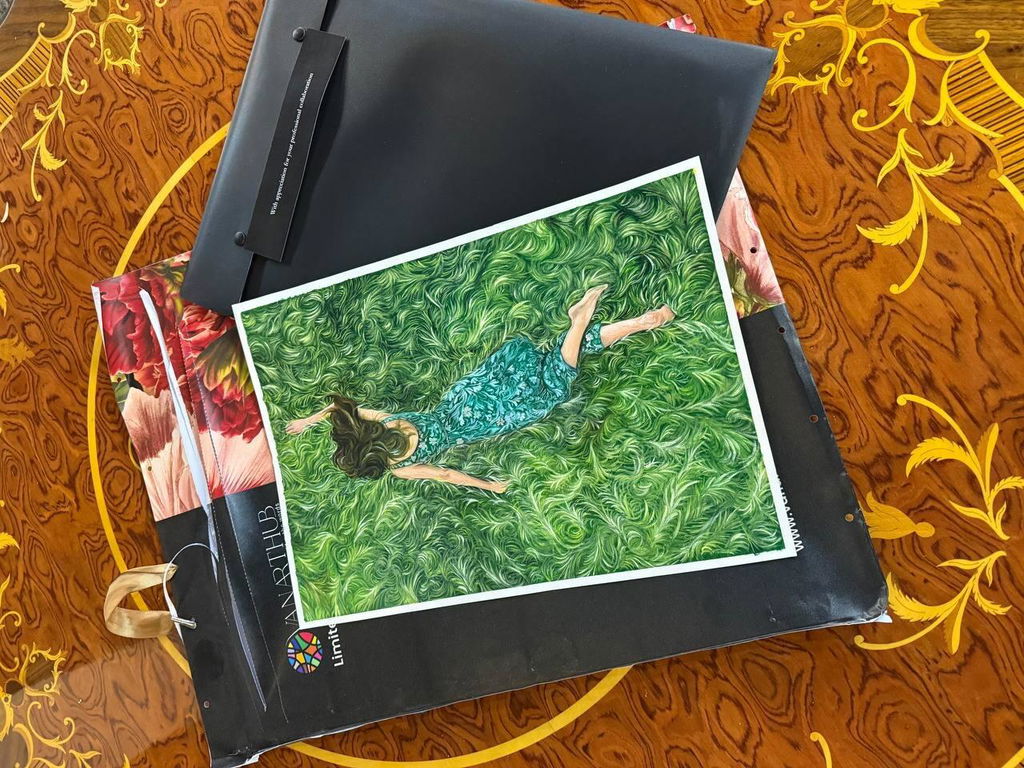
If the phrase vegetarian art means anything literal, it is the still life of vegetables and fruit: paintings in which produce itself is the whole subject. The genre has a long history. Giuseppe Arcimboldo built portraits out of fruit and vegetables in the 16th century, Caravaggio gave a simple basket of fruit the full attention of a major painter, Dutch Golden Age artists filled tables with the harvest in the 17th century, and Cezanne's apple still lifes carried the genre into modern art.
Today these paintings feel most at home in kitchens and dining rooms, where the subject matches what the room is for. This page walks through the history first, then turns practical.
Key takeaways
- Vegetable and fruit still life is one of the classic genres of Western painting, with major examples from the 16th and 17th centuries onward.
- Giuseppe Arcimboldo composed entire portraits from fruit and vegetables in the 16th century.
- Caravaggio's Basket of Fruit made ordinary produce the sole subject of a serious painting.
- Dutch Golden Age painters of the 17th century turned tables of fruit, vegetables, and flowers into a genre of their own.
- Produce still lifes suit kitchens and dining rooms because the painting and the room share the same theme: food, gathered and shared.
The harvest table of the Dutch Golden Age
In the 17th century, painters in the Netherlands made still life a genre in its own right. Tables piled with fruit, vegetables, and flowers were painted with enormous care: the shine on a grape, the weight of a cabbage, the curl of a lemon peel. These paintings treated everyday things as worthy of serious attention, and that idea never left Western art.
What makes the Dutch harvest table feel relevant now is how domestic it is. These are not scenes of gods or battles. They show food before the meal, on a table much like the one in your own dining room. That is why the genre moves so easily into a modern home: the subject already belongs where people cook and eat.
Arcimboldo, Caravaggio, and Cezanne: three ways to paint produce
Giuseppe Arcimboldo, working in the 16th century, took the playful route. He composed entire portraits out of fruit and vegetables: a face built from pears, marrows, grapes, and leaves. The paintings are strange and funny at the same time, and they show how much personality produce can carry.
Caravaggio's Basket of Fruit does the opposite. There is no person and no joke, only a basket of fruit, painted with the full skill of a major artist. It made a quiet argument that produce alone could hold a canvas, with nothing else in the frame to help it.
Cezanne's apple still lifes brought the genre into the modern era. In his hands, a few apples on a table became an exercise in form, colour, and weight, and the influence of those paintings is still visible in contemporary still life work.
| Artist or school |
Best known for |
Why it still matters |
| Giuseppe Arcimboldo |
Portraits composed entirely of fruit and vegetables |
Shows the playful side of the genre |
| Caravaggio |
Basket of Fruit, produce as the sole subject |
Proved produce alone can carry a painting |
| Dutch Golden Age painters |
Tables of fruit, vegetables, and flowers |
Made still life a genre in its own right |
| Cezanne |
Apple still lifes |
Carried the genre into modern art |
Why people call it vegetarian art
The label is informal, and it describes the subject, not the materials. A painting of vegetables can still involve animal-derived materials in its pigments, brushes, or canvas preparation, while a portrait could in theory be painted entirely with plant-based ones. Our guide to vegan vs vegetarian art unpacks that difference, and the vegan art hub covers the materials one by one.
Even so, the label points at something real. People who build their meals around plants often want their walls to reflect the same care, and a produce still life does that without a slogan. It celebrates the food itself.
Why the genre suits kitchens and dining rooms today
The simplest reason is that the subject matches the room. A fruit still life over a dining room sideboard gives guests something to look at that belongs to the occasion, and it starts conversations the way abstract work sometimes cannot. The colours help too: the reds of tomatoes, the greens of cabbage leaves, the golds of pears sit comfortably with wood tables and neutral walls. The Canadian dining room art collection gathers original works suited to exactly that setting.
Kitchens ask for a little more care, because heat and steam are hard on artwork. Our practical guide to art for plant-based kitchens covers where to hang a painting and how to frame it in rooms where cooking happens.
A well-made original also outlasts the room around it. An oil or acrylic painting can serve a home for decades; our page on how long a painting lasts explains what affects that lifespan.
Choosing a produce still life of your own
Look for a work that treats the subject with real attention rather than as quick decoration. The whole history of the genre, from Caravaggio's basket to Cezanne's apples, rests on that attention, and you can see it in a contemporary painting too: in how the light falls, and in whether the fruit has weight. If living plants appeal more than harvested produce, our page on botanical art covers that neighbouring tradition.
An original carries this genre better than a mass-produced print does; the reasons are laid out in original art vs prints. VanArtHub sells originals only, each signed by the artist and delivered with a Certificate of Authenticity, with prices starting from about $531. Every purchase includes a 14-day trial: hang the painting in your dining room, live with it, and return it within 14 days for a full refund if it does not fit, with return shipping paid.
Common questions
What is a painting of fruit and vegetables called?
It is a still life, one of the classic genres of Western painting. When the subject is food, people sometimes call it a kitchen still life, or informally, vegetarian art.
Why did old master painters choose fruit and vegetables as subjects?
Produce let painters show their skill with colour, texture, and light on everyday objects, and it gave ordinary domestic life a place in serious art. Famous examples include Caravaggio's Basket of Fruit and the Dutch harvest tables of the 17th century.
Is a fruit or vegetable still life a good choice for a kitchen?
Yes, it is one of the most natural pairings in decorating, because the subject matches the room. Just keep the painting away from the stove and sink, since heat, steam, and cooking grease damage artwork over time.
What size still life works over a dining room sideboard?
A useful rule is to choose art about two thirds the width of the furniture below it. One medium painting or a pair of smaller works both sit well over a sideboard, hung so the centre is near eye level for a standing guest.
Are still life paintings still popular with collectors?
Yes. Contemporary painters keep working in the genre, and the subject suits modern homes as well as it suited 17th-century ones: it is domestic in scale and easy to live with.
When you are ready to look at real works, browse the Canadian kitchen art collection for original paintings chosen for the rooms where food is made and shared.