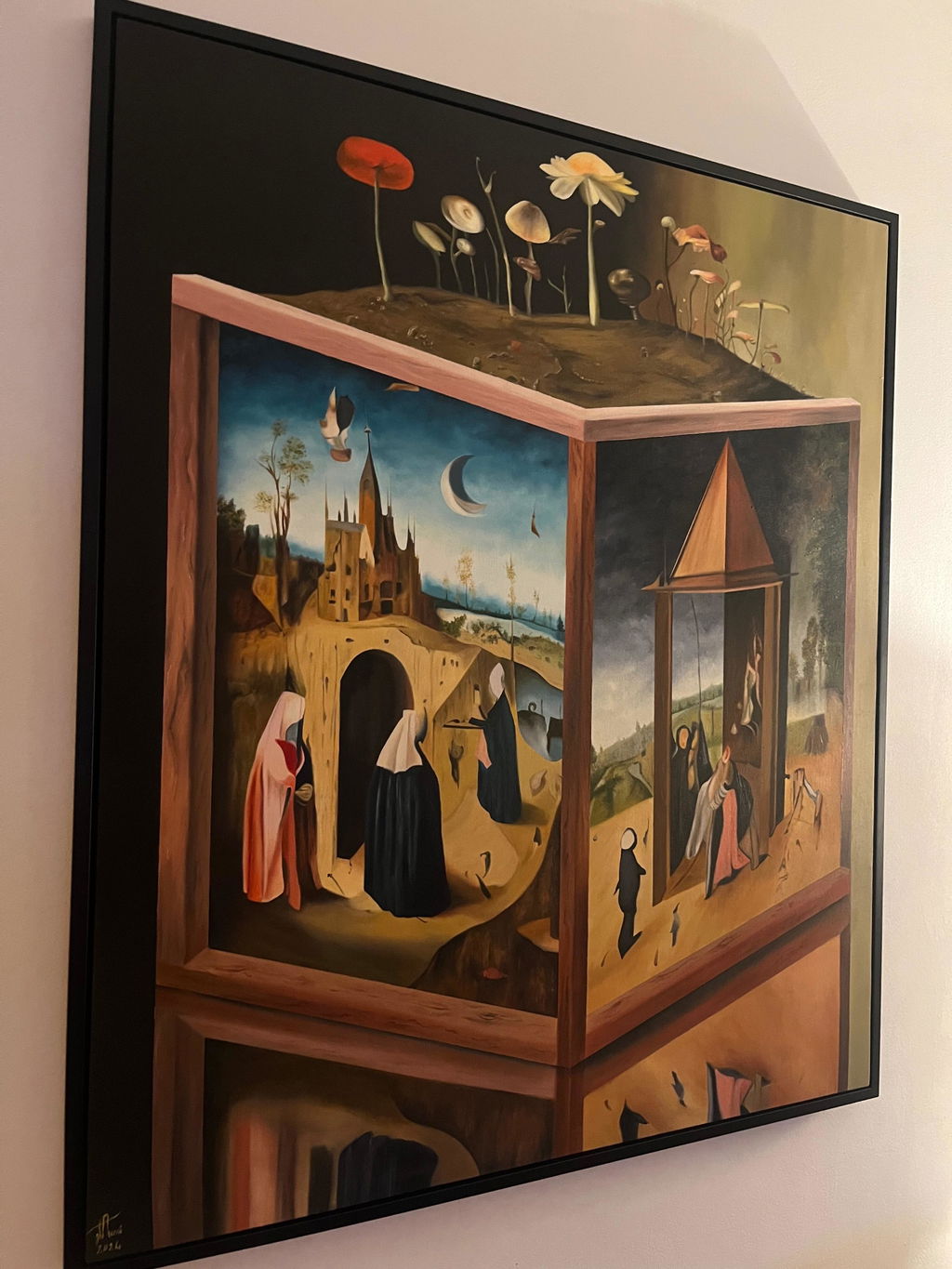
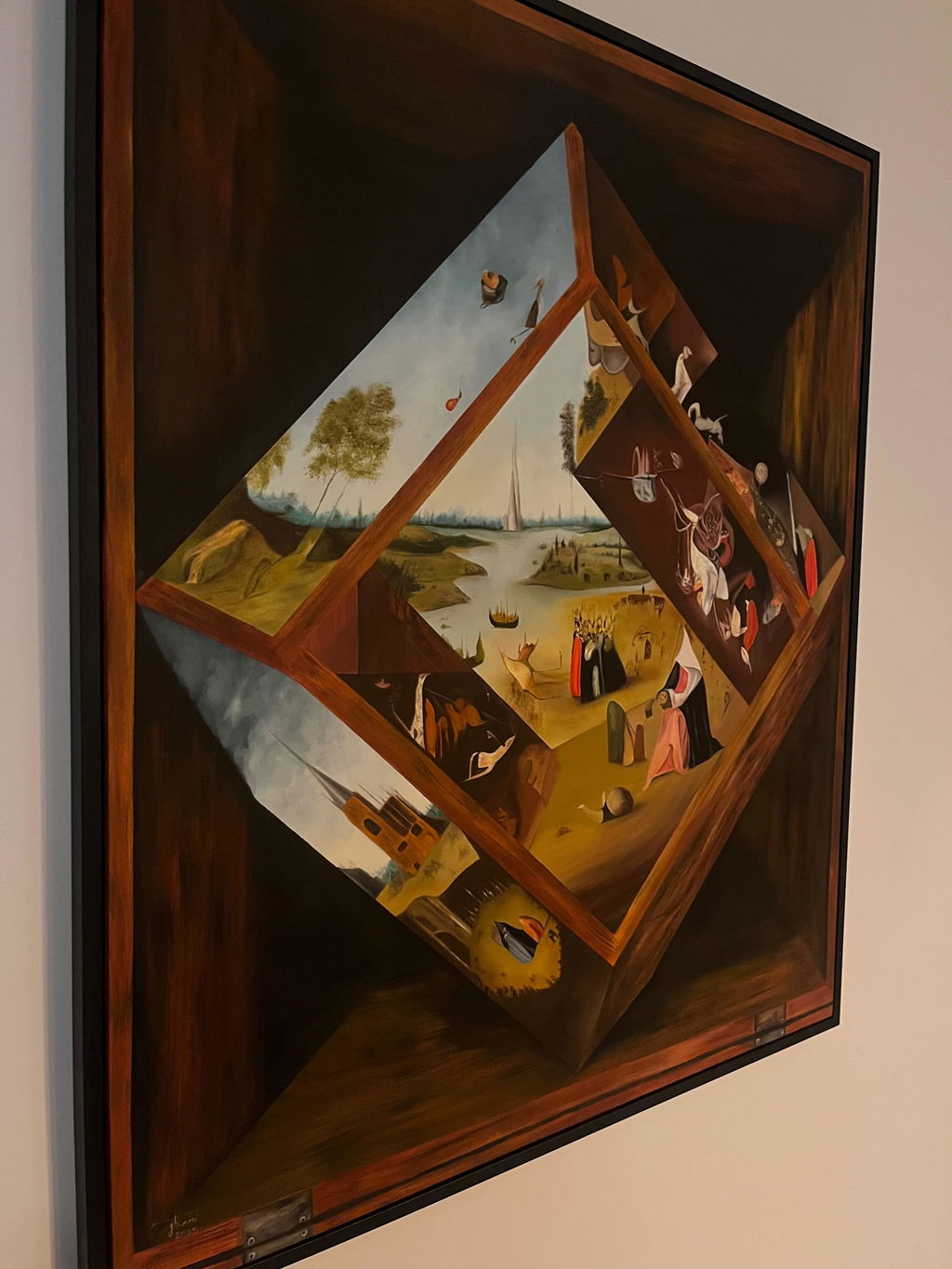
It depends, and the answer has three parts. The binder in oil paint is linseed oil, pressed from flax seed, so the base of the paint is plant-based. The exceptions are a few pigments, most often bone black (PBk9), and a small amount of beeswax used as a stabilizer in some brands. The third part is the one most buyers never see: the sizing and gesso under a traditional oil painting are made with rabbit-skin glue.
So a tube of oil colour can be vegan while the finished painting is not. This page walks through each layer, from the oil itself down to the canvas. For a finished work, the only reliable source is the artist who made it. Tell us that vegan materials matter to you, and VanArtHub will put the question to the artist before you buy.
Key takeaways
- Linseed oil, the standard binder in oil paint, is pressed from flax seed and is plant-based.
- Bone black (PBk9) is made from charred animal bones. Golden states its version is made from carbonized cattle bones.
- Williamsburg oil colours contain small amounts of beeswax as a stabilizer, by the maker's own account.
- Traditional canvas sizing and traditional gesso use rabbit-skin glue, which Golden describes as refined rabbit collagen.
- Modern acrylic sizing and acrylic gesso are synthetic, so an oil painting can be built animal-free from the canvas up.
The binder is plant-based
Oil paint is pigment ground into a drying oil, and the standard oil is linseed, pressed from the seed of the flax plant. Some makers grind certain colours in other plant oils, such as walnut or safflower. Either way, the oil itself involves no animal.
That separates oil paint from the older binders it replaced. Egg tempera uses egg yolk. Casein paint uses milk protein. If the binder were the whole story, oil paint would be vegan by default. It is not the whole story, which is why the rest of this page exists.
Pigments: check the black
The pigment exceptions in oil paint are the same ones found in every medium. The most common is bone black, also sold as ivory black, with the Colour Index code PBk9, made from charred animal bones. Golden states that its Bone Black pigment is made from carbonized cattle bones. Carmine, a red dye extracted from the dried bodies of cochineal insects, is the other classic example.
The replacements are easy to find. Carbon black (PBk7) and Mars black (PBk11) are non-animal, and according to Golden's Just Paint journal they run slightly cooler in tone than bone black. Read the pigment codes on the tube rather than the colour name, and see animal-derived pigments for the complete list across all media.
Beeswax in the tube
Some oil colours contain a small amount of wax to keep the pigment and oil from separating in the tube. Williamsburg, an oil paint brand owned by Golden, states that its colours contain small amounts of beeswax as a stabilizer. Beeswax comes from bees, so most vegans avoid it.
Stabilizers rarely appear on the front of a label, which makes wax the easiest animal ingredient to miss in an oil colour. If it matters to you, ask the maker whether a specific colour or line contains wax, and ask again when you restock, because formulations change.
Under the paint: sizing and gesso
An oil painting is a stack of layers, and the bottom layers are where tradition leans on animal products. Raw canvas is first sealed with a sizing layer, then primed with gesso. Traditional sizing uses rabbit-skin glue, which Golden describes as refined rabbit collagen, and traditional gesso is made with the same glue.
The modern route is synthetic: acrylic sizing (Golden makes GAC 400 for stiffening fabric) and acrylic gesso. Both do the job without animal glue. You cannot tell from the front of a painting which preparation the artist used, so ask. The full story of supports and grounds is in vegan canvas and gesso.
Every layer at a glance
| Layer or item |
Traditional material |
Animal-free option |
| Binder |
Linseed oil (plant-based) |
Already animal-free |
| Black pigment |
Bone black (PBk9) |
Carbon black (PBk7) or Mars black (PBk11) |
| Stabilizer |
Beeswax in some brands |
Colours made without wax |
| Canvas sizing |
Rabbit-skin glue |
Acrylic sizing |
| Ground |
Traditional glue gesso |
Acrylic gesso |
| Brushes |
Hog bristle, sable |
Synthetic brushes |
Brushes belong on the checklist because oils are where animal-hair brushes are most common. Hog bristle is the classic oil painting brush, and sable is common for detail work; both are animal hair. Synthetic brushes have improved greatly and now cover both jobs well. See vegan brushes for how to choose.
Solvents such as turpentine raise a separate question, about indoor air rather than animal ingredients. If that is part of your concern, read low-VOC paints and mediums in our sustainable art hub.
Common questions
Is linseed oil vegan?
Yes. Linseed oil is pressed from flax seed, so it is plant-based. It is the standard binder in oil paint, and some makers also grind colours in other plant oils such as walnut or safflower.
Why do some oil paints contain beeswax?
A small amount of wax helps keep the pigment and oil from separating in the tube. Williamsburg oil colours contain small amounts of beeswax as a stabilizer, by the maker's own account. Stabilizers are rarely listed on the label, so ask the maker about a specific colour.
Do oil paintings sit on animal glue?
Traditionally, yes. Traditional canvas sizing and traditional gesso are made with rabbit-skin glue. Modern acrylic sizing and acrylic gesso are synthetic, and many artists now use them. For a specific painting, only the artist can say which was used.
Can an oil painting be completely vegan?
Yes. An artist who chooses non-animal pigments, wax-free colours, an acrylic-primed canvas, and synthetic brushes can build a fully animal-free oil painting. None of this is visible in the finished work, so ask before you buy.
Do I lose anything by avoiding bone black?
Very little. Carbon black (PBk7) and Mars black (PBk11) are non-animal and widely available. According to Golden's Just Paint journal, they are slightly cooler in tone than bone black, which is a subtle difference.
Oil paint can be vegan, but you have to check each layer, from the black on the palette to the glue under the gesso. Browse our original oil paintings, and for the rest of the materials story, start at the vegan art guide.