Many colored pencils and pastels are vegan, but some are not, and the packaging rarely tells you which is which. Two things decide the answer: the binder that holds the pigment together, which can include beeswax, and the pigments themselves, a few of which come from animals. The only reliable way to know is to check the maker's own information for the exact range and colour you want.
This page explains what is inside pencils and pastels, what Faber-Castell and Derwent report about their own ranges, and what to check before you buy. If you are looking at a finished drawing rather than a box of pencils, VanArtHub can help in a different way: ask us about any work that interests you and we will put the materials question to the artist before you buy.
Key takeaways
- A colored pencil core is pigment held in a mix of waxes and oils. The wax can come from plants, from petroleum, or from bees, and it varies by maker and by range.
- Faber-Castell states that its products are vegan except its beeswax crayons. That is the brand's own account.
- Derwent's brand information, as reported by retailers, lists Coloursoft, Inktense, Metallic, and Lightfast pencils as vegan-friendly ranges. Confirm with the maker, because formulations change.
- Watch two pigments: carmine, which is extracted from cochineal insects, and ivory black or bone black (PBk9), which is made from charred animal bones.
- Art material labels rarely list binder ingredients, so a written answer from the manufacturer is the strongest evidence you can get.
What is inside a colored pencil
The core of a colored pencil is pigment held together by a binder, usually a blend of waxes and oils, pressed into a thin rod and cased in wood. The wax is the first vegan question. Pencil makers use plant waxes such as carnauba, mineral waxes such as paraffin, and sometimes beeswax, which comes from bees. Two pencils can look identical and draw almost the same line while one contains beeswax and the other does not. The box almost never says which wax was used.
Oil-based pencils replace part of the wax with vegetable oil, but they still contain wax, so the same question applies. This is why the honest answer to "are colored pencils vegan" is: it depends on the range, and only the maker knows for certain. If the material side of art interests you beyond the animal question, the sustainable hub has a wider guide to eco-friendly and natural art materials.
What is inside a pastel
Soft pastels are closer to pure pigment. A stick of soft pastel is pigment plus a small amount of gum binder, and the common gums are plant products. Gum arabic, for example, is sap collected from acacia trees. That makes the binder side of soft pastels less of a concern than pencils, though makers do not all use the same recipe, so it is still worth asking.
Oil pastels are a different product. They bind pigment with wax and oil, like a soft crayon, so they carry the same wax question as pencils. Wax crayons are the clearest case of all: Faber-Castell states that its beeswax crayons are the one product group in its range that is not vegan.
What the makers report
Two large pencil brands have said something public about this, and both statements should be read as the maker's own account, not as independent testing.
Faber-Castell states that its products are vegan with the exception of its beeswax crayons. Derwent's brand information, as reported by the retailers that stock it, lists the Coloursoft, Inktense, Metallic, and Lightfast pencil ranges as vegan-friendly. Neither claim has been checked by an outside body, and recipes change over time, so treat these statements as a starting point and confirm with the manufacturer before you rely on them.
| Maker and range |
Reported status |
Source of the claim |
| Faber-Castell, most products |
Vegan, by the brand's own account |
Faber-Castell's own statement |
| Faber-Castell beeswax crayons |
Not vegan (they contain beeswax) |
Faber-Castell's own statement |
| Derwent Coloursoft, Inktense, Metallic, and Lightfast |
Listed as vegan-friendly |
Brand information as reported by retailers |
| Other makers and ranges |
Varies, and often unstated |
Ask the manufacturer in writing |
The pigment question
Even a pencil with a fully plant-based binder can carry an animal-derived pigment. The two to know are carmine, a red dye extracted from the dried bodies of cochineal insects, and ivory black, also sold as bone black, which is made from charred animal bones.
Pigments have code names that appear on better-labelled art materials. Bone black is PBk9, which means Pigment Black 9 in the international Colour Index system. The vegan black alternatives are carbon black (PBk7) and Mars black (PBk11), which contain no animal material. Our reference page on animal-derived pigments lists each of these pigments, where it appears, and the alternative to look for.
What to check before you buy
For pencils and pastels, a short checklist covers most situations:
- Look up the range on the maker's website and search for a materials or vegan statement.
- Read individual colour names and pigment codes. Skip PBk9 blacks and carmine reds if you want a fully animal-free palette.
- Email the maker and name the exact range and colours you plan to buy. Formulations change, so a recent written answer is worth more than an old forum thread.
- Remember the paper. Many fine art papers are sized with gelatin, an animal product, so a vegan drawing needs vegan paper as well as vegan pencils.
If you are checking a finished artwork instead of a material, the process is different. Our guide on how to verify vegan art walks through the questions to ask an artist or gallery, and what a useful answer looks like.
Common questions
Are soft pastels usually vegan?
Often, because the binder is usually a plant gum, but not always. Pigments vary by colour, and carmine or bone black shades are animal-derived. Check the pigment codes and ask the maker about the specific range.
How can I tell if a colored pencil contains beeswax?
You cannot tell by looking. Check the maker's published materials information or write to them. Faber-Castell, for example, states that only its beeswax crayons contain beeswax, but every brand is different.
Which Derwent pencils are reported as vegan-friendly?
Derwent's brand information, as reported by retailers, lists the Coloursoft, Inktense, Metallic, and Lightfast ranges as vegan-friendly. Confirm directly with Derwent before relying on this, because formulations change.
Are pencil and pastel drawings on paper vegan?
Only if the paper is too. Many fine art papers are sized with gelatin, an animal product, so ask about the paper as well as the pencils or pastels used on it.
Do pencil coatings and finishes matter for vegans?
Sometimes. Some finishes and inks use shellac, a resin secreted by the lac insect. If coatings matter to you, ask the maker whether the barrel finish is shellac-free.
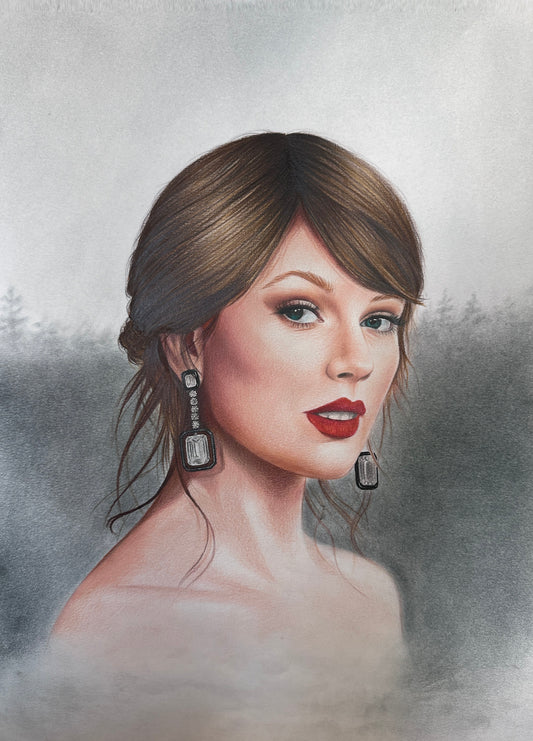
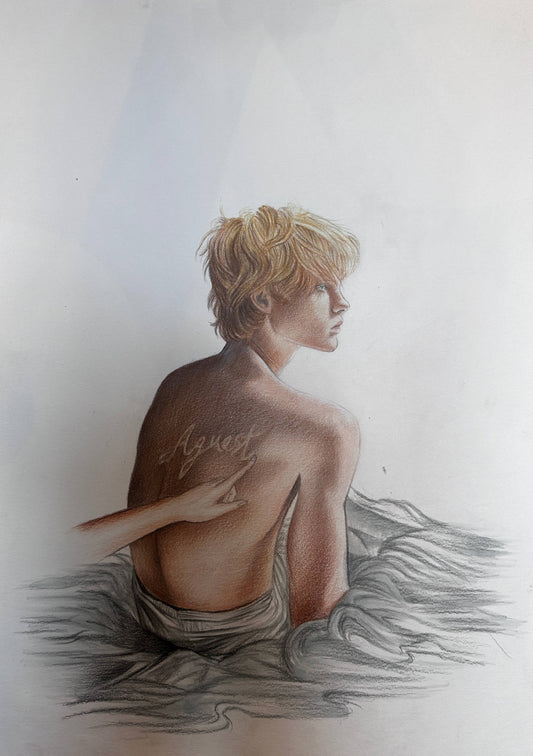
Colored pencil rewards a close look: slow, layered, hand-built colour. Browse original drawings in the colored pencil collection, and if animal-free materials matter to you, ask before you buy and we will put the question directly to the artist. For the full picture across every medium, start at the vegan art hub.