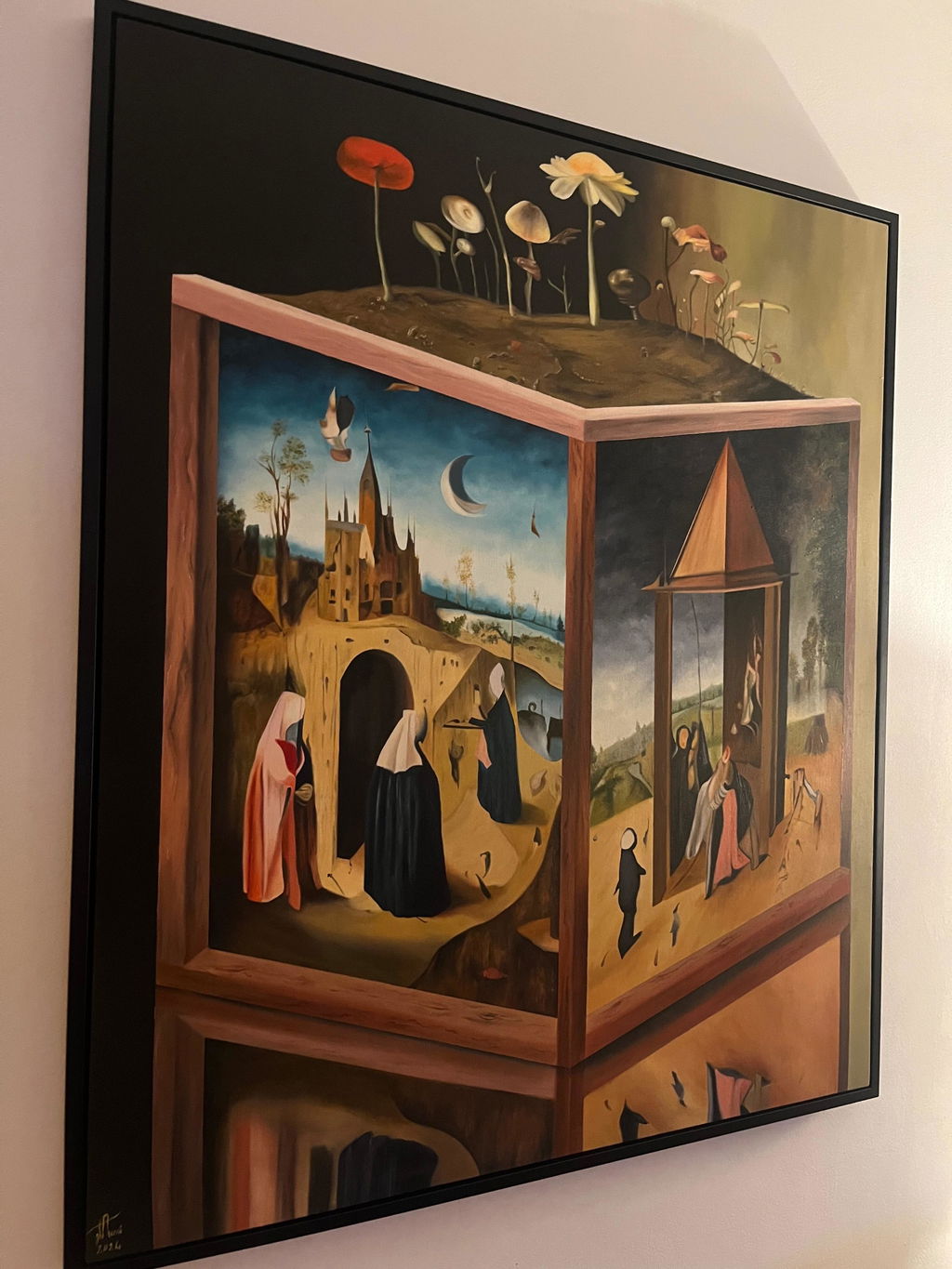
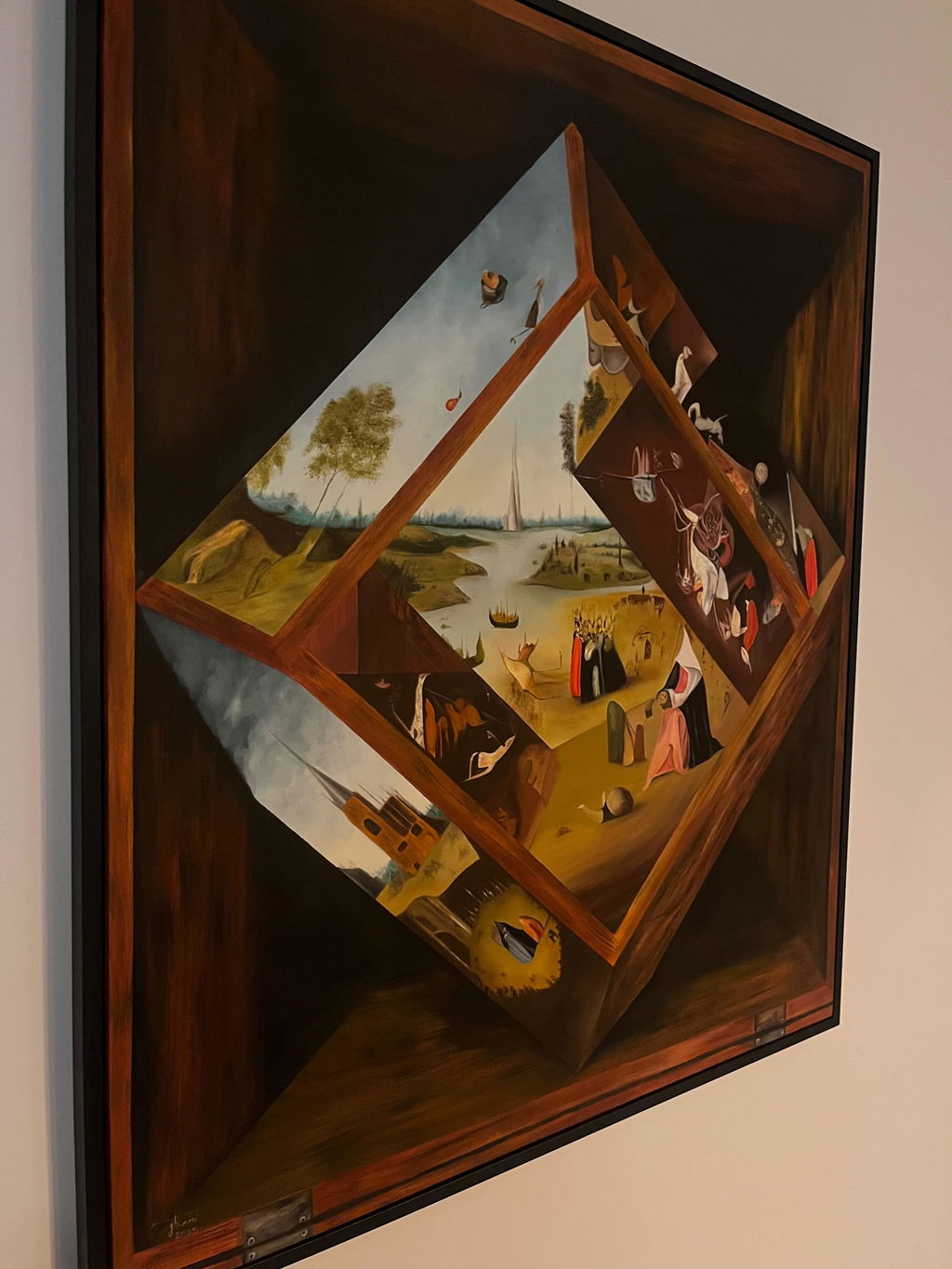
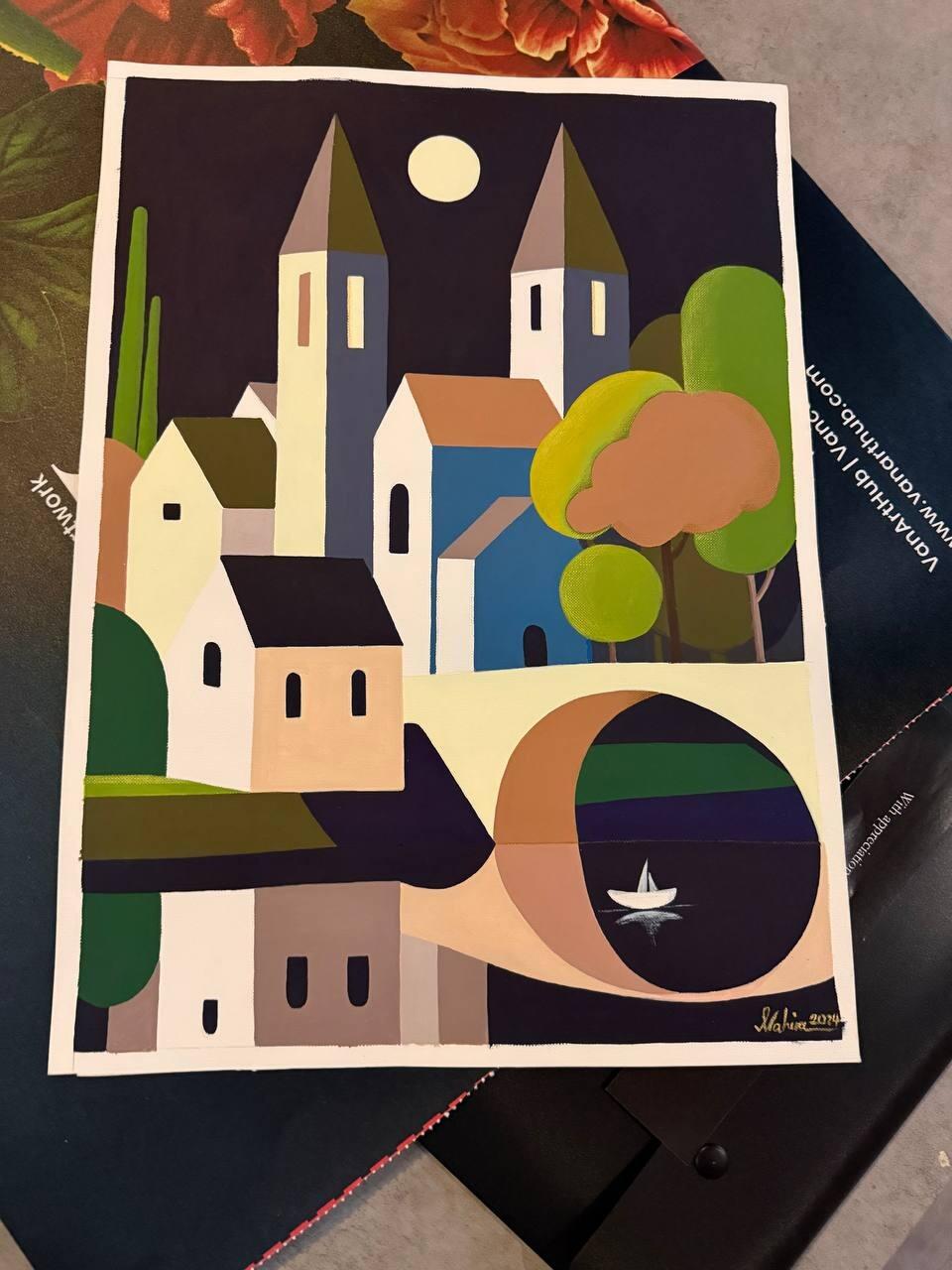
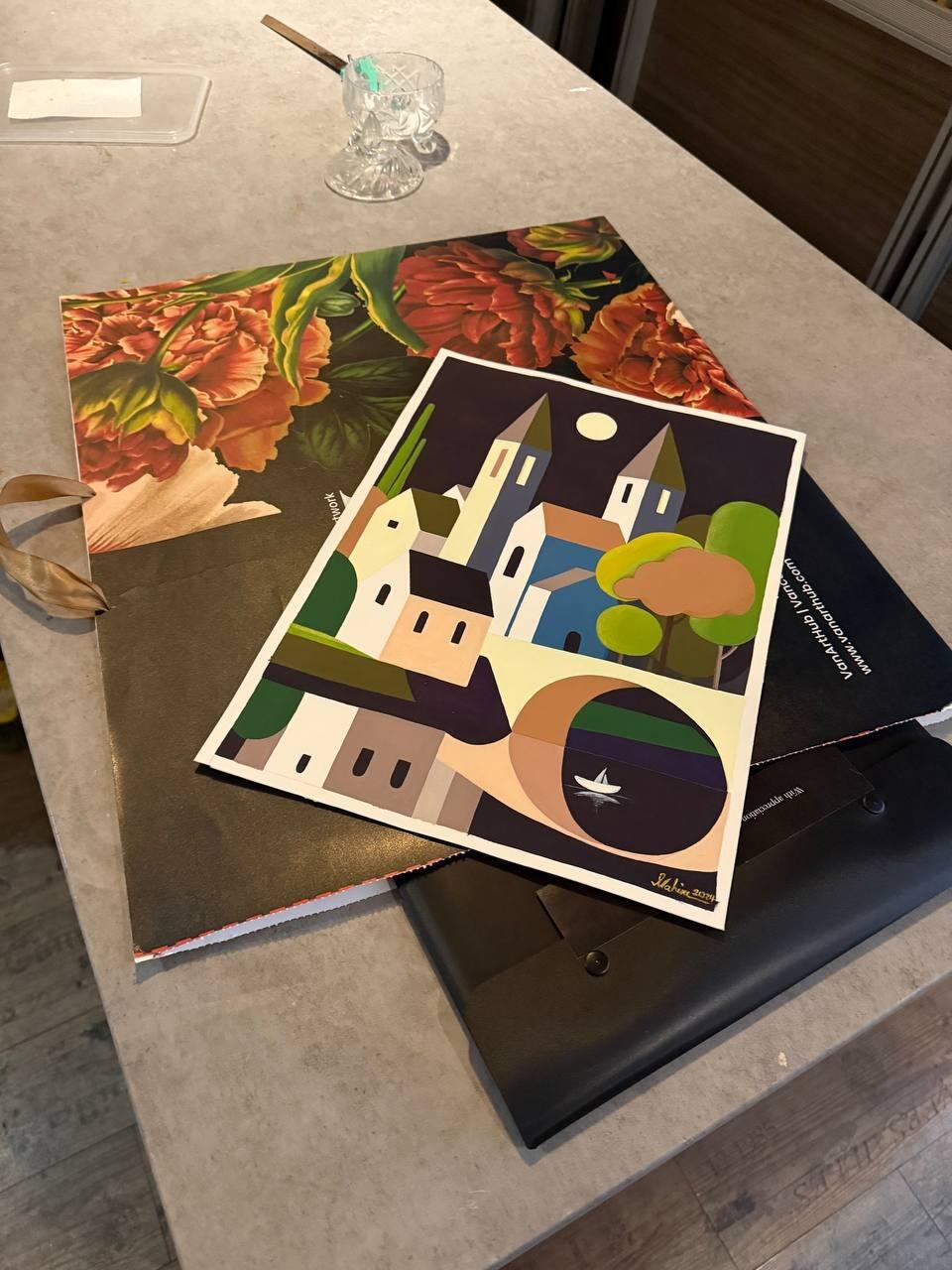
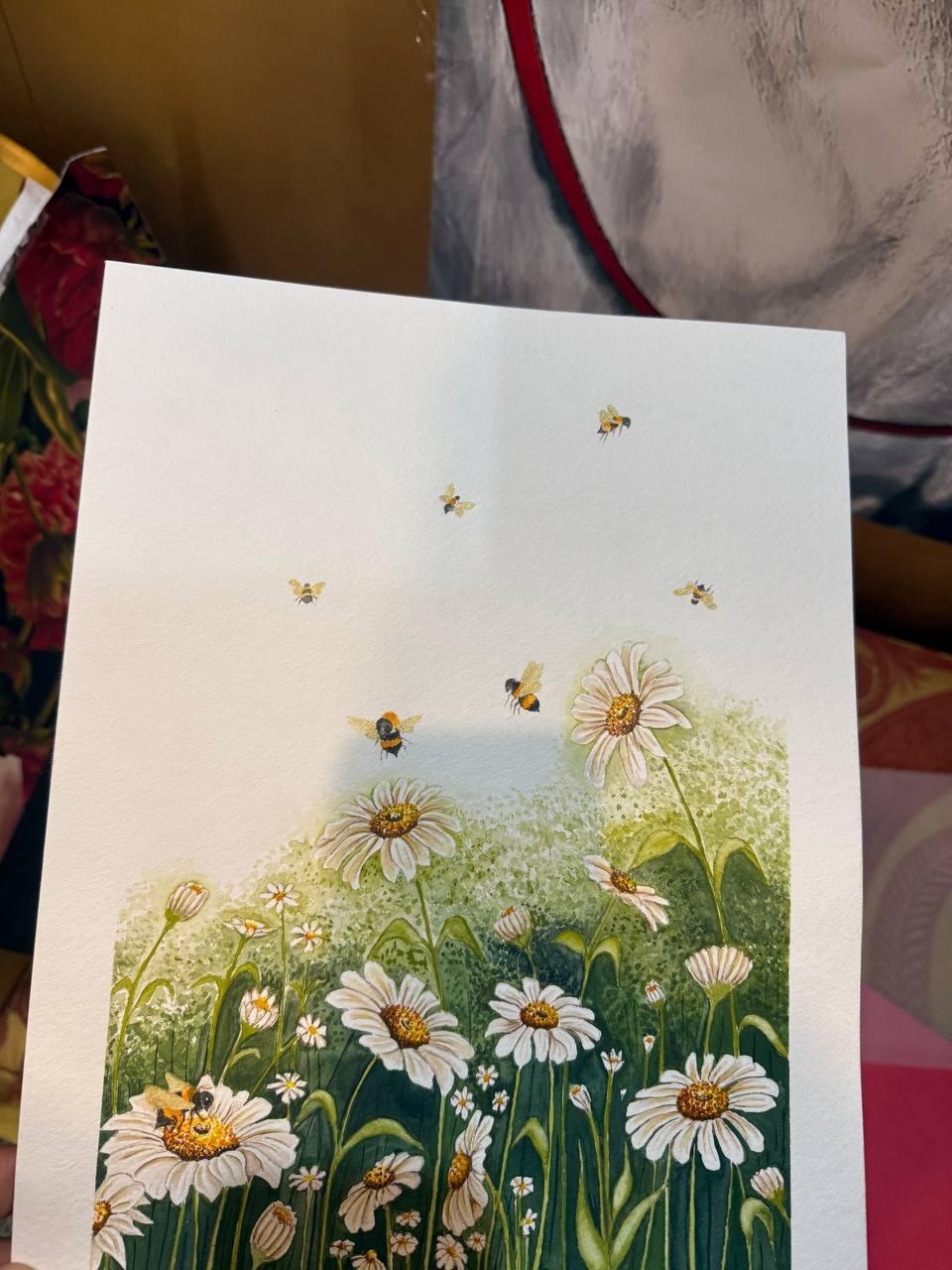
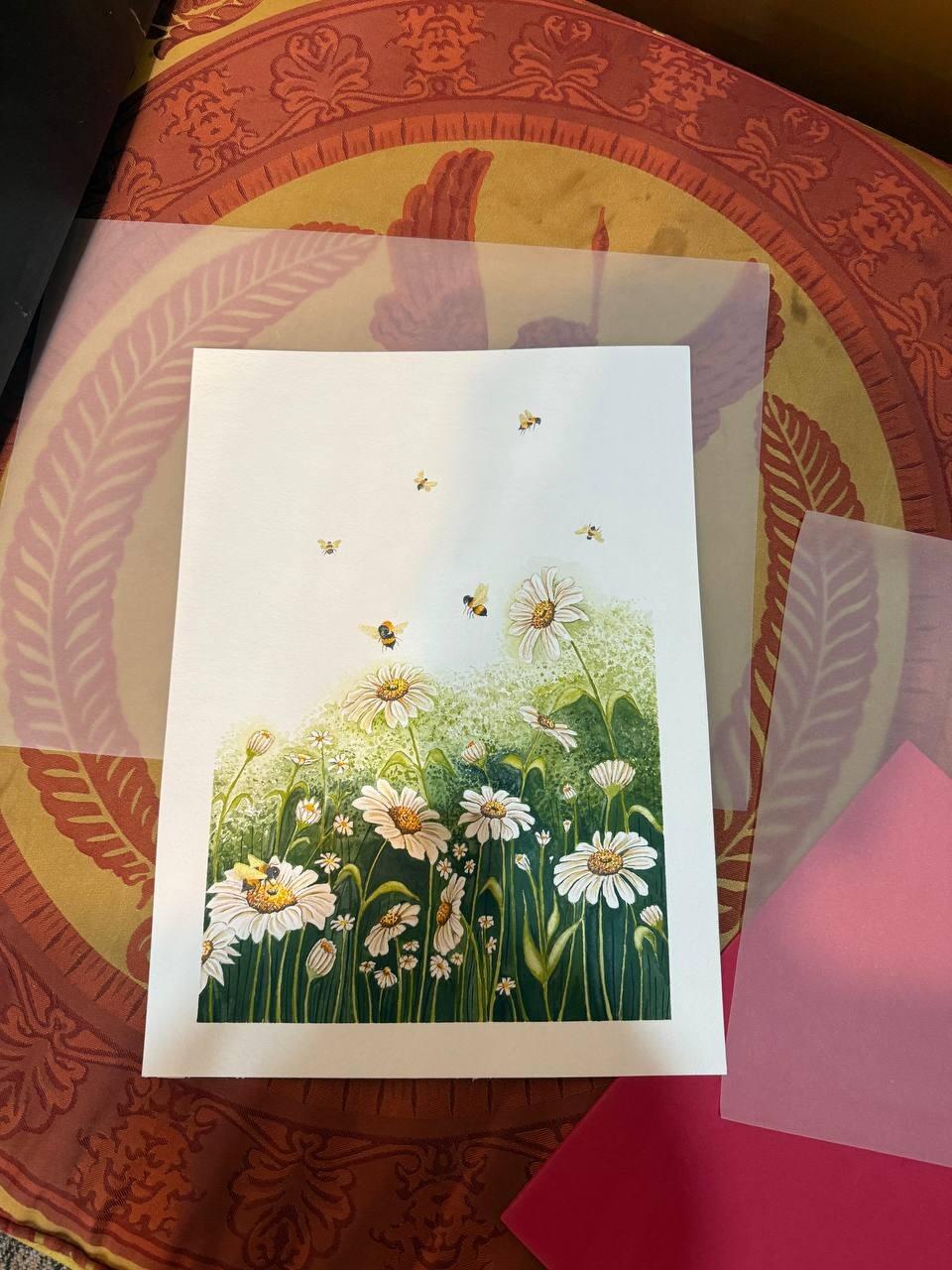
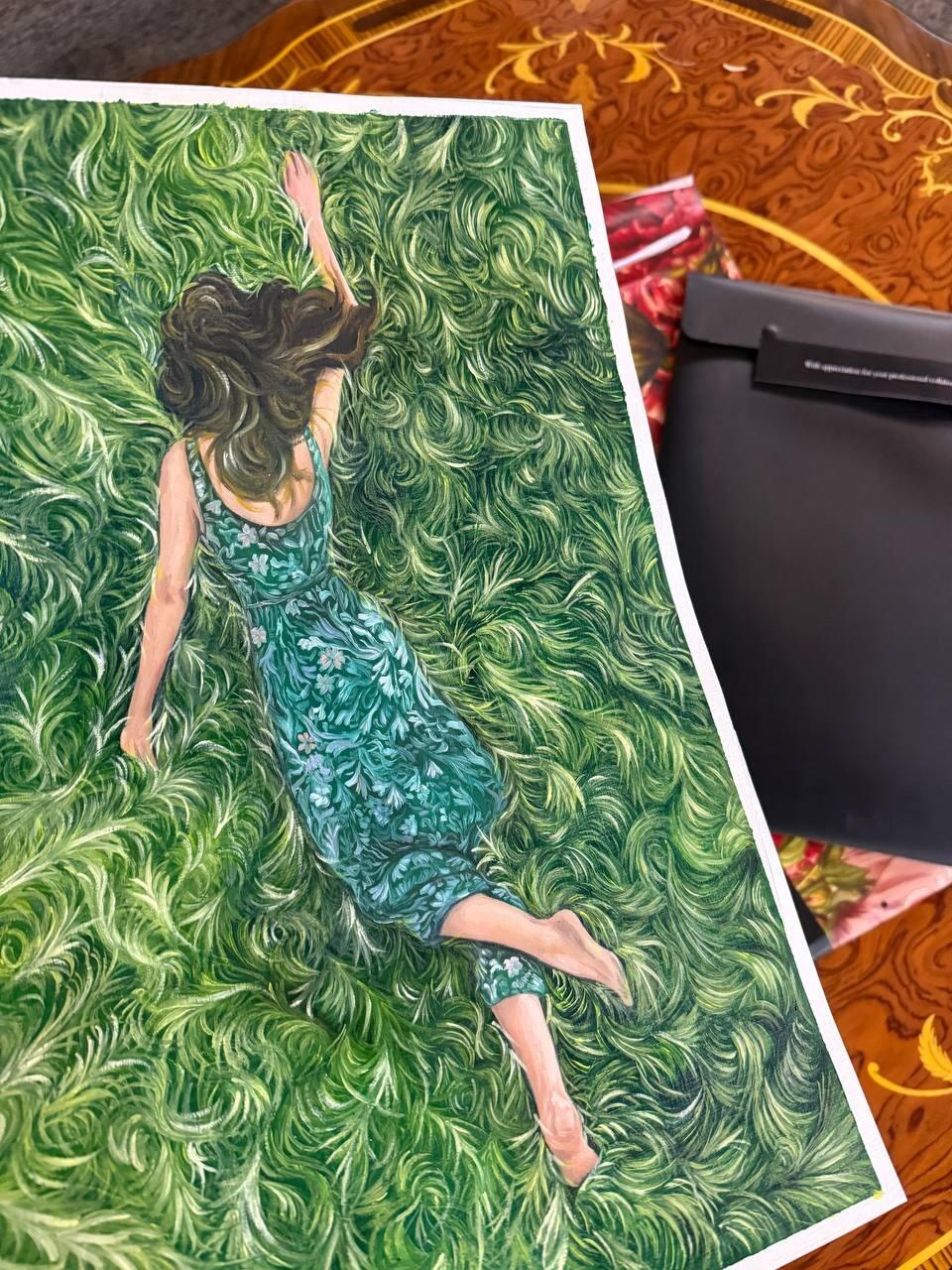
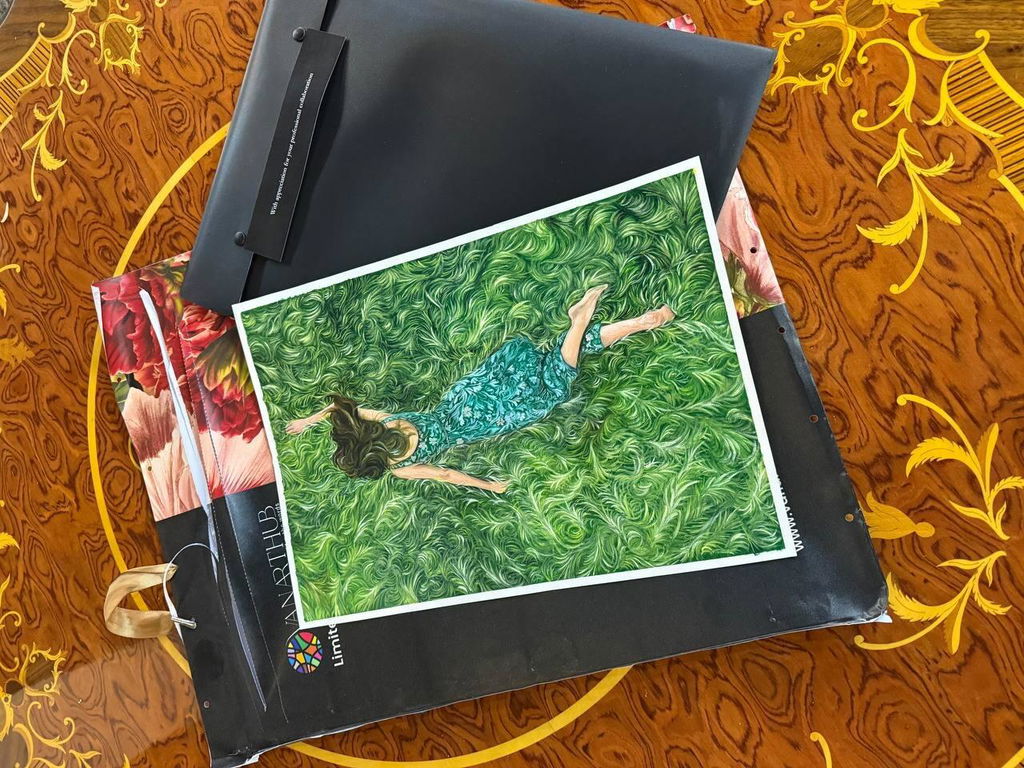
Biophilic design is the practice of bringing nature indoors on purpose. It uses natural light, living plants, natural materials such as wood, stone, and plant fibre, and images of the natural world to make rooms feel more alive. Original nature painting fits into this approach directly: a painting of a forest, a coastline, or a single flowering plant gives a room a permanent view of nature, on any wall, with no watering and no window required.
This guide explains biophilic design in plain terms and shows where art belongs in it. The examples use original paintings, because that is what VanArtHub sells: one of a kind works by living artists, priced from about $531. The ideas apply just as well to any artwork that shows the natural world.
Key takeaways
- Biophilic design means bringing natural forms, materials, and light into indoor spaces because people respond well to them.
- Art counts as a biophilic element: a nature painting gives a room a view of the natural world even where there is no window.
- A painting is the lowest-maintenance biophilic element, since it needs no water, no daylight, and no upkeep beyond gentle dusting.
- Subjects that work well include forests, water, mountains, botanical studies, and animals.
- Art supports the other elements rather than replacing them; it works best alongside daylight and living plants wherever those are possible.
What biophilic design means in plain terms
The word "biophilic" comes from "biophilia", which means a love of living things. As a design idea it is simple. Most people notice the difference between a bare grey room and a room with daylight, wood, and something green in it. Biophilic design takes that ordinary observation seriously and plans for it, instead of leaving it to chance.
In practice, designers working this way pay attention to a short list of elements: daylight and views, fresh air, living plants, water, natural materials, natural colours and patterns, and images of nature. Not every room can have all of them. A basement office has no view. A dark hallway will kill most houseplants. That is exactly where art earns its place.
Where art fits among the biophilic elements
When a real view of nature is not possible, an image of nature is the standard substitute, and it is the one element that works on any wall in any room. The table below compares the main biophilic elements by what they bring to a space and what they demand from you.
| Element |
What it brings |
What it needs |
| Daylight and views |
A live connection to weather and the time of day |
Windows, which cannot always be added |
| Living plants |
Real growth and greenery |
Water, light, and replacement when they fail |
| Natural materials |
Warmth and texture in wood, stone, and fibre |
Usually chosen once, at renovation time |
| Water features |
Movement and sound |
Power, cleaning, and regular upkeep |
| Nature art |
A permanent view of the natural world |
A hook, and placement away from direct sun |
A painting is the element with the lowest demands. It hangs where plants die and where windows cannot go, and it looks the same in February as it does in June. It is also the only element on the list that you can take with you when you move.
Choosing nature paintings for a biophilic room
Start with the subjects that read clearly as nature: forest and tree studies, rivers and coastlines, mountains, fields, single plants, and animals. Green paintings connect especially well with wood furniture and houseplants, because the colour repeats through the room and ties the elements together.
Botanical subjects deserve a special mention. A close study of one plant rewards long looking in a way a generic decorative image never will, and this kind of picture has a long history of its own. Our guide to botanical art covers that tradition.
On scale: one large landscape can act as the "window" of a windowless room, while a group of small nature studies works well along a hallway or a staircase. Hang the work where you actually pause during the day: facing your desk, opposite the bed, or at the end of a corridor you walk many times. A nature painting hung where nobody stops is a wasted element.
Why an original painting rather than a printed poster
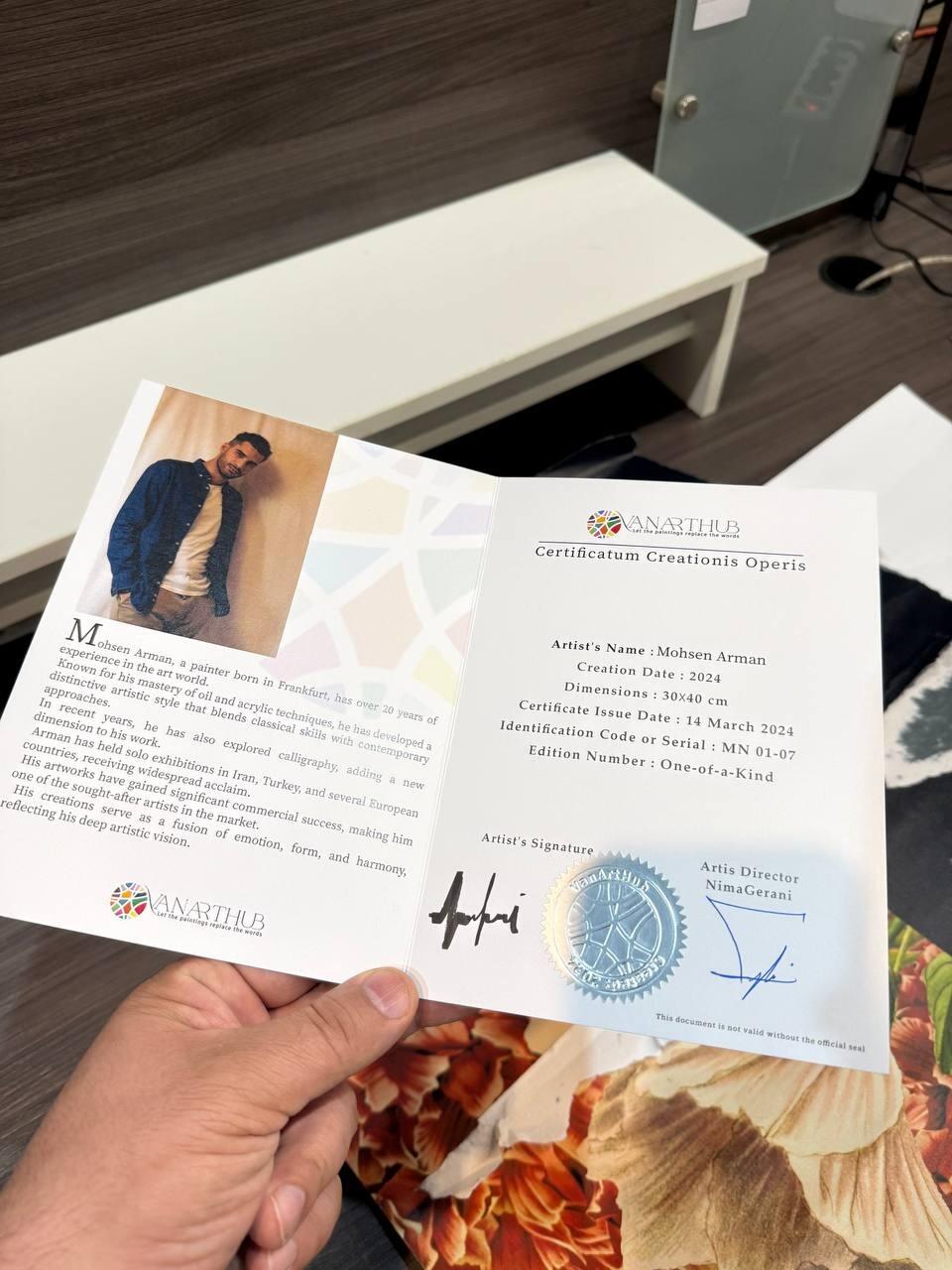
A mass-printed nature poster shows the same subject, but it behaves like disposable decor. It fades, it exists in thousands of identical copies, and when it looks tired it is replaced, never repaired. An original painting is a different kind of object. It records one person's close attention to a real place or a real plant, it lasts for decades with basic care, and it can be repaired if something goes wrong. Our page on original art vs prints goes through this comparison in detail.
This is also where biophilic design meets sustainable art. A room built around natural materials and living things is undermined by walls covered in short-lived printed decor. Fewer, better, longer-lasting objects fit the spirit of the whole approach, and a painting bought once and kept for decades is the clearest example of that on any wall.
Art, nature, and how a room feels
Many claims are made about nature imagery and how it affects people. We will not repeat numbers here that we cannot stand behind. The honest, qualitative version is enough: a room with a forest painting feels different from the same room with a bare wall, and most people can feel that difference the moment they walk in. If you want to go deeper into the connection between art, nature, and daily life at home, read art, nature and wellbeing at home.
Once a work arrives, placement and simple care decide how well it does its job over the years. Our page on how to live with sustainable art covers hanging, light, and the small habits that keep a painting looking right for decades.
Common questions
What is biophilic design in simple words?
Biophilic design means bringing nature into indoor spaces on purpose. It uses daylight, plants, natural materials such as wood and stone, and images of the natural world to make rooms feel more alive.
Does wall art count as biophilic design?
Yes. When a real view of nature is not possible, an image of nature stands in for it. A painting of a forest or a coastline gives a room a permanent view of the natural world on any wall.
What kind of painting works best in a biophilic interior?
Subjects drawn directly from nature work best: forests, water, mountains, plants, and animals. Greens and earth tones also connect the artwork to wood, stone, and living plants in the same room.
Is a nature poster as good as a nature painting for biophilic design?
A poster shows the same subject, but it fades over time and is usually replaced rather than kept. An original painting lasts for decades, can be repaired, and records one person's close attention to a real place.
Do I still need real plants if I have nature art?
Use both where you can, because they do different jobs. Plants bring living growth and need light and water; a painting brings a permanent image of nature and works in rooms where plants cannot survive.
If you are building a biophilic room, decide the art wall early, the same way you would plan a window. Every painting at VanArtHub ships free and fully insured in Canada and the USA and comes with a 14-day trial, so you can hang it in the actual room before you decide. Start with the nature paintings collection.