Two certifications genuinely appear in the art world's supply chain. FSC, the Forest Stewardship Council, certifies wood from responsibly managed forests, which covers stretcher bars and frame mouldings. B Corp is a certification by B Lab of a whole company's social and environmental performance. Beyond those, the honest position is this: there is no widely recognized certification for sustainable art itself. No respected body inspects paintings and stamps them sustainable, so anyone claiming such a certificate deserves questions.
That gap matters, because badges sell. This page, part of VanArtHub's sustainable art guide, explains what the real labels cover, what they do not, and how to check any green claim you meet while buying art.
Key takeaways
- FSC certification covers wood from responsibly managed forests, and in art it appears on stretcher bars and frames.
- B Corp, issued by B Lab, certifies a company's overall social and environmental performance; it is never a claim about a single product.
- No widely recognized certification exists for sustainable art as such, so a badge that claims one should be questioned, not trusted.
- Every real certification names its issuing body, and that body keeps public records you can search.
- Specific, checkable statements about practice are worth more than any logo.
FSC: the certification you will actually meet
The Forest Stewardship Council certifies wood from responsibly managed forests, and wood is where a painting touches forestry: the stretcher bars a canvas is mounted on and the frame around the finished work. When a supplier states that its bars or mouldings are FSC certified, that is a real, defined claim tied to an audited chain of custody, and you can reasonably rely on it.
Notice how narrow it is. FSC says nothing about the paint, the canvas fibre, the artist's studio habits, or the business selling the work. It certifies timber. That precision is exactly what makes it trustworthy, and it is the model to hold other claims against. For where FSC fits into your own framing decisions, see sustainable framing choices.
B Corp: a label for companies, not artworks
B Corp certification, issued by B Lab, assesses a whole company: its governance, its treatment of workers, its environmental practices, and its impact on the communities around it. An art business could hold it the way any company can. What the label can never do is certify a product. A painting sold by a B Corp is not thereby a "certified sustainable painting"; the certificate describes the seller, not the object.
That distinction, company against product, is one of the most common places green marketing blurs the truth, in art and everywhere else.
The certification that does not exist
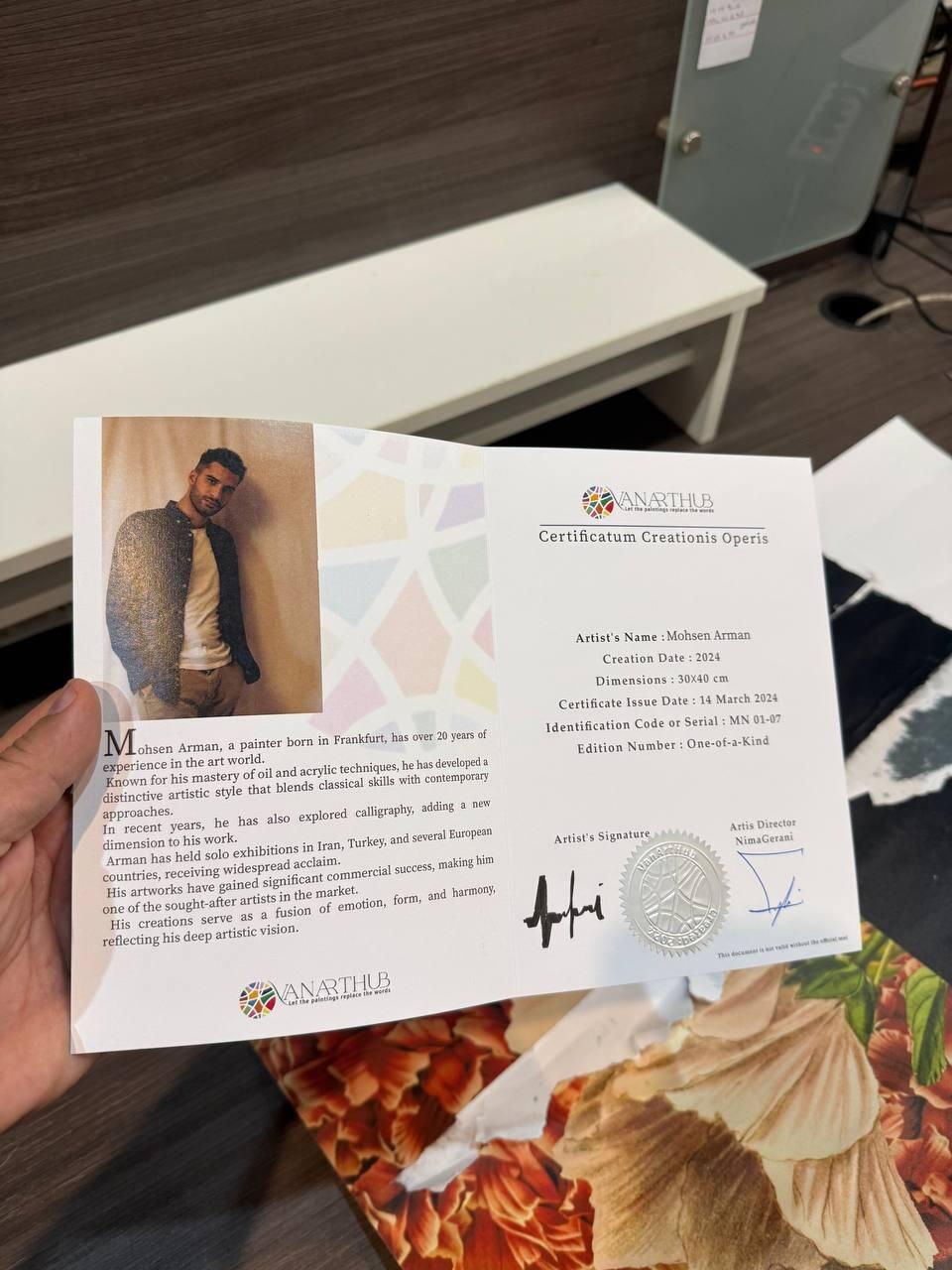
Here is the point this page exists to make: there is no widely recognized body that certifies art as sustainable. No standard defines what a sustainable painting would be, no auditor inspects artworks against such a standard, and no registry of certified artworks exists. So when a listing shows a leaf icon beside the word "certified", or a seller describes work as "certified eco art", the correct response is a pair of questions: certified by whom, and against what standard.
Sometimes the answer is an honest muddle, a seller repeating a supplier's FSC claim in looser words than they should. Sometimes it is invention. The patterns of vague and misleading green language have names, and we walk through them in greenwashing in the art world. The absence of a real certificate is not a scandal; art is made of many materials by individuals, and it resists a single standard. Pretending the certificate exists is the problem.
How to check any label in two steps
First, ask which organization issued the certification. A real label always has an issuer with a name, a standard, and an audit process. If the seller cannot name the body, the label is marketing. Second, find the issuer's public record. Genuine certifiers keep searchable directories of certificate holders, so the claim can be confirmed at the source rather than taken on trust.
Keep the product-versus-company distinction in view while you check, and apply the habit everywhere. The same two steps work on any claim a seller makes about materials; our vegan hub applies identical logic to animal-ingredient claims in how to verify vegan art.
The real labels side by side
| Label |
Issued by |
What it actually certifies |
Where you meet it in art |
| FSC |
Forest Stewardship Council |
Wood from responsibly managed forests |
Stretcher bars and frame mouldings |
| B Corp |
B Lab |
A company's overall social and environmental performance |
An art business as a whole, never one artwork |
| "Certified sustainable art" |
No widely recognized body |
Nothing; no such standard exists |
Badges and listings that deserve questions |
What VanArtHub claims, and what it does not
We hold no eco certifications and we do not claim any. What we offer instead is specific and checkable: original paintings made to last for decades, a Lifetime Trade-Back program that takes a work back for store credit and keeps art in circulation, and a direct relationship with the living Vancouver artists we sell. You can read how the trade-back works at Lifetime Trade-Back: art in a circle. If a materials question matters to your decision, ask before you buy and we will put it to the artist. That is the honest version of a green promise: no badge, just answers you can verify.
Common questions
Is there an official certification for sustainable art?
No. There is no widely recognized body that inspects artworks and certifies them as sustainable. Real certifications in the art world cover parts of the supply chain, such as FSC for wood, or the company behind the art, such as B Corp. A badge that claims to certify the art itself deserves questions.
What does FSC certification cover on a painting?
FSC, the Forest Stewardship Council, certifies wood from responsibly managed forests. In a painting's life, that can apply to the stretcher bars the canvas is mounted on and to the wooden frame. It says nothing about the paint, the canvas fibre, or the artist's practice.
Can an art gallery be B Corp certified?
B Corp certification applies to companies, so an art business can pursue it like any other firm. The label describes the company's overall social and environmental performance as assessed by B Lab. It still is not a claim about any individual artwork the company sells.
How do I check whether an eco label on art is real?
Ask two questions. First, which organization issued the certification. Second, where is the public record. Genuine certifiers keep searchable directories of certificate holders. If the seller cannot name the body, or the body has no record of them, treat the label as marketing.
Does VanArtHub hold any eco certifications?
No, and we do not claim any. What we offer instead is checkable: original paintings made to last, a Lifetime Trade-Back program for store credit that keeps art in circulation, and a direct relationship with the living Vancouver artists we sell.
Labels or no labels, the work itself is the argument. Browse our contemporary Canadian art and judge each piece on what its maker can actually tell you about it.