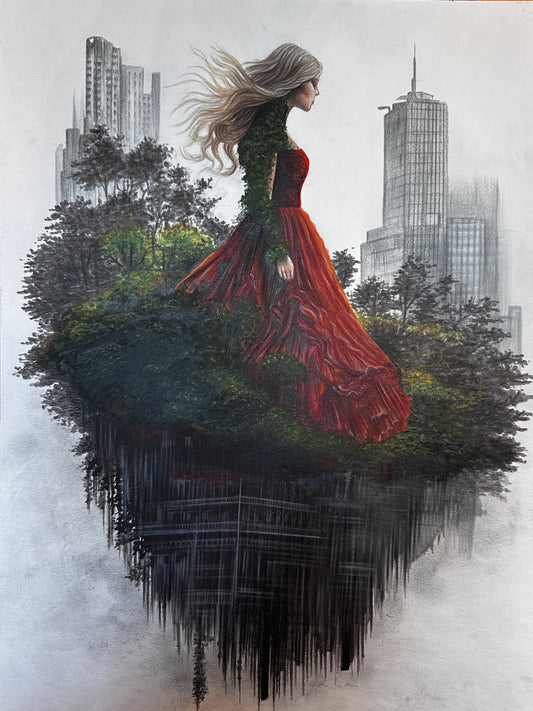
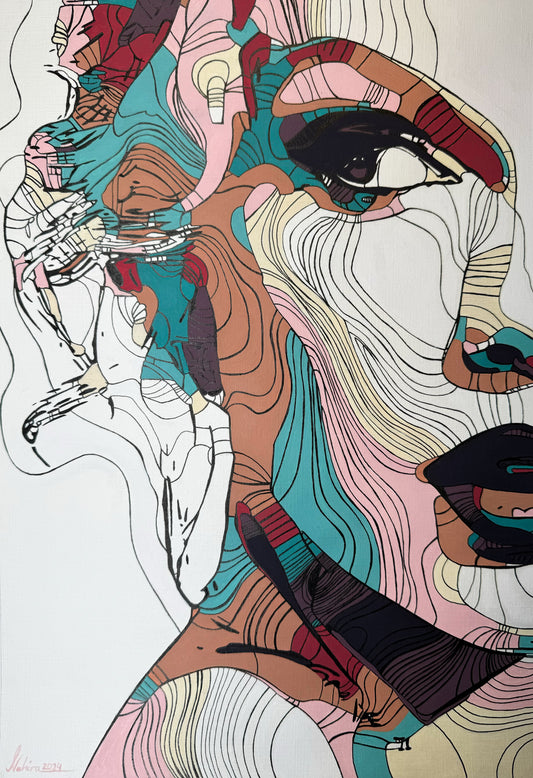
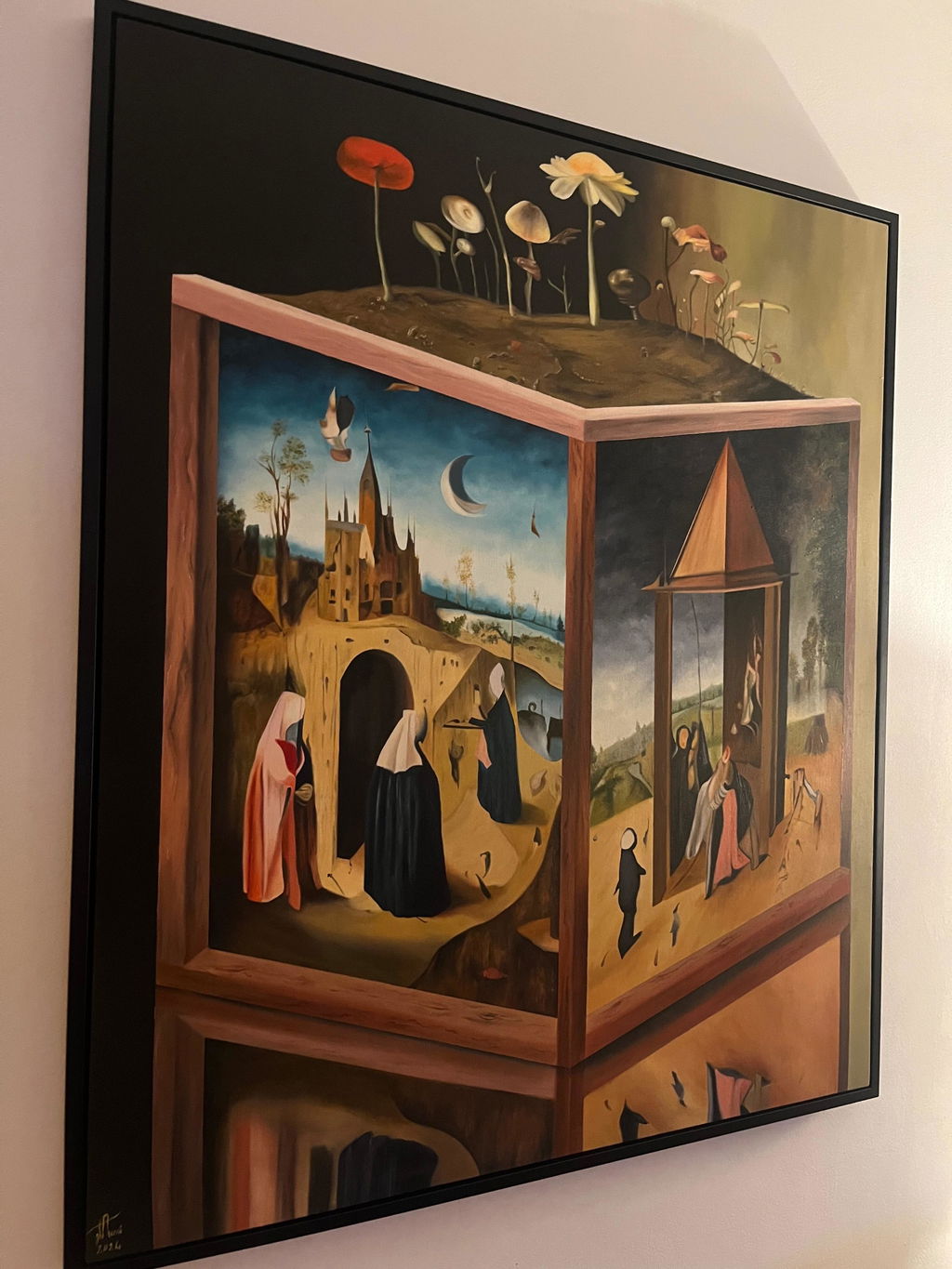
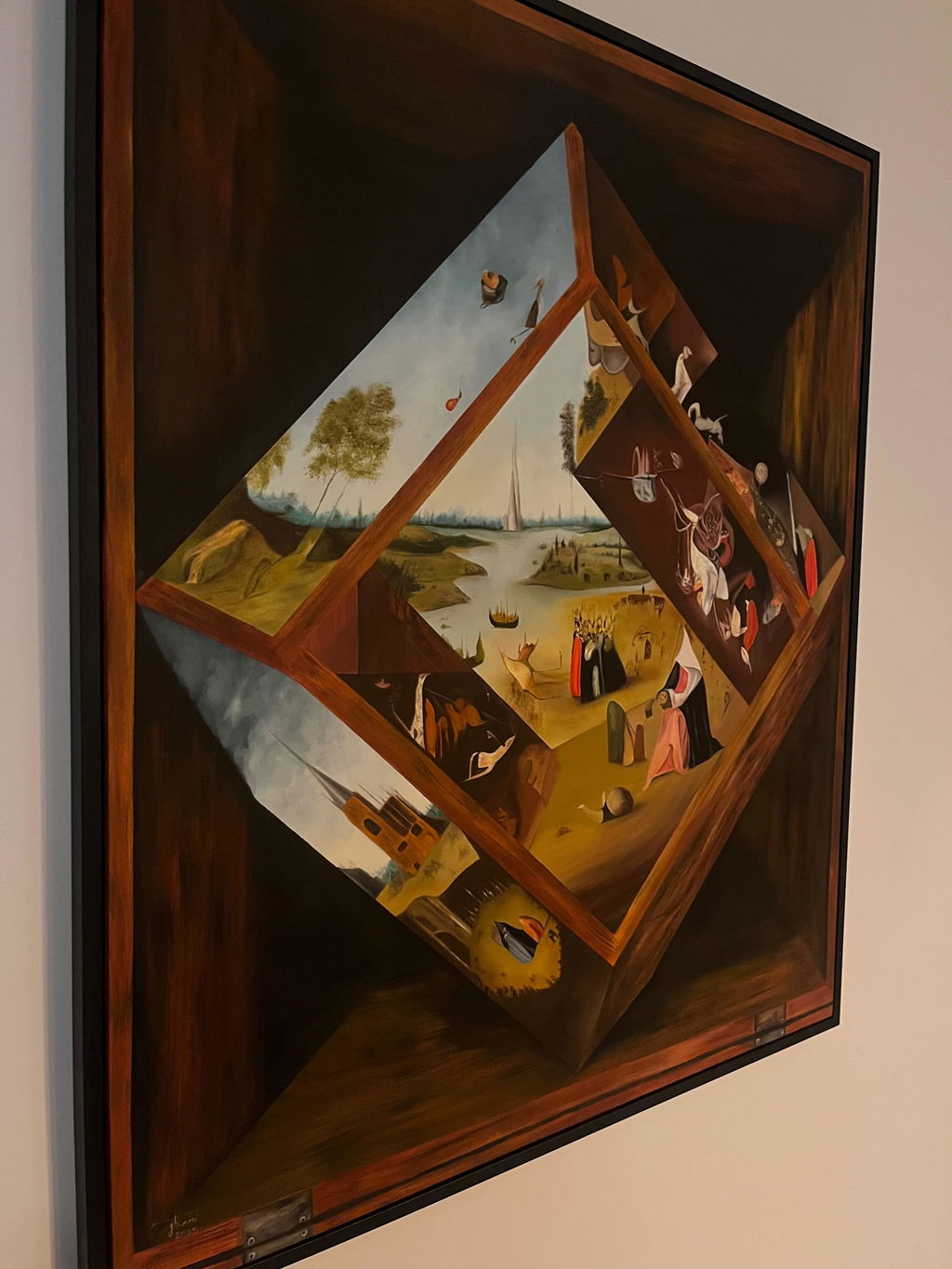
Climate change art is art made in response to a warming world. For painters, that means recording places while they are still here, mourning what is changing, and imagining what could come next. It does a job that data cannot do. A chart informs you; a painting makes you care about one specific glacier, one stretch of coast, one summer sky. This guide looks at how painters take on the subject, where this kind of art came from, and how to choose and live with it honestly.
We write from Vancouver, where VanArtHub is based, and where the changing climate is not an abstraction. Smoke-hazed summer light is something painters on this coast now know first-hand.
Key takeaways
- Climate change art responds to a warming world through witness, memory, and imagination rather than through numbers.
- Its roots reach back to ecological art projects such as Joseph Beuys' 7000 Oaks tree planting and Agnes Denes' Wheatfield: A Confrontation, both begun in 1982.
- Painters approach the subject through ice, forests, fire seasons, coastlines, and shifting seasons, and the work does not have to show disaster to count.
- A painting about climate is not automatically a low-impact object; judge the artwork and any environmental claims about it separately.
What a painting does that data cannot
Climate change is usually communicated in numbers, and numbers are easy to scroll past. A painting works on a different channel. It slows you down in front of one particular place and asks you to look at it the way the painter did: for hours, in changing light, with attention. When the place in the painting is one that is changing, that attention becomes a quiet form of concern.
This is why artists keep returning to the subject even though they hold no policy levers. A painting cannot lower emissions. What it can do is keep a place present in a room and in a mind, year after year, which is more than most headlines manage.
Where climate art came from
Art that acts on behalf of the living world predates the current climate conversation. In 1982, Agnes Denes planted Wheatfield: A Confrontation, a real wheat field grown on a Manhattan landfill, putting food and soil in front of a financial district. The same year, Joseph Beuys began 7000 Oaks, a tree-planting artwork across the city of Kassel that kept growing long after the artist died. Both works treated ecological repair as something art could do, and both are covered in more depth in our guides to environmental art and land art.
Today's climate painting inherits that lineage but mostly works at smaller scale. Instead of planting fields, painters carry particular places onto canvas while those places are in motion.
How painters respond to a warming world
Across the field, a few distinct modes keep appearing. Most climate paintings work in one of these registers, and knowing them helps you read what a work is doing.
| Mode |
What the painter does |
What the viewer takes away |
| Witness |
Records a real place as it is right now: a glacier, a coastline, a burned hillside |
A document of a moment that will not repeat |
| Elegy |
Paints what is going or already gone, holding it in memory |
Grief with a shape, which is easier to carry than grief without one |
| Imagination |
Pictures adaptation, recovery, or futures that have not arrived |
A reason to believe the story is not finished |
| Celebration |
Paints what still thrives, with full attention |
A daily reminder of what is worth protecting |
None of these modes requires a burning horizon. A calm painting of an old forest can be climate art in the celebration mode, and for a room you live in every day, it is often the mode that works best.
Subjects that carry the theme
Certain subjects have become the natural ground for climate painting. Ice and glaciers, because they change visibly within a single lifetime. Forests, because they burn, regrow, and store so much of what is at stake. Coastlines, because the line between water and land is itself in motion. Seasons, because their timing is shifting in ways longtime residents of a place can feel. Skies, because smoke and unusual light have become part of summer in many regions, including the west coast of Canada.
Painters do not need to label such work "climate art" for it to function that way. A landscape painted with honesty in this century records a changing world whether or not the title says so.
Choosing and living with climate art, honestly
Two pieces of honesty matter when you buy in this territory. The first concerns the artwork's subject: choose the mode you can live with. A work of witness or elegy suits a study or a hallway where you meet it deliberately. For a bedroom or a family room, celebration usually wears better across years.
The second concerns the object itself. A painting about climate change is still a physical object with materials, packaging, and shipping. The subject does not make the object low-impact, and a seller who implies otherwise is doing what our guide to greenwashing in the art world warns about. VanArtHub does not claim its paintings are eco-friendly or climate-positive. What we offer is narrower and true: original works made to last for decades, a Lifetime Trade-Back that keeps art in circulation, and direct support of living Vancouver artists.
If you want to see how painters in this country are engaging with the world around them, our contemporary Canadian art collection and landscape paintings collection are the places to look.
Common questions
Does climate change art have to show disaster?
No. Disaster imagery is only one mode. Climate art also works through witness, recording places as they are; through elegy, holding what is changing in memory; through imagined futures; and through celebration of what still thrives. A calm painting of an old forest can carry the theme as strongly as a burning one.
Can an ordinary landscape painting count as climate art?
Yes, when it records a place that is changing. A landscape painted honestly in this century documents a world in motion whether or not the title mentions climate. Many painters prefer to let the place speak rather than attach a label to it.
Is buying climate art good for the environment?
Buying a painting is not a climate action, and it is honest to say so. What it does do is support a living artist and put a lasting object in your home instead of disposable decor. Judge any environmental claim about the physical artwork separately from its subject matter.
How do I choose climate art that will not feel heavy at home?
Match the mode to the room. Works of witness or elegy suit spaces you visit deliberately, like a study or hallway. For rooms you rest in, choose the celebration mode: paintings of what still thrives. They carry the theme through care and attention rather than through loss.
Why do artists paint about climate change instead of presenting facts?
Because painting reaches the part of a person that facts often miss. Data describes the whole planet at once; a painting holds one specific place in front of you and asks for your attention. Feeling attached to a particular place is, for many people, the beginning of caring about the larger problem.
Climate art is one thread in a much larger conversation about art and the natural world. To follow the rest of it, from materials to collecting habits, start at our sustainable art hub.